MinuteRead
30 min
Book summary
by Eliot Brown
Premium summary · Opens in the app · 5 min read
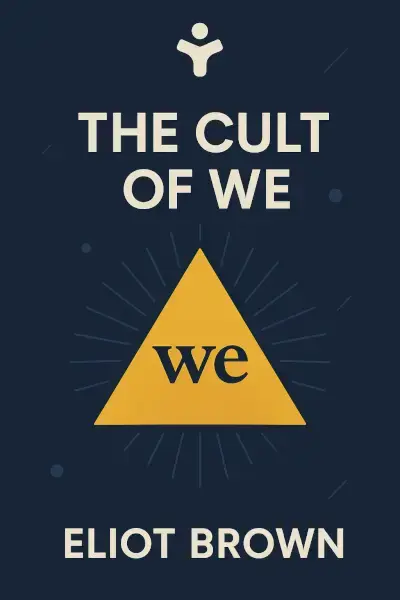
The Cult of We presents the story of WeWork, a hyped American company that offered office spaces for rent and became the most valuable start-up in the world, only to be exposed later on as a massively overpriced business that was in fact losing a million dollars a day.
The Cult of We presents the story of WeWork, a hyped American company that offered office spaces for rent and became the most valuable start-up in the world, only to be exposed later on as a massively overpriced business that was in fact losing a million dollars a day.
Undoubtedly, Adam Neumann was a great communicator and knew how to sell his pitch. Back in 2006, he met Miguel McKelvey, who later became the co-founder of WeWork. Miguel never wanted to get massively rich. However, Adam was convincing enough to make him say yes to the crazy journey they were about to embark on.
At first, they sold ready-to-go offices for tech companies and freelancers. While profitable, they sold their stake to the landlord shortly. It was time to expand and look for new offices to rent. After pitching their startup to Joel Schreiber by saying it was worth $45 million, the investor bought one-third of the business for $15 million.
Later, they were presenting themselves as a tech startup offering renting services as a means to increase their valuation to venture capitalists. Neumann was comparing the company to a real-life Facebook, and himself as the new Steve Jobs. Everybody was hooked, and so WeWork quickly expanded in Europe and Asia.
Naturally, the two lost the pace of development, so Miguel opted out. But Neumann continued to seek insane growth. So he went to ask for funding from Softbank’s CEO, Masayoshi Son, which he received. In fact, Softbank valued the company at $47 billion, and American capitalists weren’t too far from this valuation figure either.
The problem with WeWork is that Neumann was looking to expand at a pace way beyond his powers. The founders expanded in Europe and Asia. And this was before they fully established the business and had well-set procedures in place. The hype continued to a point that people were investing in this company without taking the time to research it. In fact, WeWork was looking to create a modern workplace, such as Google’s, where you can benefit from free food (vegan options included), free gym, happy hours, and so on. Naturally, the company wasn’t making any profits and was in fact losing one million dollars per day. The other problem was the expansion in many markets. Offering so many complimentary services made everyone forget the core business model, which was to offer offices for people to work in. The biggest awe of them all is that both investors and institutions such as American or Asian banks failed to notice the faults in the business, up to a certain point. Neumann was so brilliant at painting a bright future and coming up with expansion plans, that…
Continue reading in the MinuteRead app
Get the complete 5-minute summary of The Cult of We
Get the complete summary in the appKnowing how to sell your dream can open remarkable doors in life
Always plan growth strategically and never lose sight of your business’s core values
In business, ration must always dominate against emotions
"The Cult of We" is a strong fit if you want practical ideas around business, entrepreneurship, history, especially themes like knowing how to sell your dream can open remarkable doors in life; always plan growth strategically and never lose sight of your business’s core values. The MinuteRead summary distills these concepts into a focused read, whether you're deciding whether to buy the book or applying its lessons at work.
Eliot Brown covers startups and venture capital for The Wall Street Journal. He joined the Journal in 2010 to cover real estate, and previously worked at The New York Observer. A graduate of Macalester College, he lives in San Francisco.
View all summaries by Eliot BrownContinue Reading
Access the complete 5-minute summary and thousands more nonfiction books in the MinuteRead app.

Continue reading the complete summary in the MinuteRead app.