MinuteRead
30 min
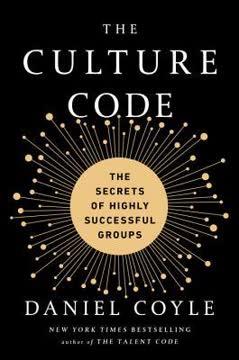
Book summary
by Daniel Coyle
Premium summary · Opens in the app · 30 min read
In the summer of 2008, a team of researchers from MIT and Cornell set out to answer a question that had puzzled social scientists for decades: what makes some groups smarter than others?
### By Daniel Coyle
**Estimated Reading Time:** 45 minutes
**What You'll Learn**
Why do some teams consistently outperform others, even when their members are less talented on paper? Why do certain organizations seem to hum with energy, trust, and innovation while others stagnate? This condensed edition reveals the hidden architecture of exceptional group culture. You will learn how psychological safety is built through small, specific signals. You will discover why vulnerability is not a weakness but the fastest route to trust. And you will understand how shared purpose can transform a collection of individuals into a unified, high-performing team.
**Who This Book Is For**
This book is for anyone who works with other people. The leader trying to build a cohesive team. The new employee searching for belonging. The coach shaping young athletes. The parent creating a family culture. The entrepreneur designing an organization from scratch. If you have ever wondered why some groups click and others crumble, the answers are here. They are simpler than you think, and they are entirely within your reach.
In the summer of 2008, a team of researchers from MIT and Cornell set out to answer a question that had puzzled social scientists for decades: what makes some groups smarter than others? They assembled hundreds of volunteers into small teams and gave them complex problems to solve. The researchers measured everything they could think of. Intelligence. Personality. Experience. Motivation. They expected the smartest groups to be the ones with the smartest people. They expected the most successful teams to be those with the most experienced leaders. They were wrong. What emerged from the data was something far more interesting. The best teams were not the ones with the highest aggregate IQ. They were not the ones with the most accomplished individual members. They were the ones where people spoke in roughly equal proportion. Where members were skilled at reading each other's emotions. Where the conversation was fluid and everyone had a turn. In short, the best teams were the ones where people felt safe. This finding points to something profound about how human beings work together. We spend enormous energy trying to make groups more effective. We hire for talent. We design incentive structures. We hold strategy offsites and team-building retreats. We obsess over leadership styles and organizational charts. And yet the real secret of high-performing groups is hiding in plain sight, in the small, everyday signals that tell people they belong. Daniel Coyle spent four years visiting some of the most successful groups on the planet to understand what makes them tick. He went inside Pixar, where teams produce hit films with astonishing consistency. He studied the Navy's SEAL Team Six, which operates…
Continue reading in the MinuteRead app
Get the complete 30-minute summary of The Culture Code
Get the complete summary in the appSafety is the foundation. Without it, nothing else works.
Send belonging cues constantly. Eye contact, attention, gratitude. Small signals, big impact.
Go first with vulnerability. Admit mistakes. Ask for help. Others will follow.
Build purpose through consistent signals. Stories, rituals, priorities. Repeat until it sticks.
Design for proximity. Put people close together. Create opportunities for informal interaction.
Separate idea generation from evaluation. Protect creativity by delaying judgment.
"The Culture Code" is a strong fit if you want practical ideas around business, leadership, management—especially themes like safety is the foundation. without it, nothing else works; send belonging cues constantly. eye contact, attention, gratitude. small signals, big impact. The MinuteRead summary distills these concepts into a focused read, whether you're deciding whether to buy the book or applying its lessons at work.
Daniel Coyle is a bestselling author known for his work on talent development and team dynamics. His books include The Talent Code and The Little Book of Talent. Coyle co-authored The Secret Race, which won the 2012 William Hill Sports Book of the Year Prize. As a contributing editor for Outside magazine, he explores topics related to human performance and achievement. Coyle also serves as a special advisor to the Cleveland Indians baseball team. He divides his time between Cleveland, Ohio durin…
View all summaries by Daniel CoyleContinue Reading
Access the complete 30-minute summary and thousands more nonfiction books in the MinuteRead app.

Continue reading the complete summary in the MinuteRead app.