MinuteRead
30 min
Book summary
Premium summary · Opens in the app · 30 min read
We live in a culture that tells us to conquer fear, to banish anxiety, to rise above the things that make us feel small. We are surrounded by messages that suggest fear is a weakness, something to be eliminated or overcome through sheer willpower. But this understanding of fear is not only wrong. It is harmful.
**Author:** Harriet Lerner, Ph.D.
**Estimated Reading Time:** 45 minutes
**What You'll Learn:** How fear, anxiety, and shame shape your decisions, relationships, and sense of self. You'll discover why courage is not the absence of fear but the ability to act strategically despite it. You'll learn to recognize the hidden ways anxiety operates in families, workplaces, and your own body, and you'll gain practical tools for communicating with honesty, building genuine self-esteem, and embracing the vulnerability that leads to real growth.
**Who This Book Is For:** Anyone who has ever felt paralyzed by fear, silenced by shame, or stuck in patterns of avoidance. If you've struggled to speak up, make a change, or accept yourself fully, this book offers a compassionate and deeply practical guide to moving forward.
We live in a culture that tells us to conquer fear, to banish anxiety, to rise above the things that make us feel small. We are surrounded by messages that suggest fear is a weakness, something to be eliminated or overcome through sheer willpower. But this understanding of fear is not only wrong. It is harmful. Harriet Lerner, a clinical psychologist with decades of experience helping people navigate their most difficult emotions, offers a radically different perspective. Fear and anxiety are not enemies to be defeated. They are ancient, universal human experiences that carry important information. They are signals, warnings, guides. The problem is not that we feel afraid. The problem is what we do with that fear. When we cannot face our anxiety directly, when we cannot name it and understand its sources, we act it out instead. We lash out at the people we love. We withdraw into silence. We sabotage our own success. We repeat the same destructive patterns over and over, convinced that the problem lies outside ourselves. Anxiety, left unexamined, becomes a force that shapes our lives from the shadows. This book exists because so many of us are dancing with fear without even knowing it. We feel the physical symptoms: the racing heart, the tight chest, the churning stomach. We notice the cognitive effects: the racing thoughts, the catastrophic predictions, the inability to concentrate. We see the behavioral changes: the avoidance, the procrastination, the overcompensation. But we rarely connect these experiences to the deeper currents of anxiety flowing beneath the surface of our daily lives. Lerner's approach is different because she does not offer simple solutions or empty reassurance. She understands that fear is woven into the fabric of our most important relationships, our workplaces, our families, and our own bodies. She knows that shame acts as a steady call to silence, inaction, and hiding. And she recognizes that true courage is not about blasting through fear…
Continue reading in the MinuteRead app
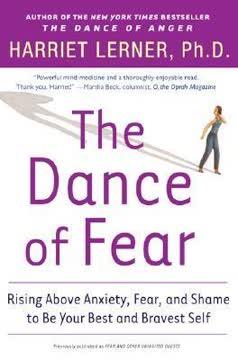
Get the complete 30-minute summary of The Dance of Fear
Get the complete summary in the appAnxiety is not your enemy. It is a signal. Learn to read it rather than suppress it.
Shame lives in secrecy. Speaking your shame to a trusted person is the most powerful way to reduce its hold on you.
Courage is not the absence of fear. It is the willingness to act while feeling afraid.
Strategic communication means considering timing, tone, and content. Honesty without strategy often backfires.
Your body is not always reliable or beautiful. Accepting this reality is more freeing than fighting it.
Change is the only constant. Resisting it creates more suffering than accepting it.
"The Dance of Fear" is a strong fit if you want practical ideas around self help, psychology, personal development, especially themes like anxiety is not your enemy. it is a signal. learn to read it rather than suppress it; shame lives in secrecy. speaking your shame to a trusted person is the most powerful way to reduce its hold on you. The MinuteRead summary distills these concepts into a focused read, whether you're deciding whether to buy the book or applying its lessons at work.
Harriet Lerner, Ph.D. is a clinical psychologist and author known for her work on women's psychology and family relationships. Born in Brooklyn to Russian-Jewish immigrant parents, she was raised with a strong emphasis on achievement and education. Lerner studied psychology and Indian studies at the University of Wisconsin-Madison, later earning her Ph.D. from City University of New York. She worked at the Menninger Foundation in Topeka, Kansas for over two decades before establishing a private …
View all summaries by Harriet LernerContinue Reading
Access the complete 30-minute summary and thousands more nonfiction books in the MinuteRead app.

Continue reading the complete summary in the MinuteRead app.