MinuteRead
30 min
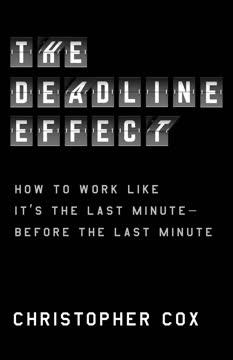
We tend to think of deadlines as unpleasant necessities. They are the ticking clocks that induce anxiety, the dates circled in red that loom over our calendars, the external pressures that force us to finally sit down and do the work we have been avoiding. Most of us treat deadlines as constraints to be managed, obstacles to be navigated, or, at best, necessary evils that keep the wheels of commerce turning.
**Author:** Christopher Cox
**Estimated Reading Time:** 45 minutes
**What You'll Learn:**
- Why deadlines are not merely dates on a calendar but powerful psychological tools - How to structure deadlines to increase motivation, focus, and quality of work - The counterintuitive ways that shorter deadlines can produce better results - How organizations from restaurants to presidential campaigns use deadlines strategically - Practical methods for applying deadline psychology to your own projects and teams
**Who This Book Is For:**
Anyone who has ever procrastinated, missed a deadline, or wondered why some teams consistently deliver while others struggle. This book is for managers, creators, entrepreneurs, students, and anyone who wants to understand the hidden mechanics of getting things done.
We tend to think of deadlines as unpleasant necessities. They are the ticking clocks that induce anxiety, the dates circled in red that loom over our calendars, the external pressures that force us to finally sit down and do the work we have been avoiding. Most of us treat deadlines as constraints to be managed, obstacles to be navigated, or, at best, necessary evils that keep the wheels of commerce turning. Christopher Cox sees them differently. In The Deadline Effect, Cox argues that deadlines are among the most powerful and least understood tools available to anyone who wants to accomplish meaningful work. A deadline, properly understood and strategically deployed, does far more than mark a finish line. It shapes behavior, focuses attention, forces prioritization, and creates the conditions under which people do their best work. The problem is not that we have deadlines. The problem is that we do not understand how to use them. Cox came to this realization through his own experience as an editor at GQ magazine, where monthly deadlines governed every aspect of the publication cycle. He noticed something curious: the quality of work produced under deadline pressure was often higher than work produced without any time constraint at all. The pressure did not merely force completion. It seemed to sharpen thinking, clarify priorities, and push writers and editors to make decisions they might otherwise have deferred indefinitely. This observation led Cox on a multi-year investigation into how deadlines function across wildly different domains. He embedded with Easter lily farmers who must deliver their entire annual crop during a two-week window before Easter Sunday. He spent time in the kitchens of Jean-Georges Vongerichten's restaurant empire, where the opening of a new location creates a cascade of interim deadlines that transform raw spaces into polished dining rooms. He followed John Delaney's long-shot presidential campaign as it scrambled to qualify for a debate stage. He visited Telluride, Colorado, where ski resort operators use a soft opening deadline to prepare for the…
Continue reading in the MinuteRead app
Get the complete 30-minute summary of The Deadline Effect
Get the complete summary in the appDeadlines are expressions of kairos, the opportune moment, not merely points on the chronological timeline.
Shorter deadlines often produce better results than longer ones because they create genuine urgency.
Break large projects into phases with interim deadlines to create momentum and combat procrastination.
Plan backward from the delivery date to identify necessary steps and avoid the planning fallacy.
Build buffer time into every schedule to account for unexpected problems.
Create soft deadlines with real consequences to generate urgency without rigidity.
"The Deadline Effect" is a strong fit if you want practical ideas around self help, productivity, business, especially themes like deadlines are expressions of kairos, the opportune moment, not merely points on the chronological timeline; shorter deadlines often produce better results than longer ones because they create genuine urgency. The MinuteRead summary distills these concepts into a focused read, whether you're deciding whether to buy the book or applying its lessons at work.
Christopher Cox is a journalist and author known for his work as an editor at GQ Magazine. He drew upon his experience managing deadlines in the publishing industry to research and write The Deadline Effect. Cox employed a hands-on approach, immersing himself in various industries to gather first-hand accounts of deadline management. His writing style is described as engaging and efficient, with a talent for crafting compelling narratives. Cox's background in magazine editing is evident in his a…
View all summaries by Christopher CoxContinue Reading
Access the complete 30-minute summary and thousands more nonfiction books in the MinuteRead app.

Continue reading the complete summary in the MinuteRead app.