MinuteRead
30 min
Book summary
Premium summary · Opens in the app · 30 min read
Most books about investing fail their readers. They promise secrets, systems, and shortcuts. They suggest that with enough cleverness, you can beat the market and retire rich ahead of schedule. They flatter your intelligence while setting you up for disappointment.
**Author:** Burton G. Malkiel **Estimated Reading Time:** 45 minutes
### What You'll Learn
The timeless principles that build real wealth, explained with uncommon clarity. You will learn why saving matters more than clever stock picking, how to harness the quiet power of compound interest, why low-cost index funds outperform almost everything else, and how to protect yourself from the biggest threat to your financial future: your own emotions.
### Who This Book Is For
Anyone who wants to build lasting financial security without becoming a full-time investor. Whether you are just starting your career, raising a family, or approaching retirement, these principles work. This book is for people who want a proven path, not a get-rich-quick scheme. It is for those who understand that wealth is built slowly, steadily, and simply.
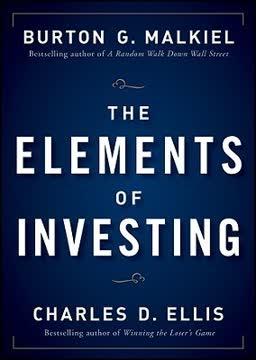
Most books about investing fail their readers. They promise secrets, systems, and shortcuts. They suggest that with enough cleverness, you can beat the market and retire rich ahead of schedule. They flatter your intelligence while setting you up for disappointment. This book is different. Burton Malkiel, one of the most respected economists of the past half-century, has spent his career studying what actually works in investing. His conclusion is both humbling and liberating: the best investment strategy is also the simplest. You do not need to outsmart anyone. You do not need to predict the future. You do not need to spend hours researching companies or watching financial news. What you need is a small set of clear principles, applied consistently over a long period of time. The problem most people face is not a lack of information. It is an excess of it. We are bombarded with market predictions, stock tips, and urgent warnings about the next crash or boom. The financial industry profits from making investing seem complicated, because complexity justifies high fees. But the truth is that a simple portfolio of low-cost index funds, held for decades, will outperform the vast majority of professional money managers. This book exists to cut through the noise. It distills investing down to its essential elements: saving, compounding, diversifying, minimizing costs, managing taxes, and controlling your own behavior. These are not exciting ideas. They will not make you rich overnight. But they work. They have always worked. And they will continue to work for anyone with the patience to apply them. The challenge is not intellectual. It is emotional. The hardest part of investing is doing nothing when everyone around you is panicking or celebrating. It is staying the course when your instincts scream at you to act. This book will give you the mental framework to remain steady. Malkiel's approach is grounded in decades of academic research, including his…
Continue reading in the MinuteRead app
Get the complete 30-minute summary of The Elements of Investing
Get the complete summary in the appSave early, save consistently, and save more than you think you need to. Your savings rate is the foundation of everythi
Use the miracle of compound interest. Start now. Time is more powerful than skill.
Diversify broadly across stocks, bonds, geographies, and time. Never bet everything on one idea.
Invest in low-cost index funds. You will not beat the market, but you will beat most investors who try.
Minimize every cost: fund fees, trading commissions, taxes, and advisory fees. Costs compound just like returns.
Use tax-advantaged accounts to the maximum. Capture your employer match. Max out your IRA.
"The Elements of Investing" is a strong fit if you want practical ideas around money & finance, business, finance, especially themes like save early, save consistently, and save more than you think you need to. your savings rate is the foundation of everythi; use the miracle of compound interest. start now. time is more powerful than skill. The MinuteRead summary distills these concepts into a focused read, whether you're deciding whether to buy the book or applying its lessons at work.
Burton G. Malkiel is a renowned economist and author, best known for his book "A Random Walk Down Wall Street." He is a strong proponent of the efficient market hypothesis and advocates for passive investing through index funds. Burton G. Malkiel has served as a professor of economics at Princeton University and has been a board member of several major corporations. His work has significantly influenced modern investment theory and practice. Malkiel's writing style is noted for its clarity and a…
View all summaries by Burton G. MalkielContinue Reading
Access the complete 30-minute summary and thousands more nonfiction books in the MinuteRead app.

Continue reading the complete summary in the MinuteRead app.