MinuteRead
30 min
Book summary
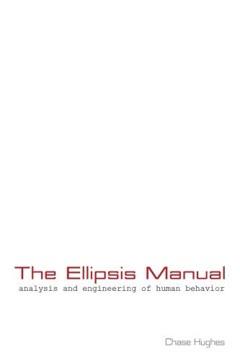
by Chase Hughes
Premium summary · Opens in the app · 30 min read
Every day, you make hundreds of decisions. What to eat, what to say, who to trust, what to buy, how to respond to the person across from you. You experience these decisions as products of your own free will. You weigh options, consider preferences, and choose. The process feels transparent, rational, and entirely your own.
**Estimated Reading Time:** 42 minutes
**What You'll Learn:**
- Why your brain has no firewall against skilled influence - How to read deception through mathematically scored behavior clusters - The 17 psychological needs that drive every human decision - How authority alone can override a person's moral compass - The linguistic patterns that bypass conscious resistance - Why emotional cycling creates deeper influence than sustained positivity - How to build total personal congruence that commands trust
**Who This Book Is For:**
This book is for anyone who wants to understand the hidden machinery of human behavior. Whether you are a negotiator, therapist, salesperson, leader, or simply someone who wants to recognize when influence is being used on you, the principles inside will fundamentally change how you see social interaction. A word of caution: this material is powerful. Understanding it carries responsibility.
Every day, you make hundreds of decisions. What to eat, what to say, who to trust, what to buy, how to respond to the person across from you. You experience these decisions as products of your own free will. You weigh options, consider preferences, and choose. The process feels transparent, rational, and entirely your own. Chase Hughes argues that this experience is largely an illusion. The human mind, for all its remarkable capabilities, operates on predictable programs. These programs evolved to conserve energy, to navigate social hierarchies, and to make rapid judgments in uncertain situations. They work well enough most of the time. But they also create vulnerabilities. Hundreds of them. And anyone who understands these vulnerabilities can exploit them with astonishing precision. The Ellipsis Manual is not a book about persuasion in the conventional sense. It is not about crafting better arguments or learning to read body language for its own sake. It is a systematic exploration of how human behavior can be engineered, shaped, and directed by someone who understands the underlying code. Hughes draws on decades of research in behavioral psychology, clinical hypnosis, intelligence operations, and interrogation techniques. He synthesizes these fields into a comprehensive framework he calls the Ellipsis Progression, a step-by-step methodology for moving a person from initial contact to willing compliance. The book's central premise is unsettling: the belief that we cannot be easily manipulated is itself the greatest vulnerability we possess. People who believe they are immune to influence are precisely the people most susceptible to it, because they never bother to examine the forces acting upon them. Consider the implications. Every advertisement you see, every political speech you hear, every conversation with a skilled negotiator, every interaction with a charismatic leader operates on principles you have never been taught to recognize. The people who understand these principles hold an enormous advantage…
Continue reading in the MinuteRead app
Get the complete 30-minute summary of The Ellipsis Manual
Get the complete summary in the appYour brain has no firewall. The belief that you cannot be manipulated is your greatest vulnerability.
Authority overrides moral reasoning. Build it through Control, Discipline, Leadership, Gratitude, and Enjoyment.
Single behaviors are unreliable. Score clusters using the Behavioral Table of Elements.
Every person has a dominant psychological need. Identify it and speak directly to it.
Breaking autopilot creates windows of heightened suggestibility. Use unusual speech, unusual behavior, or authoritative
People are swayed by their own words. Harvest their language and deploy it strategically.
"The Ellipsis Manual" is a strong fit if you want practical ideas around inspiration, psychology, personal development, especially themes like your brain has no firewall. the belief that you cannot be manipulated is your greatest vulnerability; authority overrides moral reasoning. build it through control, discipline, leadership, gratitude, and enjoyment. The MinuteRead summary distills these concepts into a focused read, whether you're deciding whether to buy the book or applying its lessons at work.
Chase Hughes is a renowned expert in human behavior and influence techniques. He has extensive experience in teaching kinesics and has authored The Ellipsis Manual , which combines his knowledge of specialized operations, influence tactics, and human psychology. Hughes' work focuses on engineering human behavior and producing predictable outcomes in various social interactions. His expertise spans multiple fields, including therapy, intelligence, and sales. Hughes is known for his ability to syn…
View all summaries by Chase HughesContinue Reading
Access the complete 30-minute summary and thousands more nonfiction books in the MinuteRead app.

Continue reading the complete summary in the MinuteRead app.