MinuteRead
30 min
Book summary
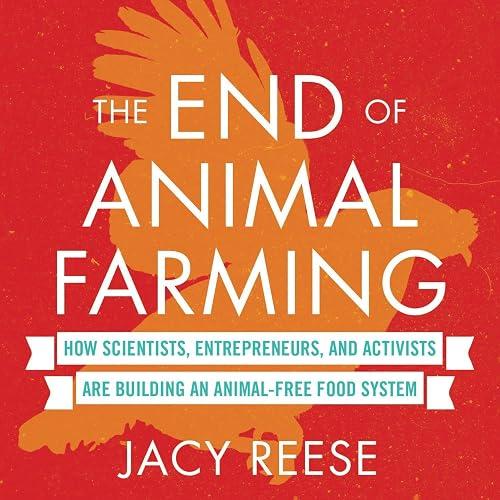
by Jacy Reese Anthis
Premium summary · Opens in the app · 30 min read
Every generation believes its way of life is permanent. The Romans could not imagine a world without slavery. The Victorians could not imagine a city without horse-drawn carriages. The whaling captains of Nantucket could not imagine a lamp that burned anything other than whale oil. Yet each of these institutions, once so deeply embedded in daily life that questioning them seemed absurd, eventually collapsed.
**Author:** Jacy Reese Anthis
**Estimated Reading Time:** 45 minutes
**What You'll Learn:**
- Why the end of animal farming is not a distant fantasy but an achievable reality within this century - How technological innovation, moral progress, and strategic advocacy are converging to transform our food system - The practical strategies that have already secured major victories for farmed animals - How to think clearly about one of the largest sources of suffering on the planet
**Who This Book Is For:**
This book is for anyone who has ever wondered whether the way we produce food aligns with the values we claim to hold. It is for the curious eater, the concerned citizen, the aspiring advocate, and the skeptic who wants to understand why so many smart people believe animal farming will end. It is for readers who want to understand not just what is wrong with the current system, but how we can realistically build something better.
Every generation believes its way of life is permanent. The Romans could not imagine a world without slavery. The Victorians could not imagine a city without horse-drawn carriages. The whaling captains of Nantucket could not imagine a lamp that burned anything other than whale oil. Yet each of these institutions, once so deeply embedded in daily life that questioning them seemed absurd, eventually collapsed. Animal farming is one of these institutions. Today, more than seventy billion land animals are raised and killed for food every year. Add fish and the number climbs into the trillions. These animals live in conditions that most people would find deeply disturbing if they saw them up close. They are confined, mutilated, and slaughtered, often within weeks or months of birth. The scale of suffering is almost impossible to comprehend. Yet most of us eat meat, dairy, and eggs without thinking much about where they come from. We are not cruel people. We are simply people who have inherited a system that hides its costs from view. The pig becomes pork somewhere far away. The chicken becomes nuggets in a factory we will never visit. The cow becomes a burger wrapped in paper and handed to us through a window. This book argues that this system is not permanent. In fact, it is already beginning to crumble. Jacy Reese Anthis is not a philosopher asking abstract questions. He is a social scientist studying how social change actually happens. His central claim is both simple and radical: animal farming will end within this century. Not because everyone will become vegan. Not because governments will ban meat. But because the same forces that ended slavery, child labor, and the whale oil industry are now turning their attention to the…
Continue reading in the MinuteRead app
Get the complete 30-minute summary of The End of Animal Farming
Get the complete summary in the appAnimal farming will end within this century because it is inefficient, unethical, and increasingly unnecessary.
The moral circle has been expanding for centuries, and animals are the next frontier.
Undercover investigations have shattered the invisibility of factory farming.
Plant-based and cultured meats will compete directly with animal products on taste, price, and convenience.
Corporate campaigns change systems more effectively than individual diet change alone.
The Four N's are the psychological barriers to change: Normal, Natural, Necessary, and Nice.
"The End of Animal Farming" is a strong fit if you want practical ideas around animals, food, science, especially themes like animal farming will end within this century because it is inefficient, unethical, and increasingly unnecessary; the moral circle has been expanding for centuries, and animals are the next frontier. The MinuteRead summary distills these concepts into a focused read, whether you're deciding whether to buy the book or applying its lessons at work.
Motivated to help readers with humanity has already seen many similar transitions, Jacy Reese Anthis wrote “The End of Animal Farming” to package those ideas for a fast, focused read. In “The End of Animal Farming”, Jacy Reese Anthis focuses on humanity has already seen many similar transitions. Through “The End of Animal Farming”, Jacy Reese Anthis distills the core ideas on animals into lessons readers can absorb in a single short sitting. Readers turn to this work when they want Jacy Reese An…
Continue Reading
Access the complete 30-minute summary and thousands more nonfiction books in the MinuteRead app.

Continue reading the complete summary in the MinuteRead app.