MinuteRead
30 min
Book summary
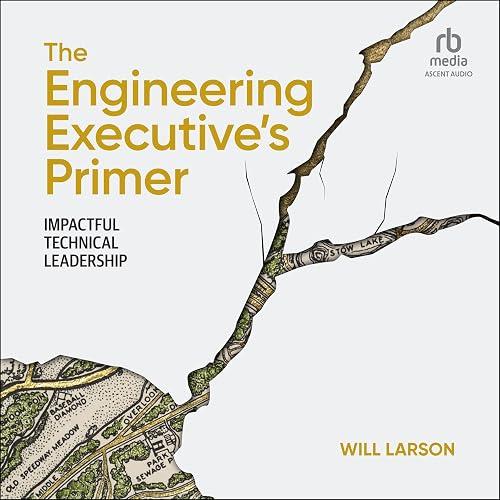
by Will Larson
Premium summary · Opens in the app · 30 min read
Most engineering executives arrive in the role with a strange realization. The skills that earned them the promotion are not the skills that will make them successful. Writing excellent code, designing robust systems, and even managing individual teams have little bearing on the daily work of an executive. The job is fundamentally different, and almost no one is prepared for it.
**Author:** Will Larson
**Estimated Reading Time:** 45 minutes
**What You'll Learn:** How to operate effectively as an engineering executive by mastering organizational values, strategic planning, measurement, resource allocation, and conflict resolution.
**Who This Book Is For:** Engineering leaders transitioning into executive roles, current executives seeking to sharpen their practice, and anyone who wants to understand how technical organizations actually function at the highest levels.
Most engineering executives arrive in the role with a strange realization. The skills that earned them the promotion are not the skills that will make them successful. Writing excellent code, designing robust systems, and even managing individual teams have little bearing on the daily work of an executive. The job is fundamentally different, and almost no one is prepared for it. Will Larson wrote this book because he saw a gap. There are countless resources for software engineers and a growing body of work for first-time managers. But when someone steps into a VP of Engineering or CTO role, they are largely left to figure things out alone. The stakes are high, the feedback loops are slow, and the mistakes are expensive. A bad executive decision can demoralize an entire organization, waste millions of dollars, or drive away your best people. The problem is compounded by the nature of executive work itself. Unlike engineering, where problems have clear technical solutions, executive challenges are ambiguous. You are dealing with incomplete information, competing priorities, and human systems that resist simple fixes. The right answer in one company may be disastrous in another. Context matters enormously, and learning to read context is a skill that takes years to develop. Another challenge is that executive feedback arrives slowly. When you write code, you know within minutes or hours whether it works. When you make an organizational change, you might not know for six months whether it was effective. This delayed feedback makes it difficult to learn from experience. You can make the same mistake repeatedly without realizing it, simply because the consequences take so long to surface. Larson's approach is different from typical leadership advice. He does not offer platitudes about being a servant leader or having difficult conversations. Instead, he provides concrete, actionable frameworks drawn from his own experience leading engineering organizations at companies like Calm, Stripe, and Uber. He writes with the precision of an engineer and the pragmatism of someone who has actually done the job. The book is organized around the fundamental question: what does an engineering executive actually do? The answer, as Larson presents it, involves creating organizational values that guide behavior, measuring what matters, developing strategy, allocating resources, making build versus buy decisions, and resolving conflicts that stem from information asymmetry. Each of these…
Continue reading in the MinuteRead app
Get the complete 30-minute summary of The Engineering Executive's Primer
Get the complete summary in the appUseful values are reversible, applicable, and honest. Test every value against these criteria.
Measure for yourself first. Start with what you have, even if imperfect. Measuring something is better than measuring no
Match metrics to audiences. Your CEO wants business impact, not developer productivity.
Create capacity rather than capture it. Invest in automation and tooling instead of pushing teams harder.
Default to vendors unless the capability is a core competency.
Most conflict stems from asymmetric information. Approach it with curiosity, not competition.
"The Engineering Executive's Primer" is a strong fit if you want practical ideas around leadership, business, management, especially themes like useful values are reversible, applicable, and honest. test every value against these criteria; measure for yourself first. start with what you have, even if imperfect. measuring something is better than measuring no. The MinuteRead summary distills these concepts into a focused read, whether you're deciding whether to buy the book or applying its lessons at work.
Motivated to help readers with useful values are reversible, Will Larson wrote “The Engineering Executive's Primer” to package those ideas for a fast, focused read. In “The Engineering Executive's Primer”, Will Larson focuses on useful values are reversible. Through “The Engineering Executive's Primer”, Will Larson distills the core ideas on leadership into lessons readers can absorb in a single short sitting. Readers turn to this work when they want Will Larson's perspective on the subject with…
View all summaries by Will LarsonContinue Reading
Access the complete 30-minute summary and thousands more nonfiction books in the MinuteRead app.

Continue reading the complete summary in the MinuteRead app.