MinuteRead
30 min
Book summary
Premium summary · Opens in the app · 30 min read
Every parent knows the frustration of watching a child struggle with something that seems simple. You have reminded your daughter five times to put her shoes on. Your son has lost his math homework for the third time this week. Your teenager spent four hours in his room and produced two sentences of an essay. You have tried rewards. You have tried consequences. You have tried yelling, though you are not proud of it. Nothing seems to stick.
**Author:** Rebecca Branstetter, Ph.D.
**Estimated Reading Time:** 45 minutes
**What You'll Learn:**
- What executive functioning actually is and why it matters more than IQ for long-term success - How to identify executive functioning strengths and weaknesses in your child - Practical strategies for improving task initiation, organization, time management, and emotional control - How to support your child without becoming a helicopter parent - How to work effectively with schools during critical transition periods
**Who This Book Is For:**
Parents who have watched their bright, capable child struggle with homework, lose important papers, melt down over minor frustrations, or seem unable to start tasks without constant reminders. It is also for teachers, counselors, and anyone who works with children and wants to understand why some kids seem to have it together while others flounder despite their best efforts.
Every parent knows the frustration of watching a child struggle with something that seems simple. You have reminded your daughter five times to put her shoes on. Your son has lost his math homework for the third time this week. Your teenager spent four hours in his room and produced two sentences of an essay. You have tried rewards. You have tried consequences. You have tried yelling, though you are not proud of it. Nothing seems to stick. The natural assumption is that the child is being lazy, defiant, or simply not trying hard enough. After all, they are smart. Their teachers say they have so much potential. They can focus for hours on video games or building elaborate Lego creations. So why can they not remember to bring home their permission slip? The answer, according to school psychologist Rebecca Branstetter, is not a matter of effort or intelligence. It is a matter of executive functioning. Executive functioning is the brain's management system. It is the set of cognitive skills that allow us to plan, prioritize, organize, initiate tasks, regulate emotions, and stay focused on goals. When these skills are weak, even the brightest child will struggle. They may understand the material perfectly but cannot figure out how to start the assignment. They may want desperately to be on time but cannot estimate how long it takes to get ready. They may care deeply about their grades but lack the working memory to keep track of due dates. The problem is that executive functioning is invisible. You cannot see it on an MRI. You cannot measure it with a simple test. It shows up only in behavior, and the behavior looks suspiciously like laziness or carelessness. This is why so many children with executive functioning challenges are misunderstood. They are told to try harder when the real issue is that they…
Continue reading in the MinuteRead app
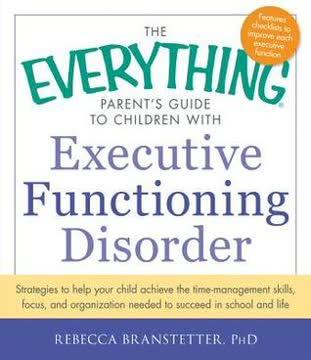
Get the complete 30-minute summary of The Everything Parent's Guide to Children with Executive Functioning Disorder
Get the complete summary in the appExecutive functioning is the brain's management system, and it can be strengthened with practice.
The Big Ten executive functions are task initiation, response inhibition, focus, time management, working memory, flexib
Difficulty starting a task is not the same as lack of motivation. It is a skill deficit that can be addressed with strat
Chronic lateness is often a time perception problem. Help your child develop an accurate sense of time by timing routine
Working memory has a limited capacity. Break instructions into smaller chunks to reduce the load.
Reasoning with a child in the middle of a meltdown is ineffective. Help them calm down first, then address the situation
"The Everything Parent's Guide to Children with Executive Functioning Disorder" is a strong fit if you want practical ideas around parenting, family, education, especially themes like executive functioning is the brain's management system, and it can be strengthened with practice; the big ten executive functions are task initiation, response inhibition, focus, time management, working memory, flexib. The MinuteRead summary distills these concepts into a focused read, whether you're deciding whether to buy the book or applying its lessons at work.
Rebecca Branstetter, Ph.D. is a school psychologist, author, and speaker dedicated to supporting children's well-being through education and mental health initiatives. She founded The Thriving School Psychologist Collective and co-created parenting courses focused on social-emotional learning and distance learning support. Branstetter's expertise in public school mental health has been featured in various national media outlets. She is a frequent speaker and has authored books on helping childre…
View all summaries by Rebecca BranstetterContinue Reading
Access the complete 30-minute summary and thousands more nonfiction books in the MinuteRead app.

Continue reading the complete summary in the MinuteRead app.