MinuteRead
30 min
Book summary
Premium summary · Opens in the app · 30 min read
Every parent wants their child to succeed. We obsess over reading levels, math scores, and whether our children will get into the right schools. We schedule tutoring sessions, enroll them in enrichment programs, and celebrate their academic achievements. But somewhere along the way, many of us overlook something far more predictive of lifelong success: emotional intelligence.
**Author:** Korrel W. Kanoy
**Estimated Reading Time:** 45 minutes
**What You'll Learn:**
- Why emotional intelligence matters more than IQ for long-term success - How to help your child recognize, understand, and manage emotions - Practical strategies for building empathy, impulse control, and resilience - How to model emotionally intelligent behavior as a parent - A complete framework for raising emotionally healthy children
**Who This Book Is For:**
Parents, caregivers, teachers, and anyone who wants to help children develop the emotional skills they need to thrive in school, relationships, and life. Whether you have a toddler or a teenager, the principles in this book apply across every stage of development.
Every parent wants their child to succeed. We obsess over reading levels, math scores, and whether our children will get into the right schools. We schedule tutoring sessions, enroll them in enrichment programs, and celebrate their academic achievements. But somewhere along the way, many of us overlook something far more predictive of lifelong success: emotional intelligence. Consider two children. The first child scores in the ninety-fifth percentile on standardized tests but struggles to make friends, falls apart when things don't go her way, and gives up at the first sign of difficulty. The second child scores in the seventieth percentile but navigates social situations with ease, persists through challenges, and manages frustration without melting down. Which child is more likely to thrive in college, in relationships, and in the workplace? The answer, according to decades of research, is almost certainly the second child. Emotional intelligence, often abbreviated as EI or EQ, refers to a set of skills that allow people to recognize, understand, and manage their own emotions while also navigating the emotions of others. These skills include self-awareness, empathy, impulse control, flexibility, stress tolerance, and optimism. Unlike IQ, which remains relatively stable after adolescence, emotional intelligence can be developed and strengthened throughout life. This means that every parent has the opportunity to help their child build these crucial skills. The problem is that most of us were never taught how to do this. Our own parents may have dismissed our feelings, punished our emotional outbursts, or simply didn't know how to talk about emotions. We grew up in a culture that often treats feelings as inconvenient obstacles rather than valuable information. As a result, many parents find themselves repeating patterns they swore they would never repeat, simply because they don't know what else to do. Korrel Kanoy's approach is different. Rather than treating emotional intelligence as an abstract concept or a personality trait that children either have or don't have, she presents it as a set of teachable skills. Just as children learn to play soccer, practice the piano,…
Continue reading in the MinuteRead app
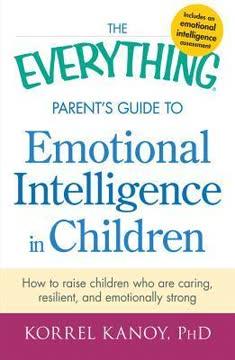
Get the complete 30-minute summary of The Everything Parent's Guide to Emotional Intelligence in Children
Get the complete summary in the appEmotional intelligence is a set of skills that can be taught, practiced, and developed throughout life.
Self-awareness is the foundation: children must recognize and name their emotions before they can manage them.
Use descriptive feedback instead of evaluative praise to build healthy self-regard.
Empathy develops through practice in perspective-taking. Ask children how others might feel.
Impulse control is like a muscle: it strengthens with practice. Start with small challenges.
Flexibility grows through gradual exposure to change. Introduce small variations to routines.
"The Everything Parent's Guide to Emotional Intelligence in Children" is a strong fit if you want practical ideas around parenting, especially themes like emotional intelligence is a set of skills that can be taught, practiced, and developed throughout life; self-awareness is the foundation: children must recognize and name their emotions before they can manage them. The MinuteRead summary distills these concepts into a focused read, whether you're deciding whether to buy the book or applying its lessons at work.
Korrel Kanoy is an author specializing in emotional intelligence and parenting. While specific details about her background are not provided, her work focuses on helping parents develop emotional intelligence in their children. Kanoy's approach likely draws from research and practical experiences in child development and psychology. As an expert in this field, she aims to provide parents with tools and strategies to nurture their children's emotional well-being. Kanoy's writing style and content…
View all summaries by Korrel W. KanoyContinue Reading
Access the complete 30-minute summary and thousands more nonfiction books in the MinuteRead app.

Continue reading the complete summary in the MinuteRead app.