MinuteRead
30 min
Book summary
Premium summary · Opens in the app · 30 min read
Every parent knows the feeling. You ask your child to do something. They ignore you. You ask again. They argue. You raise your voice. They raise theirs. Before you know it, everyone is angry, nothing has been accomplished, and you are left wondering where you went wrong.
**Author:** Carl Pickhardt
**Estimated Reading Time:** 45 minutes
**What You'll Learn:**
- Why positive discipline builds stronger parent-child relationships than punishment-based approaches - How to shift from constant correction to effective instruction - Age-specific strategies for toddlers through teenagers - How to navigate lying, peer pressure, and risky behaviors - Practical frameworks for fostering independence while maintaining boundaries
**Who This Book Is For:**
Parents who feel stuck in cycles of yelling, punishing, and frustration. Parents who want their children to cooperate out of respect rather than fear. Parents navigating the transition from managing young children to guiding teenagers. Anyone who wants to understand why children misbehave and how to respond in ways that actually teach lasting lessons.
Every parent knows the feeling. You ask your child to do something. They ignore you. You ask again. They argue. You raise your voice. They raise theirs. Before you know it, everyone is angry, nothing has been accomplished, and you are left wondering where you went wrong. This is the daily reality for millions of parents. The frustration is not a sign of failure. It is a sign that the tools most of us inherited from our own upbringing are inadequate for the job. We were taught that discipline means punishment. That obedience is the goal. That a firm hand and a stern voice will produce respectful children. But the evidence tells a different story. Children raised primarily through punishment often comply temporarily while harboring resentment. They learn to avoid getting caught rather than to make good choices. They obey when someone is watching and rebel when no one is. The relationship between parent and child becomes a contest of wills rather than a partnership of growth. Carl Pickhardt offers a fundamentally different vision of discipline. He argues that discipline is not about punishment at all. It is about teaching. The word itself comes from the Latin root meaning instruction. When we discipline a child, we are not simply correcting bad behavior. We are instructing them in how to live according to family values and within family rules. This distinction changes everything. When discipline becomes instruction, the parent becomes a teacher rather than an enforcer. The child becomes a learner rather than a defendant. The goal shifts from controlling behavior to building understanding. The relationship shifts from adversarial to collaborative. Positive discipline does not mean permissive parenting. It does not mean letting children do whatever they want. It means setting clear expectations, teaching those expectations consistently, and correcting violations in ways that preserve dignity and promote learning. It means spending far more time instructing than correcting. It means recognizing that children are not miniature adults but developing human beings whose brains, emotions, and…
Continue reading in the MinuteRead app
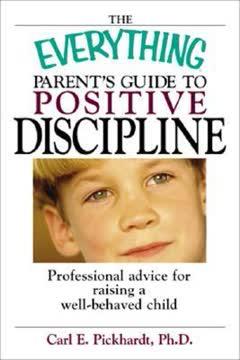
Get the complete 30-minute summary of The Everything Parent's Guide To Positive Discipline
Get the complete summary in the appDiscipline is teaching, not punishment. Focus on instruction over correction.
Aim for a 90 percent instruction to 10 percent correction ratio.
Use specific praise to reinforce positive behaviors.
Be consistent. Children thrive on predictability.
Adjust your discipline approach as your child grows.
Allow natural consequences to teach responsibility.
"The Everything Parent's Guide To Positive Discipline" is a strong fit if you want practical ideas around parenting, especially themes like discipline is teaching, not punishment. focus on instruction over correction; aim for a 90 percent instruction to 10 percent correction ratio. The MinuteRead summary distills these concepts into a focused read, whether you're deciding whether to buy the book or applying its lessons at work.
Carl E. Pickhardt , who also writes under the name C.E. Pickhardt, is the author of "The Everything Parent's Guide To Positive Discipline." As an author focused on parenting and family dynamics, Pickhardt has written a comprehensive guide to positive discipline techniques. His work aims to provide parents with strategies for effective communication and behavior management with their children. Pickhardt's approach emphasizes understanding and reframing challenging situations to improve parent-chi…
View all summaries by Carl PickhardtContinue Reading
Access the complete 30-minute summary and thousands more nonfiction books in the MinuteRead app.

Continue reading the complete summary in the MinuteRead app.