MinuteRead
30 min
Book summary
Premium summary · Opens in the app · 30 min read
Every parent believes their child is remarkable. But some parents notice something different early on. Their daughter asks questions that seem too sophisticated for her age. Their son remembers details from conversations that happened months ago. A three-year-old teaches herself to read. A five-year-old worries about fairness on the playground with an intensity that surprises adults.
**Author:** Sarah Herbert Robbins **Estimated Reading Time:** 45 minutes
**What You'll Learn:**
- How to recognize giftedness beyond test scores and report cards - Why gifted children often develop unevenly and what that means for daily life - How to navigate the social and emotional intensity that accompanies giftedness - What educational options actually work for gifted learners - How to handle perfectionism, underachievement, and twice-exceptionality - How to build a family environment where everyone thrives
**Who This Book Is For:**
Parents who suspect their child may be gifted or have already received confirmation. Educators seeking deeper understanding of gifted learners. Family members who want to support a gifted child without feeling overwhelmed. Anyone who has ever wondered why a bright child struggles in ways that seem contradictory.
Every parent believes their child is remarkable. But some parents notice something different early on. Their daughter asks questions that seem too sophisticated for her age. Their son remembers details from conversations that happened months ago. A three-year-old teaches herself to read. A five-year-old worries about fairness on the playground with an intensity that surprises adults. These moments bring both wonder and uncertainty. Is this normal? Should we do something differently? Are we imagining things? The truth is that raising a gifted child is not simply a matter of providing harder homework or skipping a grade. Giftedness shapes how a child experiences the world. It affects friendships, emotional reactions, family dynamics, and the way a child thinks about herself. A gifted child may read at a high school level while crying over a broken crayon like any other first grader. She may debate philosophy at dinner and struggle to tie her shoes. He may grasp complex mathematical concepts but feel utterly lost when trying to join a playground game. This book exists because parents of gifted children often feel alone. They receive conflicting advice from teachers, family members, and well-meaning friends. Some people tell them to push harder. Others tell them to relax and let the child be normal. Neither approach captures the full picture. The challenge is that giftedness is widely misunderstood. Many people equate it with high achievement, assuming that gifted children will naturally succeed without much help. But giftedness is not a guarantee of success. It is a way of experiencing the world with heightened intensity, unusual depth, and sometimes painful asynchrony. A gifted child may be years ahead intellectually while remaining right on track emotionally. This gap creates confusion for everyone involved. Sarah Herbert Robbins wrote this guide to help parents navigate that confusion with confidence. Her approach is grounded in both research and practical experience. She does not offer a one-size-fits-all formula because none exists. Instead, she…
Continue reading in the MinuteRead app
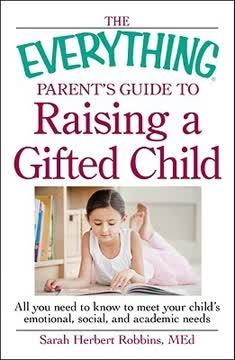
Get the complete 30-minute summary of The Everything Parent's Guide to Raising a Gifted Child
Get the complete summary in the appGiftedness is a way of being, not just a test score.
Asynchronous development is normal. Intellectual ability does not equal emotional maturity.
Emotional intensity is part of giftedness. Validate feelings while teaching coping skills.
Gifted children need true peers, not just age peers.
Twice-exceptional children need support for both their gifts and their challenges.
Praise effort and process, not innate ability. This counters perfectionism.
"The Everything Parent's Guide to Raising a Gifted Child" is a strong fit if you want practical ideas around parenting, especially themes like giftedness is a way of being, not just a test score; asynchronous development is normal. intellectual ability does not equal emotional maturity. The MinuteRead summary distills these concepts into a focused read, whether you're deciding whether to buy the book or applying its lessons at work.
Herbert Robbins Med is the author of The Everything Parent's Guide to Raising a Gifted Child . As an educator specializing in gifted education, Robbins brings expertise to the subject of parenting gifted children. His book covers a wide range of topics, from identifying giftedness to addressing common misconceptions and providing practical advice on discipline and communication. Robbins emphasizes the importance of understanding different types of giftedness and the unique challenges faced by gi…
View all summaries by Sarah Herbert RobbinsContinue Reading
Access the complete 30-minute summary and thousands more nonfiction books in the MinuteRead app.

Continue reading the complete summary in the MinuteRead app.