MinuteRead
30 min
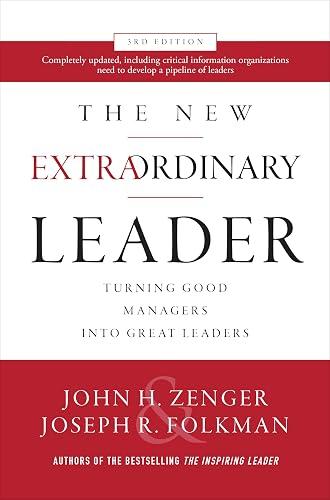
Book summary
by John H. Zenger
Premium summary · Opens in the app · 30 min read
Most organizations operate under a quiet but persistent assumption: leadership development is about fixing what is broken. Identify your weaknesses. Work on them. Become more well-rounded. The logic feels sound. After all, a leader with glaring deficiencies seems obviously limited. Yet this assumption, held by countless HR departments, executive coaches, and well-intentioned managers, has produced decades of mediocre results.
**Author:** John H. Zenger with Joseph Folkman
**Estimated Reading Time:** 45 minutes
**What You'll Learn:** Why the gap between good and extraordinary leadership is far larger than most people imagine, how strengths rather than weaknesses create exceptional leaders, and what specific competencies separate the top 10 percent from everyone else.
**Who This Book Is For:** Current leaders who want to move from competent to exceptional, aspiring leaders who want to build the right foundation, and anyone responsible for developing leadership talent in organizations.
Most organizations operate under a quiet but persistent assumption: leadership development is about fixing what is broken. Identify your weaknesses. Work on them. Become more well-rounded. The logic feels sound. After all, a leader with glaring deficiencies seems obviously limited. Yet this assumption, held by countless HR departments, executive coaches, and well-intentioned managers, has produced decades of mediocre results. John Zenger and Joseph Folkman began with a different question. Instead of asking what was wrong with poor leaders, they asked what was right with exceptional ones. What separates the top 10 percent of leaders from everyone else? Is the difference marginal, a matter of slightly better communication or marginally improved decision-making? Or is something more dramatic happening? The answer transformed their understanding of leadership entirely. Using a database of more than 200,000 leadership assessments covering over 20,000 managers, Zenger and Folkman discovered that the difference between good leaders and extraordinary leaders is not incremental. It is profound. Leaders in the top decile of effectiveness produce results that dwarf those of merely competent leaders. The gap is not 5 percent or 10 percent. It is often twofold, threefold, or more in measurable business outcomes. This finding carries enormous implications. It means that the stakes of leadership development are far higher than most organizations recognize. Moving a leader from average to good produces modest gains. Moving a leader from good to extraordinary transforms organizational performance. The question is not whether leadership matters. The question is whether organizations are willing to pursue the kind of development that actually creates extraordinary leaders. The book's second major insight is equally counterintuitive. Extraordinary leaders are not defined by the absence of weaknesses. They are defined by the presence of profound strengths. The best leaders have flaws. Sometimes significant ones. What sets them apart is that they possess three, four, or five competencies that they perform at a level that is genuinely exceptional. These strengths become their signature. They define how the leader adds value. They create followership, trust, and results. This insight inverts the traditional approach to leadership development. Instead of asking "What should I fix?" the better question becomes "What should I amplify?" Instead of pursuing well-roundedness, extraordinary leaders pursue distinctiveness. They…
Continue reading in the MinuteRead app
Get the complete 30-minute summary of The Extraordinary Leader
Get the complete summary in the appThe difference between good and extraordinary leadership is profound, not incremental. Top leaders produce twice the res
Strengths, not the absence of weaknesses, define extraordinary leadership. Build strengths rather than fixing weaknesses
One profound strength moves a leader from the 34th to the 64th percentile. Five strengths place them in the top 10 perce
Leadership consists of five clusters: character, personal capability, focus on results, interpersonal skills, and leadin
Powerful combinations amplify impact. Leaders strong in both interpersonal skills and results focus have a 72 percent ch
Fatal flaws must be addressed first. No amount of strength can compensate for a fundamental failure of character or inte
"The Extraordinary Leader" is a strong fit if you want practical ideas around leadership, business, management, especially themes like the difference between good and extraordinary leadership is profound, not incremental. top leaders produce twice the res; strengths, not the absence of weaknesses, define extraordinary leadership. build strengths rather than fixing weaknesses. The MinuteRead summary distills these concepts into a focused read, whether you're deciding whether to buy the book or applying its lessons at work.
Motivated to help readers with "The difference between really great leaders and the others is extraordinary." Quantifiable impact, John H. Zenger wrote “The Extraordinary Leader” to package those ideas for a fast, focused read. In “The Extraordinary Leader”, John H. Zenger focuses on "The difference between really great leaders and the others is extraordinary." Quantifiable impact. Through “The Extraordinary Leader”, John H. Zenger distills the core ideas on leadership into lessons readers can a…
Continue Reading
Access the complete 30-minute summary and thousands more nonfiction books in the MinuteRead app.

Continue reading the complete summary in the MinuteRead app.