MinuteRead
30 min
Book summary
Premium summary · Opens in the app · 30 min read
Every day, billions of people use money without questioning what it is or where it comes from. They work for it, save it, spend it, and borrow it, all while assuming that the monetary system operates according to rules that are natural, inevitable, and beyond their control. This assumption is wrong.
**Author:** Saifedean Ammous
**Estimated Reading Time:** 2 hours 15 minutes
**What You'll Learn:**
- How the world transitioned from gold-backed money to government-controlled fiat currency - Why fiat money fundamentally changes human behavior, incentives, and time preferences - How the fiat system distorts science, food, energy, and international development - Why Bitcoin represents a genuine alternative to the fiat monetary order - How Bitcoin's technical properties could reshape the global financial system
**Who This Book Is For:**
This book is for anyone who has ever wondered why prices keep rising, why debt seems unavoidable, why governments can spend without limit, and why saving money feels like a losing game. It is for readers who sense that something is wrong with the global financial system but cannot quite articulate what it is. It is for those who have heard about Bitcoin and want to understand not just how it works, but why it matters in the broader sweep of economic history. No background in economics is required, only curiosity about the hidden forces shaping modern life.
Every day, billions of people use money without questioning what it is or where it comes from. They work for it, save it, spend it, and borrow it, all while assuming that the monetary system operates according to rules that are natural, inevitable, and beyond their control. This assumption is wrong. Money is not a neutral tool. The type of money a society uses shapes its incentives, its values, its institutions, and its future. A monetary system built on sound money, money that holds its value over time, encourages saving, long-term thinking, and productive investment. A monetary system built on money that loses value continuously encourages spending, borrowing, and short-term gratification. The difference between these two systems is not merely technical. It is civilizational. For most of human history, the world operated on sound money. Gold and silver served as the foundation of monetary systems because they were scarce, difficult to produce, and impossible to counterfeit. Governments could not create gold out of thin air. When they spent more than they collected in taxes, they had to borrow real savings from their citizens or from foreign lenders. This constraint imposed discipline. It forced governments to prioritize. It prevented endless wars and unlimited welfare programs. It protected savers from the silent theft of inflation. That world is gone. Today, every major economy operates on fiat money, currency that has value only because a government says it does. Fiat money is not backed by gold, silver, or any physical commodity. It is backed by nothing except the power of the state to demand its use in payment of taxes and the willingness of citizens to accept it…
Continue reading in the MinuteRead app
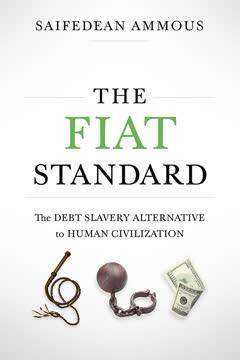
Get the complete 30-minute summary of The Fiat Standard
Get the complete summary in the appThe fiat standard began when governments defaulted on their gold obligations, starting with Britain in 1915 and ending w
Fiat money is created through lending. Banks create new money when they issue loans, which means the entire system depen
The Cantillon Effect means that new money benefits those closest to the money creation process, which is why the rich ha
Fiat money destroys saving by making it a losing strategy. Inflation punishes savers and rewards borrowers.
The fiat standard has enabled an unprecedented expansion of government power by allowing governments to spend without ta
Government funding of science, food, energy, and development has distorted these sectors, producing worse outcomes than
"The Fiat Standard" is a strong fit if you want practical ideas around economics, finance, money, especially themes like the fiat standard began when governments defaulted on their gold obligations, starting with britain in 1915 and ending w; fiat money is created through lending. banks create new money when they issue loans, which means the entire system depen. The MinuteRead summary distills these concepts into a focused read, whether you're deciding whether to buy the book or applying its lessons at work.
Saifedean Ammous is an economist and best-selling author known for his work on Bitcoin and Austrian economics. He authored "The Bitcoin Standard" and "The Fiat Standard," both widely translated and popular in cryptocurrency circles. Ammous holds a PhD in Sustainable Development from Columbia University and has taught economics at the Lebanese American University. He currently offers online courses on Bitcoin economics and Austrian economics through his platform Saifedean.com. Ammous also hosts "…
View all summaries by Saifedean AmmousContinue Reading
Access the complete 30-minute summary and thousands more nonfiction books in the MinuteRead app.

Continue reading the complete summary in the MinuteRead app.