 MinuteRead
30 min
Book summary
Premium summary · Opens in the app · 30 min read
Most organizations are filled with capable, intelligent, well-intentioned people. Yet these same organizations repeatedly make decisions that produce disappointing results. They launch initiatives that fizzle. They solve problems that reappear months later in a different form. They create strategies that look brilliant on paper but collapse in practice.
**Author:** Peter M. Senge with Art Kleiner, Charlotte Roberts, Richard Ross, and Bryan Smith
**Estimated Reading Time:** 45 minutes
**What You'll Learn:** - How to see the hidden patterns that shape organizational behavior - Why individual learning rarely translates into organizational learning - Practical tools for building teams that genuinely think together - How to create a shared vision that generates commitment rather than compliance - The leadership practices that cultivate lasting learning cultures
**Who This Book Is For:** This book is for anyone who has ever felt that their organization is stuck in repetitive patterns, that smart people are making poor collective decisions, or that the whole is somehow less than the sum of its parts. It is for managers, team leaders, educators, and change agents who suspect that the most important work happens beneath the surface of daily operations.
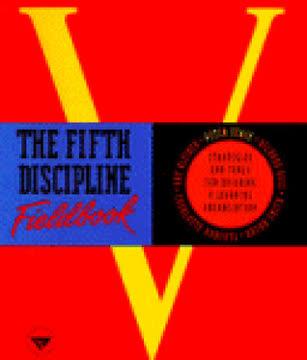
Most organizations are filled with capable, intelligent, well-intentioned people. Yet these same organizations repeatedly make decisions that produce disappointing results. They launch initiatives that fizzle. They solve problems that reappear months later in a different form. They create strategies that look brilliant on paper but collapse in practice. Why does this happen? Peter Senge and his colleagues at MIT's Center for Organizational Learning spent years studying this question. Their conclusion was both simple and profound: organizations fail not because people are incompetent or unmotivated, but because they are trapped in ways of thinking that prevent them from seeing the systems they are part of. Consider a familiar scenario. A company faces declining sales. The sales team is blamed. Pressure mounts. The sales team responds by pushing harder, offering discounts, making more calls. Sales briefly improve. Then they decline again, now with lower margins. The company responds with more pressure. The cycle continues, each turn making the situation worse. Everyone is working harder, yet the problem deepens. The people in this scenario are not stupid. They are not lazy. They are trapped in a structure they cannot see. They are responding to events rather than understanding the patterns that generate those events. They are treating symptoms rather than addressing causes. This is the central problem The Fifth Discipline Fieldbook addresses. The book is not a theoretical treatise. It is a practical guide, written by practitioners for practitioners, filled with exercises, stories, and tools developed in real organizations facing real challenges. The core argument is that organizations need to become learning organizations: places where people continually expand their capacity to create the results they truly desire, where new patterns of thinking are nurtured, where collective aspiration is set free, and where people are continually learning how to learn together. This is not a soft, feel-good aspiration. It is a survival imperative.…
Continue reading in the MinuteRead app
Get the complete 30-minute summary of The Fifth Discipline Fieldbook
Get the complete summary in the app**Structure influences behavior.** To change behavior, change the structure that generates it.
**See the system.** Look for patterns of behavior over time, not just isolated events.
**Identify feedback loops.** Reinforcing loops amplify change. Balancing loops resist change.
**Expect delays.** Consequences often appear long after their causes.
**Clarify your vision.** Creative tension between vision and reality is the engine of growth.
**Surface your mental models.** Unexamined assumptions are barriers to learning.
"The Fifth Discipline Fieldbook" is a strong fit if you want practical ideas around business, leadership, management, especially themes like **structure influences behavior.** to change behavior, change the structure that generates it; **see the system.** look for patterns of behavior over time, not just isolated events. The MinuteRead summary distills these concepts into a focused read, whether you're deciding whether to buy the book or applying its lessons at work.
Peter M. Senge is a renowned author and expert in organizational development. He is best known for his work on learning organizations and systems thinking. Senge's groundbreaking book, "The Fifth Discipline," introduced the concept of the learning organization and established him as a leading thinker in the field. He has authored and co-authored several other books on organizational learning and leadership. Senge is a senior lecturer at the MIT Sloan School of Management and the founder of the S…
View all summaries by Peter M.; Kleiner SengeContinue Reading
Access the complete 30-minute summary and thousands more nonfiction books in the MinuteRead app.

Continue reading the complete summary in the MinuteRead app.






