MinuteRead
30 min
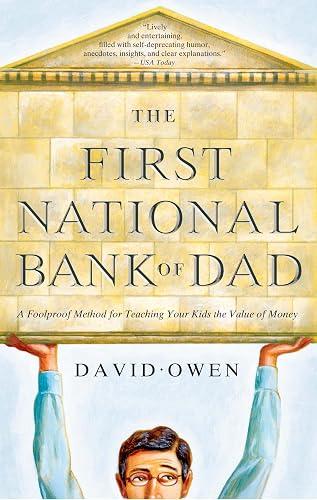
Book summary
by David Owen
Premium summary · Opens in the app · 30 min read
Every parent wants their children to grow up to be responsible with money. We imagine our kids becoming adults who save for the future, spend thoughtfully, invest wisely, and give generously. We picture them avoiding the financial mistakes that plague so many people: crushing credit card debt, impulsive purchases, a lifetime of living paycheck to paycheck.
**Author:** David Owen
**Estimated Reading Time:** 45 minutes
**What You'll Learn:** How to raise financially literate children by giving them real control over money, creating systems that make saving attractive, and using everyday experiences as powerful teaching tools.
**Who This Book Is For:** Parents who want their children to develop healthy financial habits, grandparents looking for meaningful ways to contribute to their grandchildren's education, and anyone who has ever wondered why traditional approaches to teaching kids about money so often fail.
Every parent wants their children to grow up to be responsible with money. We imagine our kids becoming adults who save for the future, spend thoughtfully, invest wisely, and give generously. We picture them avoiding the financial mistakes that plague so many people: crushing credit card debt, impulsive purchases, a lifetime of living paycheck to paycheck. So we try to teach them. We give them piggy banks. We lecture them about the importance of saving. We pay them for chores and expect them to learn the value of a dollar. We open savings accounts at real banks and show them the statements. We tell them money doesn't grow on trees. And then we watch in frustration as they blow their birthday money on plastic toys that break within a week. We see them treat their allowance as an entitlement rather than an opportunity to learn. We notice that the savings account we opened for them sits untouched, earning a fraction of a percent in interest, teaching them nothing except that saving is boring and pointless. David Owen, a staff writer for The New Yorker, faced this exact problem with his own children. He tried the conventional approaches and watched them fail. His daughter treated her allowance as a minor inconvenience in her otherwise fully funded life. His son showed no interest in the savings account that was supposed to teach him about compound interest. The lessons weren't landing. Then Owen had a realization that changed everything: the reason his children weren't learning about money was that the money they were spending wasn't really theirs. They had no skin in the game. When a child asks for something and a parent says yes or no, the child learns nothing about trade-offs, opportunity costs, or the relationship between saving and spending. They learn only how to ask more effectively. The solution Owen developed was radical in its simplicity. He gave his children genuine control over their own money. He created a "Bank of Dad" that paid interest rates high enough to make saving visibly rewarding. He let his children make their own spending decisions, even when those decisions were clearly mistakes. He built a home stock exchange where his kids could…
Continue reading in the MinuteRead app
Get the complete 30-minute summary of The First National Bank of Dad
Get the complete summary in the appGive children genuine control over their money. No veto power, no confiscation, no lectures.
Let children make mistakes. The lessons learned from mistakes are more powerful than any lecture.
Create a Bank of Dad with high interest rates to make saving visibly rewarding.
Separate allowances from chores. Allowances teach financial literacy. Chores teach family responsibility.
Create a home stock exchange to give children hands-on investing experience.
Use eBay as a laboratory for learning about commerce and economics.
"The First National Bank of Dad" is a strong fit if you want practical ideas around parenting, finance, money, especially themes like give children genuine control over their money. no veto power, no confiscation, no lectures; let children make mistakes. the lessons learned from mistakes are more powerful than any lecture. The MinuteRead summary distills these concepts into a focused read, whether you're deciding whether to buy the book or applying its lessons at work.
Motivated to help readers with if the money they spend isn't truly theirs, David Owen wrote “The First National Bank of Dad” to package those ideas for a fast, focused read. In “The First National Bank of Dad”, David Owen focuses on if the money they spend isn't truly theirs. Through “The First National Bank of Dad”, David Owen distills the core ideas on parenting into lessons readers can absorb in a single short sitting. Readers turn to this work when they want David Owen's perspective on the s…
Continue Reading
Access the complete 30-minute summary and thousands more nonfiction books in the MinuteRead app.

Continue reading the complete summary in the MinuteRead app.