MinuteRead
30 min
Book summary
Premium summary · Opens in the app · 30 min read
In the spring of 1775, the idea that thirteen scattered colonies could defeat the British Empire seemed absurd. Britain possessed the world's most powerful navy, a professional army hardened by decades of global conflict, and the financial resources of an empire spanning continents. The American colonies had no standing army, no navy, no central government, and no unified currency. They were, by any rational measure, doomed.
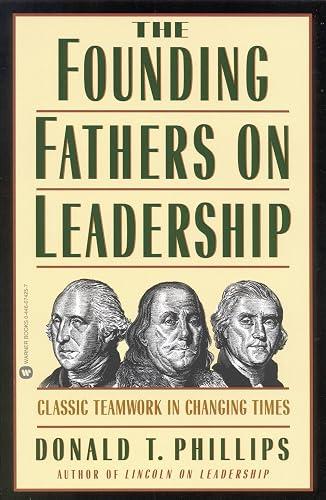
**Author:** Donald T. Phillips
**Estimated Reading Time:** 45 minutes
**What You'll Learn:**
- How a group of colonists transformed themselves into revolutionary leaders - The communication strategies that rallied a nation to independence - Why resilience, not brilliance, won the American Revolution - How compromise built the most enduring democracy in history - Practical leadership lessons you can apply immediately
**Who This Book Is For:**
Leaders who face overwhelming odds. Managers navigating change. Entrepreneurs building something from nothing. Anyone who wants to understand how ordinary people accomplish extraordinary things through vision, teamwork, and relentless persistence.
In the spring of 1775, the idea that thirteen scattered colonies could defeat the British Empire seemed absurd. Britain possessed the world's most powerful navy, a professional army hardened by decades of global conflict, and the financial resources of an empire spanning continents. The American colonies had no standing army, no navy, no central government, and no unified currency. They were, by any rational measure, doomed. Yet eight years later, the impossible happened. A collection of farmers, merchants, lawyers, and tradesmen defeated the greatest military power on earth and established a new form of government that would reshape human history. How did they do it? The answer lies not in superior weaponry or fortunate circumstances. The answer lies in leadership. The American Revolution was won not by soldiers alone but by leaders who understood how to inspire ordinary people to do extraordinary things. It was won by men who could articulate a vision so compelling that people would risk their lives, their fortunes, and their sacred honor to achieve it. Donald T. Phillips examines this remarkable period through the lens of leadership. He argues that the Founding Fathers were not merely politicians and statesmen. They were masterful leaders who understood principles that remain as relevant today as they were in 1776. They knew how to communicate with clarity and passion. They knew how to build teams of talented individuals. They knew how to persevere through devastating setbacks. They knew how to compromise without abandoning core principles. The story of the American Revolution is often told as a series of events: the Boston Tea Party, the Declaration of Independence, Valley Forge, Yorktown. But beneath these events lies a deeper story about how leadership works in practice. It is a story about how vision becomes action, how groups become teams, how setbacks become opportunities, and how ideals become institutions. What makes this story particularly valuable is that the Founding Fathers were not born leaders. They learned leadership through trial and error, through failure and adaptation. George Washington lost more battles than he won. Benjamin Franklin faced repeated rejection before securing French support. Thomas Jefferson struggled with public…
Continue reading in the MinuteRead app
Get the complete 30-minute summary of The Founding Fathers on Leadership
Get the complete summary in the app**Create awareness before expecting action.** People must understand why change is necessary before they will embrace it
**Build teams of people whose strengths complement your own.** No leader accomplishes anything alone.
**Listen first, then speak.** Understanding others is the foundation of effective communication.
**Turn setbacks into strength.** Extract lessons from every failure and adapt your approach.
**Refuse to lose.** Persistence is often the difference between success and failure.
**Take calculated risks.** Assess the situation, prepare thoroughly, and act boldly when the odds favor action.
"The Founding Fathers on Leadership" is a strong fit if you want practical ideas around leadership, history, business, especially themes like **create awareness before expecting action.** people must understand why change is necessary before they will embrace it; **build teams of people whose strengths complement your own.** no leader accomplishes anything alone. The MinuteRead summary distills these concepts into a focused read, whether you're deciding whether to buy the book or applying its lessons at work.
Motivated to help readers with "We hold these truths to be self-evident: that all men are created equal; that they are endowed by their, Donald T. Phillips wrote “The Founding Fathers on Leadership” to package those ideas for a fast, focused read. In “The Founding Fathers on Leadership”, Donald T. Phillips focuses on "We hold these truths to be self-evident: that all men are created equal; that they are endowed by their. Through “The Founding Fathers on Leadership”, Donald T. Phillips distills t…
View all summaries by Donald T. PhillipsContinue Reading
Access the complete 30-minute summary and thousands more nonfiction books in the MinuteRead app.

Continue reading the complete summary in the MinuteRead app.