MinuteRead
30 min
Book summary
by Freddy Ballé
Premium summary · Opens in the app · 30 min read
Bob Woods had a problem. His company, a manufacturer of automotive components, was losing money. Customers were complaining about late deliveries. Inventory was piling up in the warehouse. Every attempt to fix things seemed to make the situation worse. He had tried cost-cutting programs, new software systems, and motivational speeches. Nothing worked.
**Author:** Freddy Ballé
**Estimated Reading Time:** 42 minutes
**What You'll Learn:**
- Why delivery to the customer matters more than anything else - How to see waste hiding in plain sight throughout your operations - What pull systems are and why they transform production - How to develop people before you develop processes - Why leadership behavior determines whether lean transformation succeeds or fails - How to balance stability and flexibility in production - What heijunka means and why it smooths the chaos of demand
**Who This Book Is For:**
This book is for anyone who manages operations, leads teams, or wants to understand why some organizations seem to improve continuously while others stagnate. It is for the plant manager frustrated by late deliveries and rising inventory. It is for the executive who senses that cost-cutting alone will not save the business. It is for the curious reader who wants to understand the thinking behind Toyota's legendary production system, not just the tools. If you have ever wondered why some factories flow smoothly while others lurch from crisis to crisis, this book will show you the answer.
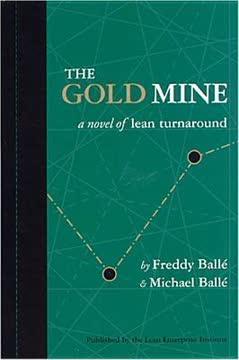
Bob Woods had a problem. His company, a manufacturer of automotive components, was losing money. Customers were complaining about late deliveries. Inventory was piling up in the warehouse. Every attempt to fix things seemed to make the situation worse. He had tried cost-cutting programs, new software systems, and motivational speeches. Nothing worked. Then his father-in-law, a retired executive with deep experience in lean manufacturing, offered to help. What followed was a journey through the heart of a struggling factory, a journey that revealed something surprising: the problem was not the people. The problem was the system. And the system could be changed. This is the story told in *The Gold Mine*, a novel by Freddy Ballé that teaches lean manufacturing principles through narrative. The book follows Bob Woods as he learns to see his factory differently, guided by his father-in-law and a wise sensei who understands that real improvement happens on the shop floor, not in the boardroom. The title comes from a central metaphor. The factory is a gold mine. The gold is not in the machinery or the inventory. The gold is in the people, in their knowledge, their creativity, and their ability to solve problems. Most managers never see this gold because they are too busy looking at spreadsheets and quarterly reports. They walk past the real source of value every day without recognizing it. Why do so many organizations struggle to improve? The answer is that they focus on the wrong things. They focus on cost reduction before they focus on delivery. They focus on efficiency before they focus…
Continue reading in the MinuteRead app
Get the complete 30-minute summary of The Gold Mine
Get the complete summary in the appDelivery comes first, then inventory reduction, then cost. Follow the sequence.
The gold is in the people. Develop people before you develop processes.
Go to the gemba. See reality with your own eyes. Do not manage from the office.
Map your value stream. You cannot improve what you cannot see.
Pull, do not push. Produce only what the next process needs, when it needs it.
Standardize work, then improve it. The cycle of standardization and kaizen drives continuous improvement.
"The Gold Mine" is a strong fit if you want practical ideas around business, management, leadership, especially themes like delivery comes first, then inventory reduction, then cost. follow the sequence; the gold is in the people. develop people before you develop processes. The MinuteRead summary distills these concepts into a focused read, whether you're deciding whether to buy the book or applying its lessons at work.
Freddy Balle is an author known for his work on lean manufacturing and business improvement. He co-authored "The Gold Mine" with Michael Ballé, presenting lean concepts through a fictional narrative. Balle's approach combines storytelling with practical business insights, making complex ideas more accessible to readers. His work often focuses on the human aspects of implementing lean principles, emphasizing the importance of leadership and cultural change in organizational transformation. Balle'…
View all summaries by Freddy BalléContinue Reading
Access the complete 30-minute summary and thousands more nonfiction books in the MinuteRead app.

Continue reading the complete summary in the MinuteRead app.