MinuteRead
30 min
Book summary
Premium summary · Opens in the app · 30 min read
Simply put, we face a crisis of self-regulation.
**Author:** Katherine Reynolds Lewis **Estimated Reading Time:** 45 minutes
**What You'll Learn** Why the old rules of discipline stopped working, what children actually need to develop self-control, and how to build a family culture where misbehavior becomes an opportunity rather than a crisis.
**Who This Book Is For** Parents who feel exhausted by constant power struggles, educators searching for approaches that actually work, and anyone who suspects that punishment and rewards are failing an entire generation of children.
Something has changed. Walk through any elementary school hallway, sit in any restaurant with young families, or spend an afternoon at a playground and you will sense it. Children today seem less capable of managing their emotions, less able to handle disappointment, and more prone to explosive reactions than children a generation ago. Teachers report spending more time managing behavior than delivering instruction. Parents describe feeling like hostage negotiators in their own homes. The statistics confirm what intuition suggests. Rates of anxiety and depression among children and adolescents have climbed steadily for decades. Diagnoses of attention disorders have multiplied. Emotional outbursts that would have been remarkable thirty years ago have become routine. Something fundamental has shifted in how children develop the capacity for self-control. Katherine Reynolds Lewis spent years investigating this shift as a journalist covering education, parenting, and workplace dynamics. What she discovered surprised her. The problem is not that children today are somehow defective or that parents have become permissive. The problem is that the conditions children need to develop self-regulation have been systematically dismantled by changes in how we live, work, and structure childhood. Children need three things to develop the ability to manage their own behavior. They need deep connection with caring adults. They need abundant opportunities for unstructured play, especially outdoors and with other children. And they need gradually increasing responsibility that allows them to practice making decisions and experiencing consequences in a safe environment. Over the past several decades, all three of these pillars have eroded. Connection has been weakened by the fragmentation of family life. Parents work longer hours. Families eat fewer meals together. Digital devices compete for attention even when family members share physical space. Children spend more time in structured activities and less time simply being with the adults who love them. Unstructured play has nearly vanished from childhood. Recess has been shortened or eliminated in many schools. Outdoor exploration has been replaced by screen time. Organized sports and enrichment activities, valuable in their own right, have crowded out the free, child-directed play that builds executive function and emotional regulation. Children no longer spend hours negotiating the rules of invented games, resolving disputes without adult intervention, and learning through direct experience how to…
Continue reading in the MinuteRead app
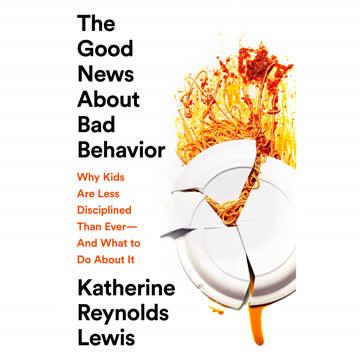
Get the complete 30-minute summary of The Good News About Bad Behavior
Get the complete summary in the appChildren misbehave because they lack skills, not because they choose to be difficult. Ask "What skill is missing?" rathe
Connection comes before correction. A child who feels connected wants to cooperate. A child who feels disconnected has n
Empathy reduces the intensity of difficult emotions. Acknowledge feelings before trying to solve problems.
Unstructured play is not optional. It is how children build self-regulation. Protect time for free, child-directed play
Punishment suppresses behavior temporarily but does not teach skills. Focus on building capability, not imposing sufferi
Solve problems with children, not for them. Solutions they help create are solutions they are motivated to follow.
"The Good News About Bad Behavior" is a strong fit if you want practical ideas around parenting, education, psychology, especially themes like children misbehave because they lack skills, not because they choose to be difficult. ask "what skill is missing?" rathe; connection comes before correction. a child who feels connected wants to cooperate. a child who feels disconnected has n. The MinuteRead summary distills these concepts into a focused read, whether you're deciding whether to buy the book or applying its lessons at work.
Katherine Reynolds Lewis is an accomplished journalist based in the Washington, DC area. Her work focuses on parenting, education, and workplace issues, with articles appearing in prestigious publications such as The Atlantic, Fortune, the New York Times, and the Washington Post Magazine. Lewis's expertise in child psychology and parenting strategies is evident in her book, which draws on extensive research and real-world examples. Her approach combines journalistic rigor with personal experienc…
View all summaries by Katherine Reynolds LewisContinue Reading
Access the complete 30-minute summary and thousands more nonfiction books in the MinuteRead app.

Continue reading the complete summary in the MinuteRead app.