 MinuteRead
30 min
Book summary
Premium summary · Opens in the app · 30 min read
The conference room was filled with senior executives. The PowerPoint deck contained 147 slides. The data was impeccable. The logic was airtight. The case for change was undeniable. And yet, six months later, nothing had happened.
**Author:** John P. Kotter **Estimated Reading Time:** 45 minutes
**What You'll Learn:** Why most large-scale change efforts fail and how to make yours succeed. This book reveals that the heart of change is not strategy, data, or systems but emotion. You will learn the eight-step framework for leading transformation, grounded in a simple but profound truth: people change what they do less because they are given analysis that shifts their thinking than because they are shown a truth that influences their feelings.
**Who This Book Is For:** Leaders who have tried to drive change and met resistance. Managers frustrated by rational arguments that go nowhere. Anyone who needs to move an organization, a team, or even themselves toward a new way of operating. If you have ever wondered why smart people reject good ideas, this book holds the answer.
The conference room was filled with senior executives. The PowerPoint deck contained 147 slides. The data was impeccable. The logic was airtight. The case for change was undeniable. And yet, six months later, nothing had happened. This scene plays out in organizations every day. A leader identifies a threat or an opportunity, builds a rational case, presents the analysis, and expects people to act. When they do not, the leader assumes the argument was not clear enough. So they add more data. More slides. More logic. And still, nothing changes. John Kotter spent decades studying why some organizations successfully transform themselves while most fail. The answer surprised many people. The central issue is never strategy, structure, or systems. It is behavior. And behavior change does not happen through analysis that shifts thinking. It happens through experiences that shift feelings. People change what they do less because they are given analysis that changes their thoughts than because they are shown a truth that influences their emotions. This is the heart of change. It is not an argument against rational thinking. It is an argument for understanding how human beings actually function. We are not purely logical creatures who occasionally feel emotions. We are emotional creatures who occasionally think logically. The emotional brain processes information faster and with greater influence on behavior than the rational brain. If you ignore this reality, your change effort will fail. The book you are about to read distills Kotter's research into a practical framework. It follows an eight-step process for leading change, but the steps are not the real insight. The real insight is the see-feel-change dynamic that makes each step work. When people see a problem with their own eyes, they feel something in their gut. That feeling reduces complacency and resistance. It creates urgency. It motivates action. Analysis alone rarely does this. This is not…
Continue reading in the MinuteRead app
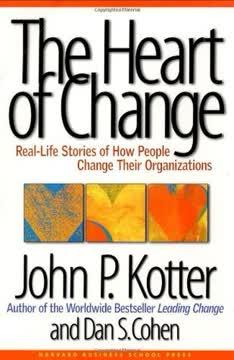
Get the complete 30-minute summary of The Heart of Change
Get the complete summary in the appBehavior change happens through see-feel-change, not analyze-think-change. Create experiences that shift feelings.
Build urgency by showing people problems and opportunities in visceral ways. Data supports urgency but rarely creates it
Assemble a guiding coalition with the right mix of power, expertise, credibility, and leadership. Invest in making them
Create a vision that is imaginable, desirable, feasible, focused, flexible, and communicable. People need to see and fee
Communicate the vision ten times more than you think necessary. Use every channel. Model it through your behavior.
Remove barriers that prevent people from acting on the vision. Structures, systems, skills, and resistant supervisors ar
"The Heart of Change" is a strong fit if you want practical ideas around business, leadership, management, especially themes like behavior change happens through see-feel-change, not analyze-think-change. create experiences that shift feelings; build urgency by showing people problems and opportunities in visceral ways. data supports urgency but rarely creates it. The MinuteRead summary distills these concepts into a focused read, whether you're deciding whether to buy the book or applying its lessons at work.
John P. Kotter is a renowned expert on leadership and organizational change. He is the Konosuke Matsushita Professor of Leadership, Emeritus at Harvard Business School and has authored numerous books on change management. Kotter's works include "Leading Change," "Our Iceberg is Melting," and "That's Not How We Do It Here!" He co-founded Kotter International, a firm specializing in change management and strategy execution. Kotter's approach focuses on engaging employees to drive sustainable chang…
View all summaries by John P. KotterContinue Reading
Access the complete 30-minute summary and thousands more nonfiction books in the MinuteRead app.

Continue reading the complete summary in the MinuteRead app.






