MinuteRead
30 min
Book summary
by Ron Chernow
Premium summary · Opens in the app · 30 min read
There is a peculiar paradox at the heart of modern finance. We live in an age of enormous banks, trillion-dollar balance sheets, and financial institutions so large they are deemed too big to fail. Yet for all their size and reach, these institutions have become strangely anonymous. Their leaders are rarely household names. Their influence, while vast, is diffuse and impersonal. No single banker today could summon the heads of the largest financial institutions into a private library, lock the d
**Author:** Ron Chernow
**Estimated Reading Time:** 45 minutes
**What You'll Learn:** How a single banking dynasty shaped the financial architecture of the modern world, the unwritten codes that governed high finance for over a century, and why the era of the gentleman banker can never return.
**Who This Book Is For:** Anyone who wants to understand the hidden history of Anglo-American finance, the personalities who built global capitalism, and the forces that transformed banking from a private club into a ruthless global marketplace.
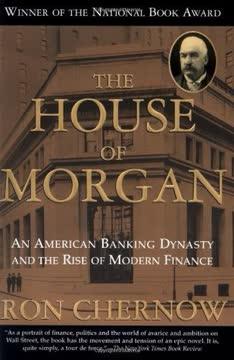
There is a peculiar paradox at the heart of modern finance. We live in an age of enormous banks, trillion-dollar balance sheets, and financial institutions so large they are deemed too big to fail. Yet for all their size and reach, these institutions have become strangely anonymous. Their leaders are rarely household names. Their influence, while vast, is diffuse and impersonal. No single banker today could summon the heads of the largest financial institutions into a private library, lock the doors, and demand they cooperate to save the economy from collapse. That is precisely what J. Pierpont Morgan did in 1907. The story of the House of Morgan is not merely a corporate history or a family saga. It is the story of how finance evolved from a personal, relationship-driven enterprise into the impersonal, market-driven system we know today. It is a story about power: how it is acquired, how it is wielded, and how it eventually dissipates. It is also a story about character, about the peculiar blend of moralism and ruthlessness that defined the men who built the most influential banking dynasty in Anglo-American history. Ron Chernow's achievement in The House of Morgan is to make this sprawling history feel intimate and immediate. He traces the Morgan story across 150 years and four generations, from the cramped counting houses of Victorian London to the gleaming towers of modern Wall Street. Along the way, he introduces us to a cast of characters who seem almost fictional in their larger-than-life qualities: George Peabody, the frugal Baltimore merchant who founded the dynasty in London; Junius Spencer Morgan, the stern patriarch who transformed a modest merchant house into a financial powerhouse; J. Pierpont Morgan, the red-faced, rhinophymic titan whose very presence could calm panics and terrify presidents; and the generations of partners who followed, men who inherited a tradition and then watched it dissolve under the pressures of war, depression, and deregulation. The book addresses a question that has become increasingly urgent in our own era of financial instability: What is the proper relationship between private capital and public power? For much of the Morgan era, the answer was ambiguous. The House of Morgan operated as a quasi-governmental institution,…
Continue reading in the MinuteRead app
Get the complete 30-minute summary of The House of Morgan
Get the complete summary in the appThe House of Morgan began with George Peabody, a Baltimore merchant who built his business on personal reputation and tr
Junius Morgan transformed Peabody's firm into a dynasty, emphasizing conservative principles and calculated risk-taking.
J. Pierpont Morgan embodied both the promise and the peril of concentrated financial power.
The Gentleman Banker's Code created stability but limited competition and bred popular suspicion.
The panic of 1907 demonstrated Morgan's power and led to the creation of the Federal Reserve.
World War I marked the high point of Morgan influence and the beginning of its decline.
"The House of Morgan" is a strong fit if you want practical ideas around history, biography, business, especially themes like the house of morgan began with george peabody, a baltimore merchant who built his business on personal reputation and tr; junius morgan transformed peabody's firm into a dynasty, emphasizing conservative principles and calculated risk-taking. The MinuteRead summary distills these concepts into a focused read, whether you're deciding whether to buy the book or applying its lessons at work.
Ron Chernow is an acclaimed American biographer and journalist born in 1949. He began his career as a freelance writer before working at a think tank, which sparked his interest in financial history. His first book, The House of Morgan, won the National Book Award in 1990 and launched his career as a biographer. Chernow has since written several bestselling biographies of prominent figures in American history and finance, including John D. Rockefeller and Alexander Hamilton. He is known for his …
View all summaries by Ron ChernowContinue Reading
Access the complete 30-minute summary and thousands more nonfiction books in the MinuteRead app.

Continue reading the complete summary in the MinuteRead app.