 MinuteRead
30 min
Book summary
by Nathan Furr
Premium summary · Opens in the app · 30 min read
Every year, thousands of new products launch with great fanfare. Teams have spent months planning, building, and refining. Market research suggested strong demand. Financial models projected healthy returns. Executives signed off with confidence.
**Author:** Nathan Furr
**Estimated Reading Time:** 45 minutes
**What You'll Learn:**
- Why traditional management fails when facing uncertainty - How to discover customer problems worth solving - How to prototype and test solutions rapidly - How to validate business models before scaling - How to pivot effectively when assumptions prove wrong - How to transition from exploration to execution
**Who This Book Is For:**
Entrepreneurs launching new ventures, managers inside established companies tasked with innovation, product leaders seeking systematic approaches to uncertainty, and anyone who has ever wondered why so many promising ideas fail despite careful planning.
Every year, thousands of new products launch with great fanfare. Teams have spent months planning, building, and refining. Market research suggested strong demand. Financial models projected healthy returns. Executives signed off with confidence. And then nothing happens. The product sits on shelves. The app gets downloaded once and deleted. The service attracts a trickle of customers who quickly churn. The company quietly discontinues the offering and everyone moves on, a little more cynical about innovation than before. This pattern repeats across industries, geographies, and company sizes. It happens in startups and Fortune 500 companies alike. The specific details vary, but the underlying cause remains remarkably consistent: the teams applied management practices designed for certainty to problems defined by uncertainty. Traditional management emerged during the industrial revolution, when the primary challenge was executing known business models efficiently. You knew what product you were making. You knew who your customers were. You knew your cost structure and distribution channels. The job of management was to optimize, standardize, and scale. Planning, budgeting, and execution were the core competencies. But innovation operates under fundamentally different conditions. When you are creating something genuinely new, you do not know what product will work. You do not know who your customers will be. You do not know which business model will prove viable. You are not executing a known plan. You are searching for an unknown answer. Applying execution-oriented management to search-oriented problems produces predictable failures. Detailed business plans become works of fiction. Customer surveys capture what people say, not what they will do. Stage-gate processes kill promising ideas before they have a chance to evolve. Teams become discouraged as their carefully planned projects collapse upon contact with reality. Nathan Furr, a professor of innovation and strategy at INSEAD, observed this pattern across hundreds of companies and thousands of innovation attempts. He noticed something else too: a new set of tools and perspectives was emerging across disparate fields. Lean startup methodology was transforming how entrepreneurs approached uncertainty. Design thinking was changing how companies understood customer needs. Agile development was reshaping how teams built products. Each approach addressed a piece…
Continue reading in the MinuteRead app
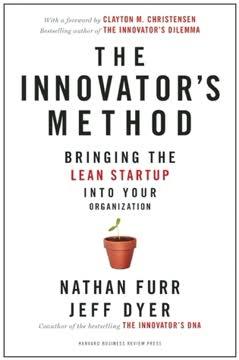
Get the complete 30-minute summary of The Innovator's Method
Get the complete summary in the app**Search before executing.** When facing uncertainty, test assumptions before investing in them.
**Understand the job-to-be-done.** Customers hire products to make progress in specific circumstances.
**Observe, do not just ask.** Watch what customers do. Their behavior reveals needs that surveys miss.
**Prototype rapidly.** Create low-fidelity prototypes that test specific assumptions before building complete products.
**Increase your experiment count.** More experiments mean more learning and more chances to find what works.
**Validate the business model.** A great solution requires viable pricing, acquisition, and cost structure.
"The Innovator's Method" is a strong fit if you want practical ideas around business, entrepreneurship, management, especially themes like **search before executing.** when facing uncertainty, test assumptions before investing in them; **understand the job-to-be-done.** customers hire products to make progress in specific circumstances. The MinuteRead summary distills these concepts into a focused read, whether you're deciding whether to buy the book or applying its lessons at work.
Nathan Furr is an innovation and strategy professor at INSEAD business school. He has co-authored several books on innovation and entrepreneurship, including "The Innovator's DNA" and "Leading Transformation." Nathan Furr is known for his research on how individuals and organizations can develop the skills to innovate effectively in uncertain environments. His work focuses on helping established companies and startups navigate the challenges of innovation and disruption. Furr has consulted with …
View all summaries by Nathan FurrContinue Reading
Access the complete 30-minute summary and thousands more nonfiction books in the MinuteRead app.

Continue reading the complete summary in the MinuteRead app.






