MinuteRead
30 min
Book summary
Premium summary · Opens in the app · 30 min read
Health care in America presents one of the great paradoxes of modern life. We live in an era of astonishing medical capability. Surgeons can replace failing hearts. Genetic sequencing can identify disease before symptoms appear. Pharmaceuticals can transform once-fatal conditions into manageable chronic illnesses. Yet for all this progress, the system that delivers these miracles grows more expensive, more complex, and more frustrating with each passing year.
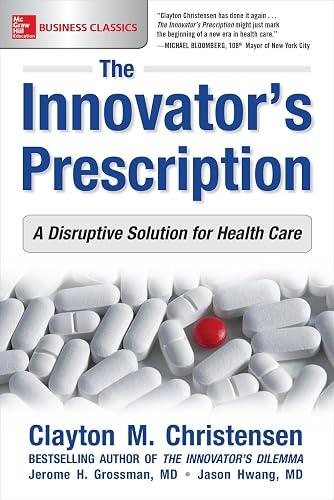
**Author:** Clayton M. Christensen with Jerome H. Grossman, M.D. and Jason Hwang, M.D.
**Estimated Reading Time:** 45 minutes
**What You'll Learn:**
- Why health care costs continue to rise despite remarkable medical advances - How disruptive innovation can transform health care from expensive and inaccessible to affordable and convenient - The three business models that must separate for health care to improve - Why precision medicine will decentralize care to lower-cost settings - How employers, insurers, and policymakers can accelerate meaningful reform
**Who This Book Is For:**
This book is for anyone frustrated by the paradox of modern medicine: miraculous technologies delivered through a system that feels broken. It is for business leaders seeking to understand how disruption works in complex industries. It is for health care professionals wondering why their institutions resist change. It is for patients who sense that better care should cost less, not more. And it is for policymakers searching for solutions beyond incremental reform.
Health care in America presents one of the great paradoxes of modern life. We live in an era of astonishing medical capability. Surgeons can replace failing hearts. Genetic sequencing can identify disease before symptoms appear. Pharmaceuticals can transform once-fatal conditions into manageable chronic illnesses. Yet for all this progress, the system that delivers these miracles grows more expensive, more complex, and more frustrating with each passing year. The numbers tell a troubling story. Health care spending in the United States consumes a larger share of the economy than in any other developed nation, yet health outcomes lag behind countries that spend far less. Families face rising premiums, deductibles, and out-of-pocket costs. Employers struggle to provide coverage while remaining competitive. Government programs strain under the weight of entitlement spending. Meanwhile, millions of Americans remain uninsured or underinsured, unable to access care that the system technically has the capacity to provide. The conventional explanations for this crisis are familiar. Some blame insurance companies. Others point to pharmaceutical pricing. Many cite the fee-for-service reimbursement model that rewards volume over value. Still others argue that health care is simply different from other industries, that the normal rules of economics and innovation do not apply. Clayton Christensen, the Harvard Business School professor whose work on disruptive innovation reshaped how we understand business transformation, offers a different diagnosis. The problem, he argues, is not that health care lacks innovation. The problem is that health care has innovated in the wrong direction. The industry has focused on making care more sophisticated, more specialized, and more technologically advanced. In doing so, it has made care more expensive and less accessible. Christensen's insight is both simple and profound. In every industry, there are two types of innovation. Sustaining innovations improve…
Continue reading in the MinuteRead app
Get the complete 30-minute summary of The Innovator's Prescription
Get the complete summary in the appDisruptive innovation makes products and services simpler, cheaper, and more accessible, then improves over time and dis
Health care combines three business models that should be separate: solution shops, value-adding process businesses, and
The general hospital is expensive because it tries to be all three business models at once.
Focused providers achieve better outcomes at lower cost by optimizing for a specific job.
Medical knowledge progresses from intuitive to empirical to precision medicine, enabling care to move to lower-cost sett
Retail clinics are disrupting primary care. Facilitated networks are disrupting chronic disease management.
"The Innovator's Prescription" is a strong fit if you want practical ideas around health care, business, health, especially themes like disruptive innovation makes products and services simpler, cheaper, and more accessible, then improves over time and dis; health care combines three business models that should be separate: solution shops, value-adding process businesses, and. The MinuteRead summary distills these concepts into a focused read, whether you're deciding whether to buy the book or applying its lessons at work.
Motivated to help readers with the disruptive innovation theory explains the process by which complicated, Clayton M. Christensen wrote “The Innovator's Prescription” to package those ideas for a fast, focused read. In “The Innovator's Prescription”, Clayton M. Christensen focuses on the disruptive innovation theory explains the process by which complicated. Through “The Innovator's Prescription”, Clayton M. Christensen distills the core ideas on health care into lessons readers can absorb in a …
View all summaries by Clayton M. ChristensenContinue Reading
Access the complete 30-minute summary and thousands more nonfiction books in the MinuteRead app.

Continue reading the complete summary in the MinuteRead app.