MinuteRead
30 min
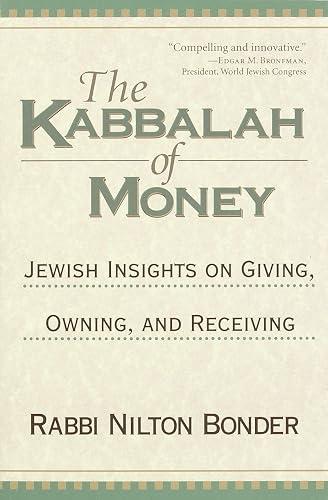
Book summary
by Nilton Bonder
Premium summary · Opens in the app · 30 min read
Money is one of the most powerful forces in human life, yet it remains one of the least examined. We spend most of our waking hours earning it, managing it, spending it, worrying about it, and planning around it. We build careers around it. We structure our relationships with it. We measure success by it. And yet, for all its centrality, we rarely pause to ask what money actually is.
**Author:** Nilton Bonder **Estimated Reading Time:** 42 minutes
**What You'll Learn:**
- Why money is fundamentally a spiritual instrument, not merely an economic tool - How ancient Jewish wisdom reframes wealth, poverty, charity, and business ethics - What the concept of *gesheft* reveals about creating value through ethical transactions - Why the "wheel of fortune" teaches resilience through financial cycles - How balancing justice and compassion transforms economic relationships - What it truly means to be rich, beyond material accumulation
**Who This Book Is For:**
This book is for anyone who has ever felt uneasy about the relationship between money and meaning. It is for businesspeople who suspect their work carries moral weight beyond profit margins. It is for those who give to charity but wonder if they are doing enough, or doing it right. It is for readers curious about how an ancient spiritual tradition can illuminate modern economic life. And it is for anyone who has ever asked whether wealth and goodness can truly coexist.
Money is one of the most powerful forces in human life, yet it remains one of the least examined. We spend most of our waking hours earning it, managing it, spending it, worrying about it, and planning around it. We build careers around it. We structure our relationships with it. We measure success by it. And yet, for all its centrality, we rarely pause to ask what money actually is. Most of us inherit a set of unexamined assumptions about money. We assume it is a neutral tool, a means to an end. We assume that more is better, that scarcity is natural, that competition is inevitable. We assume that the spiritual life and the financial life occupy separate spheres, and that the pursuit of one necessarily compromises the other. We assume that money is, at its core, a secular concern. Nilton Bonder challenges every one of these assumptions. Drawing on the deep well of Jewish wisdom, particularly the Kabbalistic tradition, Bonder argues that money is not a secular matter at all. It is, in fact, one of the most spiritual instruments ever created by human beings. Money is a symbol of trust, a physical manifestation of faith between strangers. Every transaction we make is an act of belief: belief that the currency will hold value, belief that the other party will honor the agreement, belief that the broader system will continue to function. When we use money, we are participating in a vast web of interdependence that spans communities, nations, and generations. This perspective transforms everything. If money is a symbol of faith, then how we earn it, spend it, save it, and give it away becomes a spiritual practice. If wealth…
Continue reading in the MinuteRead app
Get the complete 30-minute summary of The Kabbalah of Money
Get the complete summary in the appMoney is a symbol of faith in human interdependence. Every transaction is an act of trust.
Real wealth is created through ethical transactions, not mere accumulation.
Tzedakah is justice, not charity. It is an obligation, not an option.
The wheel of fortune turns for everyone. Remain humble in prosperity and hopeful in adversity.
Luck is the intersection of preparedness and opportunity. Cultivate your *mazel*.
Fair competition benefits everyone. Compete on value, not on destruction.
"The Kabbalah of Money" is a strong fit if you want practical ideas around money, religion, judaism, especially themes like money is a symbol of faith in human interdependence. every transaction is an act of trust; real wealth is created through ethical transactions, not mere accumulation. The MinuteRead summary distills these concepts into a focused read, whether you're deciding whether to buy the book or applying its lessons at work.
Motivated to help readers with "In God We Trust." This is another version of the word amen, Nilton Bonder wrote “The Kabbalah of Money” to package those ideas for a fast, focused read. In “The Kabbalah of Money”, Nilton Bonder focuses on "In God We Trust." This is another version of the word amen. Through “The Kabbalah of Money”, Nilton Bonder distills the core ideas on money into lessons readers can absorb in a single short sitting. Readers turn to this work when they want Nilton Bonder's persp…
Continue Reading
Access the complete 30-minute summary and thousands more nonfiction books in the MinuteRead app.

Continue reading the complete summary in the MinuteRead app.