MinuteRead
30 min
Book summary
Premium summary · Opens in the app · 30 min read
Every year, organizations spend billions of dollars on management education, executive training, consulting engagements, and business books. They hire the brightest minds from the best universities. They attend conferences, collect data, and develop sophisticated strategies. They know what they need to do to improve performance, increase quality, enhance customer satisfaction, and build better workplaces.
**Author:** Jeffrey Pfeffer **Estimated Reading Time:** 45 minutes
**What You'll Learn:**
- Why most organizations fail to act on what they already know - The hidden barriers that prevent knowledge from becoming action - How fear, measurement, and internal competition undermine performance - Why simple systems and clear philosophy beat complex strategies - Practical methods for closing the gap between knowing and doing
**Who This Book Is For:**
This book is for leaders, managers, and professionals who have ever wondered why their organization invests heavily in training, consulting, and strategic planning yet sees little meaningful change. It is for anyone frustrated by the gap between what their company knows and what it actually does. If you have ever sat through a brilliant presentation, agreed on a clear plan, and then watched nothing happen, this book explains why and shows you what to do about it.
Every year, organizations spend billions of dollars on management education, executive training, consulting engagements, and business books. They hire the brightest minds from the best universities. They attend conferences, collect data, and develop sophisticated strategies. They know what they need to do to improve performance, increase quality, enhance customer satisfaction, and build better workplaces. And yet, remarkably little changes. The problem is not a lack of knowledge. The problem is that knowledge rarely translates into action. Companies know that treating employees well leads to better performance, yet they continue to manage through fear and intimidation. They know that collaboration produces better results than internal competition, yet they design reward systems that pit colleagues against each other. They know that long-term thinking matters, yet they obsess over quarterly earnings. This is the knowing-doing gap, and it is one of the most persistent and costly problems in organizational life. Jeffrey Pfeffer, a professor at Stanford University's Graduate School of Business, spent years studying why so much knowledge produces so little action. He examined companies across industries, reviewed decades of research, and identified a troubling pattern. Organizations do not fail because they lack information. They fail because they cannot turn the information they already possess into consistent, sustained action. The consequences of this gap are enormous. Companies waste resources on training programs that never change behavior. They hire consultants who deliver recommendations that sit on shelves. They develop strategic plans that never get implemented. They repeat the same mistakes year after year, not because they do not know better, but because they cannot seem to do better. Pfeffer's central insight is both simple and profound. The gap between knowing and doing is often wider than the gap between ignorance and knowing. In other words, the hard part is not figuring out what to do. The hard part is…
Continue reading in the MinuteRead app
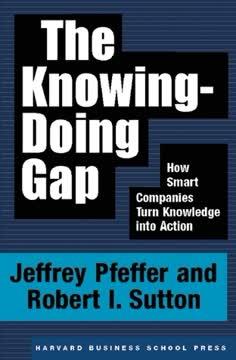
Get the complete 30-minute summary of The Knowing-Doing Gap
Get the complete summary in the appThe gap between knowing and doing is often wider than the gap between ignorance and knowing.
Knowledge is only valuable when it is put into practice.
Talk is easy and action is hard, which is why organizations prefer talk.
Fear prevents people from acting on their knowledge.
What gets measured gets done, so measure what matters.
Internal competition undermines collaboration and trust.
"The Knowing-Doing Gap" is a strong fit if you want practical ideas around business, leadership, management, especially themes like the gap between knowing and doing is often wider than the gap between ignorance and knowing; knowledge is only valuable when it is put into practice. The MinuteRead summary distills these concepts into a focused read, whether you're deciding whether to buy the book or applying its lessons at work.
Jeffrey Pfeffer is a renowned organizational behavior expert and professor at Stanford University's Graduate School of Business. He has authored numerous influential books and articles on management, leadership, and organizational dynamics. Pfeffer's work often challenges conventional wisdom, focusing on evidence-based management practices. He has been recognized as a top management thinker and has received several awards for his contributions to the field. Pfeffer's expertise extends beyond aca…
View all summaries by Jeffrey PfefferContinue Reading
Access the complete 30-minute summary and thousands more nonfiction books in the MinuteRead app.

Continue reading the complete summary in the MinuteRead app.