 MinuteRead
30 min
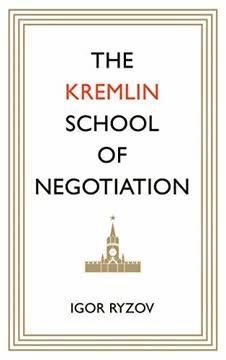
Book summary
by Igor Ryzov
Premium summary · Opens in the app · 30 min read
Every day, you negotiate. You negotiate with your employer over salary, with suppliers over costs, with family members over responsibilities, with yourself over how you spend your time. Most people approach these moments with a mixture of hope and anxiety, relying on instinct rather than strategy. They speak when they should listen. They concede when they should pause. They reveal their desperation without realizing it.
**Author:** Igor Ryzov
**Estimated Reading Time:** 45 minutes
**What You'll Learn:**
- How to read your opponent's true motives before saying a word - Why the strongest negotiators never appear desperate - How to use silence, questions, and emotional control as strategic weapons - The four behavior models people adopt in negotiations and how to respond to each - How to calculate your true value before entering any discussion - Why compromise is a strength and concession is a weakness
**Who This Book Is For:**
Anyone who negotiates regularly, whether in business, career advancement, personal relationships, or high-stakes deals. If you have ever walked away from a negotiation feeling you gave up too much, or if you want to understand how skilled negotiators consistently secure better outcomes, this book will transform your approach.
The central insight of The Kremlin School of Negotiation is deceptively simple: no one has ever squeezed better terms out of a supplier than those the supplier squeezes out of themselves. This means that the most effective negotiators do not extract concessions through pressure or aggression. They create conditions in which the other party voluntarily offers better terms. They do this by understanding what the other party truly values, what they fear, and what they believe their alternatives to be. Then they shape the negotiation so that the other party's own logic leads them to the desired conclusion. This insight reframes negotiation entirely. Most people think of negotiation as a contest of wills, a battle in which the stronger party prevails. They prepare by strengthening their arguments and steeling their nerves. They enter the room ready to fight. But fighting is exhausting, and even when you win, you often lose. The supplier who feels squeezed will look for ways to recover their losses elsewhere. The employee who accepts a low salary under pressure will leave at the first better opportunity. The partner who concedes out of exhaustion will harbor resentment that poisons the relationship. The Kremlin School approach avoids these outcomes by making the other party an active participant in their own persuasion. When someone arrives at a conclusion through their own reasoning, they commit to it more fully than when it is imposed upon them. They feel ownership of the decision. They are less likely to resent it or seek to reverse it. This is why the five postulates of the Kremlin School are structured as they are. Listening attentively builds trust and gathers information. Asking questions guides the other party's thinking. Subtle depreciation of their position creates doubt about their alternatives. Offering a way out provides a face-saving path to agreement. Creating uncertainty about the consequences of not reaching agreement motivates action. Each step moves…
Continue reading in the MinuteRead app
Get the complete 30-minute summary of The Kremlin School of Negotiation
Get the complete summary in the appListen more than you speak. The person asking questions controls the negotiation.
Identify the other party's true motive before choosing your strategy.
Assess your position honestly from the other party's perspective using the forecast matrix.
Recognize the four behavior models: Teenager, Mouse, Tank, and Leader. Respond strategically to each.
Control the emotional temperature using the four regulators: people, positions, options, and time.
Make compromises deliberately, not concessions reactively.
"The Kremlin School of Negotiation" is a strong fit if you want practical ideas around business, psychology, self help, especially themes like listen more than you speak. the person asking questions controls the negotiation; identify the other party's true motive before choosing your strategy. The MinuteRead summary distills these concepts into a focused read, whether you're deciding whether to buy the book or applying its lessons at work.
Igor Ryzov is a Russian businessman and author specializing in negotiation techniques. His background in sales and business dealings informs his writing, providing a Russian perspective on negotiation strategies. Ryzov draws from his personal experiences and anecdotes to illustrate various negotiation scenarios and tactics. While not explicitly focused on government-level diplomacy, his work incorporates elements of Russian cultural approaches to negotiation. Ryzov's expertise lies in practical,…
View all summaries by Igor RyzovContinue Reading
Access the complete 30-minute summary and thousands more nonfiction books in the MinuteRead app.

Continue reading the complete summary in the MinuteRead app.






