MinuteRead
30 min
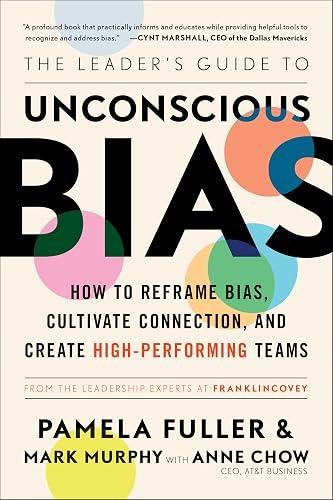
Book summary
by Pamela Fuller
Premium summary · Opens in the app · 30 min read
Every day, your brain makes thousands of decisions without asking your permission. It decides who seems trustworthy within seconds of meeting them. It determines which ideas deserve attention and which can be safely ignored. It shapes who you gravitate toward in meetings, who you mentor, who you promote, and who you overlook.
**Author:** Pamela Fuller
**Estimated Reading Time:** 45 minutes
**What You'll Learn:** How unconscious bias operates in your mind and organization, why it limits performance and innovation, and practical strategies to identify, mitigate, and overcome bias in yourself and your team.
**Who This Book Is For:** Leaders at every level who want to make better decisions, build stronger teams, and create environments where everyone can contribute their best work.
Every day, your brain makes thousands of decisions without asking your permission. It decides who seems trustworthy within seconds of meeting them. It determines which ideas deserve attention and which can be safely ignored. It shapes who you gravitate toward in meetings, who you mentor, who you promote, and who you overlook. Most of this happens outside your awareness. The uncomfortable truth is that bias is not a character flaw reserved for a few bad actors. It is a fundamental feature of human cognition. Your brain receives roughly eleven million pieces of information every second but can consciously process only about forty of them. To manage this overwhelming flood, your mind relies on shortcuts: patterns, assumptions, and generalizations that help you navigate the world efficiently. These shortcuts are bias. If you believe you have no bias, you are mistaken. What you actually have is a brain working exactly as designed. The challenge is that while bias is natural, its consequences are not neutral. In the workplace, unconscious bias determines who gets hired, who gets heard, who gets developed, and who gets left behind. It shapes performance reviews, team dynamics, and leadership pipelines. And it operates most powerfully when people believe they are being objective. Pamela Fuller wrote this book because she saw a gap between awareness and action. Many organizations have invested in diversity training. Many leaders can define unconscious bias and nod along during workshops. But far fewer know what to do when bias shows up in real time, in real decisions, with real consequences. This book bridges that gap. It offers a framework for understanding how bias works, recognizing it in yourself, and taking practical steps to mitigate its effects. The goal is not perfection. No one eliminates bias entirely. The goal is progress: becoming more aware, making better decisions, and creating environments where everyone can perform at their best. The stakes are high. Research cited in the book shows that employees who perceive bias in their workplace are three times more likely to withhold ideas, significantly more likely to be disengaged, and more likely to leave within a year. Bias is not just a moral issue. It is a performance issue. It suppresses innovation, weakens teams, and costs organizations their best talent. The good news is that the same…
Continue reading in the MinuteRead app
Get the complete 30-minute summary of The Leader's Guide to Unconscious Bias
Get the complete summary in the appBias is natural. It is a feature of human cognition, not a moral failing.
Believing you are unbiased is the biggest obstacle to addressing bias.
Bias affects performance. It suppresses innovation, weakens engagement, and drives away talent.
Self-awareness is the foundation. Examine your identity and question your assumptions.
Empathy and curiosity are skills. Practice them to build connection across difference.
Courage is essential. Awareness without action changes nothing.
"The Leader's Guide to Unconscious Bias" is a strong fit if you want practical ideas around leadership, business, management, especially themes like bias is natural. it is a feature of human cognition, not a moral failing; believing you are unbiased is the biggest obstacle to addressing bias. The MinuteRead summary distills these concepts into a focused read, whether you're deciding whether to buy the book or applying its lessons at work.
Motivated to help readers with 1) Unconscious bias is a natural part of human cognition, Pamela Fuller wrote “The Leader's Guide to Unconscious Bias” to package those ideas for a fast, focused read. In “The Leader's Guide to Unconscious Bias”, Pamela Fuller focuses on 1) Unconscious bias is a natural part of human cognition. Through “The Leader's Guide to Unconscious Bias”, Pamela Fuller distills the core ideas on leadership into lessons readers can absorb in a single short sitting. Readers turn…
Continue Reading
Access the complete 30-minute summary and thousands more nonfiction books in the MinuteRead app.

Continue reading the complete summary in the MinuteRead app.