MinuteRead
30 min
Book summary
Premium summary · Opens in the app · 30 min read
Every organization struggles with problems that seem impossible to solve. Orders arrive late. Defects keep appearing. Customers complain about the same issues month after month. Teams hold meetings, propose fixes, and implement changes, yet the problems persist or return in a new form.
**Author:** Michael L. George
**Estimated Reading Time:** 42 minutes
**What You'll Learn:**
- How to solve business problems using the DMAIC framework - How to identify what customers truly value - How to measure processes accurately and reliably - How to find root causes using data instead of guesswork - How to eliminate waste and build efficient workflows - How to sustain improvements over the long term
**Who This Book Is For:**
Professionals who want a practical, field-tested guide to process improvement. Whether you lead a manufacturing line, manage a service team, or run a small business, the tools in this book will help you see problems clearly, solve them systematically, and make the solutions stick.
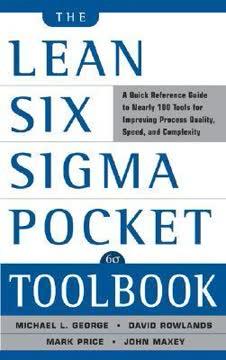
Every organization struggles with problems that seem impossible to solve. Orders arrive late. Defects keep appearing. Customers complain about the same issues month after month. Teams hold meetings, propose fixes, and implement changes, yet the problems persist or return in a new form. Why does this happen? Because most organizations solve problems the wrong way. They rely on intuition instead of evidence. They treat symptoms instead of root causes. They implement solutions without understanding the underlying process. They celebrate quick wins that unravel within weeks. The Lean Six Sigma Pocket Toolbook exists to solve this problem. Michael L. George, founder of The George Group and one of the most respected figures in process improvement, created this book as a practical companion for anyone who needs to improve how work gets done. It is not a theoretical treatise. It is a field manual. The book brings together two powerful improvement methodologies. Lean focuses on eliminating waste and creating flow. Six Sigma focuses on reducing variation and solving problems with data. Together, they form a complete system for making processes faster, better, and more reliable. The core of this system is DMAIC, a five-phase framework that stands for Define, Measure, Analyze, Improve, and Control. Each phase has specific tools and techniques. Each phase builds on the previous one. Each phase moves you closer to a lasting solution. What makes this approach different is its discipline. Most people want to jump straight to solutions. They see a problem and immediately propose a fix. DMAIC forces you to slow down. It requires you to define the problem precisely before attempting to solve it. It demands that you measure current performance before changing anything. It insists that you analyze root causes before generating solutions. It compels you to verify improvements before declaring victory. And it requires you to build controls that prevent the problem from returning. This discipline feels slow at first. But it is far faster than the alternative. When you skip steps, you solve the wrong problem…
Continue reading in the MinuteRead app
Get the complete 30-minute summary of The Lean Six Sigma Pocket Toolbook
Get the complete summary in the appUse DMAIC: Define, Measure, Analyze, Improve, Control.
Define problems specifically before attempting to solve them.
Listen to the Voice of the Customer instead of assuming you know what they want.
Verify your measurement system before trusting your data.
Walk the process to see reality, not documentation.
Eliminate the eight forms of waste: defects, overproduction, waiting, non-utilized talent, transportation, inventory, mo
"The Lean Six Sigma Pocket Toolbook" is a strong fit if you want practical ideas around business, management, reference, especially themes like use dmaic: define, measure, analyze, improve, control; define problems specifically before attempting to solve them. The MinuteRead summary distills these concepts into a focused read, whether you're deciding whether to buy the book or applying its lessons at work.
Michael L. George is a prominent figure in the field of Lean Six Sigma, known for founding and leading The George Group, which became the largest Lean Six Sigma consulting practice in the United States. His expertise in process improvement methodologies has made him a respected author and consultant in the industry. George's influential book, "Lean Six Sigma," published by McGraw-Hill, achieved significant success and established him as a thought leader in the field. His work has contributed to …
View all summaries by Michael L. GeorgeContinue Reading
Access the complete 30-minute summary and thousands more nonfiction books in the MinuteRead app.

Continue reading the complete summary in the MinuteRead app.