MinuteRead
5 min
Book summary
Premium summary · Opens in the app · 5 min read
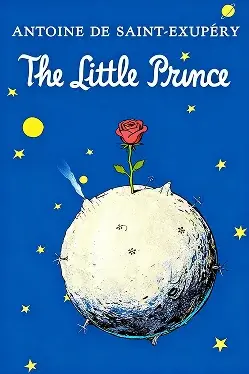
The Little Prince is a beautiful children’s story full of valuable lessons for adults, recounting the tale of an aviator and a little boy from a distant planet, both stranded in the desert, looking to get home, sharing what they’ve learned about life.
The Little Prince is a beautiful children’s story full of valuable lessons for adults, recounting the tale of an aviator and a little boy from a distant planet, both stranded in the desert, looking to get home, sharing what they’ve learned about life.
The story begins with the narrator complaining about adults’ inability to understand what’s important in life. To test them, he shows them a picture of a boa that has eaten an elephant. When they claim it looks like a hat, he knows they’ve lost their imagination.
The narrator is an aviator, and when his plane crashes in the Sahara desert, he meets the little prince, a young boy with golden hair and strong curiosity. Surprisingly, the prince interprets the elephant-devouring boa correctly. Then, the prince asks the narrator to draw a sheep but dismisses his first few attempts. Only when he draws a simple box, claiming the sheep is inside, is the prince satisfied — finally they both got to use their imagination!
Some people will look at a van Gogh painting and only see sunflowers, but there’s more on the canvas than just dried colors. If you try, you can feel what it would be like to touch the flowers, sense the sunshine nourishing them in a field, or even picture their whole life journey from seed to wilting.
Imagination is our strongest skill as humans. If we don’t apply it to what we take in through our senses, we’ll miss the meaning of our life experiences. Einstein once said that “imagination is more important than knowledge,” and it was only through imagination that he derived his most important theories.
Don’t lose your imagination, and always look beyond the obvious.
While the pair tries to find water and fix the narrator’s plane, the little prince tells him his story. Originally hailing from a house-sized asteroid, where tended to three volcanoes, kept fast-growing baobab trees at bay, and cared for his single rose, the prince one day decided to visit other planets. On six planets, he met six individuals, each of which represents a common trap for adults: A king without any followers, who only gives pointless orders, like telling the sun to set. A conceited man who prides himself on being the most admired person on his planet — because he’s the only one there. An alcoholic who drinks to not feel ashamed about his drinking. A manager who only counts the stars instead of looking at them. A lamplighter who turns the light (aka the sun) on his planet on and off every 30 seconds, blindly following his orders. A geographer who has never been to any of the places he catalogs. Ego, vanity, bad…
Continue reading in the MinuteRead app
Get the complete 5-minute summary of The Little Prince
Get the complete summary in the appIf we don’t apply our imagination to our sensory observations, we’ll miss the point of life.
Adulthood comes with 6 common ruts, but we can get out of them if we’re willing to take an honest look in the mirror.
The most important things in life aren’t things we can see or touch — and friendship is one of them.
"The Little Prince" is a strong fit if you want practical ideas around communication skills, creativity, culture, especially themes like if we don’t apply our imagination to our sensory observations, we’ll miss the point of life; adulthood comes with 6 common ruts, but we can get out of them if we’re willing to take an honest look in the mirror. The MinuteRead summary distills these concepts into a focused read, whether you're deciding whether to buy the book or applying its lessons at work.
Motivated to help readers with themes of loneliness, friendship, love, and loss, Antoine de Saint-Exupéry wrote “The Little Prince” as a practical guide drawn from years of experience and research. In “The Little Prince”, Antoine de Saint-Exupéry focuses on beautiful children’s story full of valuable lessons for adults. Through “The Little Prince”, Antoine de Saint-Exupéry distills the core ideas on communication skills into lessons readers can absorb in a single short sitting. Readers turn to t…
View all summaries by Antoine de Saint-ExupéryContinue Reading
Access the complete 5-minute summary and thousands more nonfiction books in the MinuteRead app.

Continue reading the complete summary in the MinuteRead app.