MinuteRead
30 min
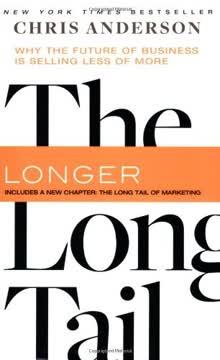
In 2004, Chris Anderson, then editor-in-chief of Wired magazine, asked a simple question: What percentage of the top ten thousand titles on Netflix ever rented at least once a month? The answer, he assumed, would follow the familiar pattern of the entertainment industry. A small number of hits would dominate. The rest would gather dust.
**Author:** Chris Anderson
**Estimated Reading Time:** 45 minutes
**What You'll Learn:** Why the future of business lies not in selling a few blockbuster hits, but in selling a vast number of niche products. You will learn how the economics of digital distribution have permanently changed culture, commerce, and creation. You will understand why the tools of production are now in your hands, why the shelf space of the internet is infinite, and how new forms of recommendation are reshaping what we buy, watch, and listen to.
**Who This Book Is For:** Anyone who has wondered why Netflix invests in obscure documentaries, why Amazon stocks books no physical store would carry, or why the music industry no longer revolves solely around platinum albums. This book is for entrepreneurs, creators, marketers, and curious consumers who sense that the era of mass culture is ending and want to understand what comes next.
In 2004, Chris Anderson, then editor-in-chief of Wired magazine, asked a simple question: What percentage of the top ten thousand titles on Netflix ever rented at least once a month? The answer, he assumed, would follow the familiar pattern of the entertainment industry. A small number of hits would dominate. The rest would gather dust. The actual number stunned him. It was ninety-nine percent. Almost everything was being rented by someone, somewhere, at some point. The demand existed. It was just spread impossibly thin across an enormous catalog of choices. This observation led Anderson to a realization that would reshape how we think about commerce and culture. For most of the twentieth century, we lived in a world of scarcity. Physical shelf space was expensive. Movie theaters had limited screens. Radio stations had limited airtime. Retailers had to stock only what would sell in sufficient volume to justify the cost of floor space. The result was a hit-driven culture. Blockbusters, bestsellers, platinum albums. The head of the demand curve was everything. The tail, the vast territory of niche products that sold only a few copies, was ignored. It had to be. The internet changed all of that. Digital distribution eliminated the cost of shelf space. Suddenly, it was just as cheap to offer a million songs as it was to offer a thousand. The economics of scarcity gave way to the economics of abundance. And when that happened, something remarkable emerged. The tail, that long, flat stretch of the demand curve, began to matter. In aggregate, all those niche products added up to a market as large as the hits. Sometimes larger. The Long Tail is not just a theory about retail. It is a theory about how technology reshapes culture. When everyone has access to the tools of production, the…
Continue reading in the MinuteRead app
Get the complete 30-minute summary of The Long Tail
Get the complete summary in the appThe Long Tail is the vast territory of niche products that collectively rival the hits in economic value.
Three forces power the Long Tail: democratized production, democratized distribution, and improved filters.
Digital distribution eliminates the bottleneck of physical shelf space, making unlimited selection economically viable.
The tools of professional-quality production are now available to anyone with a laptop.
Filters and recommendation systems drive demand down the tail by helping people find what they want.
The 80/20 rule still applies, but the neglected eighty percent is no longer zero. It is a substantial market.
"The Long Tail" is a strong fit if you want practical ideas around business, economics, technology—especially themes like the long tail is the vast territory of niche products that collectively rival the hits in economic value; three forces power the long tail: democratized production, democratized distribution, and improved filters. The MinuteRead summary distills these concepts into a focused read, whether you're deciding whether to buy the book or applying its lessons at work.
Chris Anderson is a prominent technology journalist and author. As Editor-in-Chief of Wired magazine since 2001, he has led the publication to multiple National Magazine Award nominations and wins. Anderson gained widespread recognition for his bestselling book The Long Tail, based on his influential 2004 Wired article. His career includes roles at The Economist, where he pioneered internet coverage, and scientific journals Nature and Science. Anderson's expertise in technology and business tren…
View all summaries by Chris AndersonContinue Reading
Access the complete 30-minute summary and thousands more nonfiction books in the MinuteRead app.

Continue reading the complete summary in the MinuteRead app.