MinuteRead
30 min
Book summary
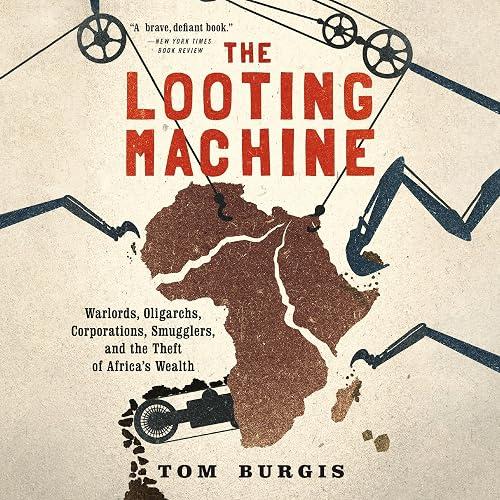
by Tom Burgis
Premium summary · Opens in the app · 30 min read
There is a paradox that haunts the African continent. The land holds staggering wealth: oil beneath the waters of the Gulf of Guinea, diamonds in the soil of Sierra Leone, cobalt and coltan in the hills of the Congo, platinum and gold beneath the South African veld. By some estimates, Africa possesses a third of the world's hydrocarbon and mineral resources. If natural wealth translated directly into human prosperity, Africa would be among the richest places on Earth.
**Author:** Tom Burgis
**Estimated Reading Time:** 45 minutes
**What You'll Learn:**
- How Africa's vast natural wealth became a curse rather than a blessing - The hidden networks connecting African elites to global financial centers - Why foreign governments, corporations, and institutions enable the plunder - The human cost of resource extraction and the violence that sustains it - How your everyday purchases connect you to the system
**Who This Book Is For:**
This book is for anyone who wants to understand why a continent holding a third of the world's mineral and hydrocarbon resources remains mired in poverty. It is for readers who suspect that the story of African corruption is incomplete without examining the Western bankers, Asian middlemen, and multinational executives who facilitate it. It is for those who want to see beyond headlines about "African corruption" and understand the global machinery that makes it possible.
There is a paradox that haunts the African continent. The land holds staggering wealth: oil beneath the waters of the Gulf of Guinea, diamonds in the soil of Sierra Leone, cobalt and coltan in the hills of the Congo, platinum and gold beneath the South African veld. By some estimates, Africa possesses a third of the world's hydrocarbon and mineral resources. If natural wealth translated directly into human prosperity, Africa would be among the richest places on Earth. Instead, the opposite has occurred. The countries most abundantly endowed with resources are often the poorest, most violent, and most corrupt. Nigeria, Africa's largest oil producer, has seen hundreds of billions of dollars flow through its petroleum industry since independence, yet more than half its population lives in extreme poverty. Angola, the continent's second-largest oil producer, was governed for decades by a family that treated the state treasury as a personal account while millions of Angolans lacked clean water. The Democratic Republic of Congo, home to minerals essential to every smartphone on the planet, has been convulsed by wars that killed millions. This is not a coincidence. It is a system. Tom Burgis spent years as a correspondent for the Financial Times in Johannesburg and Lagos, investigating the intersection of business, politics, and corruption across Africa. What he discovered was not a collection of isolated acts of theft by individual African leaders. He found a machine: an interconnected apparatus of extraction and plunder that stretches from presidential palaces in Luanda and Abuja to trading floors in London, law firms in New York, and state-owned enterprises in Beijing. The looting machine has many components. It includes African presidents who treat national oil companies as personal piggy banks. It includes Western multinationals that pay bribes disguised as "signature bonuses" and "consulting fees." It includes middlemen who…
Continue reading in the MinuteRead app
Get the complete 30-minute summary of The Looting Machine
Get the complete summary in the appAfrica's natural resources are being systematically looted by a transnational network of elites, corporations, and gover
The shadow state fuses political power and economic power, turning the state into a vehicle for private enrichment.
State-owned companies like Sonangol and NNPC serve as financial engines for the shadow state.
The looting machine depends on foreign partners: multinational companies, international banks, and Western governments.
The offshore system enables the looting machine to operate with impunity by concealing the flow of money.
Africa loses more than $50 billion annually to illicit financial flows, more than it receives in foreign aid.
"The Looting Machine" is a strong fit if you want practical ideas around africa, politics, economics, especially themes like africa's natural resources are being systematically looted by a transnational network of elites, corporations, and gover; the shadow state fuses political power and economic power, turning the state into a vehicle for private enrichment. The MinuteRead summary distills these concepts into a focused read, whether you're deciding whether to buy the book or applying its lessons at work.
Motivated to help readers with yet the machinery that is looting Africa is more powerful than all of them, Tom Burgis wrote “The Looting Machine” to package those ideas for a fast, focused read. In “The Looting Machine”, Tom Burgis focuses on yet the machinery that is looting Africa is more powerful than all of them. Through “The Looting Machine”, Tom Burgis distills the core ideas on africa into lessons readers can absorb in a single short sitting. Readers turn to this work when they want Tom B…
Continue Reading
Access the complete 30-minute summary and thousands more nonfiction books in the MinuteRead app.

Continue reading the complete summary in the MinuteRead app.