MinuteRead
30 min
Book summary
Premium summary · Opens in the app · 30 min read
In the fall of 2019, something strange happened in the American financial system. The repo market, a largely invisible but critically important corner of Wall Street where banks lend money to each other overnight, suddenly seized up. Interest rates on these short-term loans spiked to levels that suggested something was deeply wrong. The Federal Reserve, caught off guard, rushed to inject billions of dollars into the system to prevent a full-blown crisis.
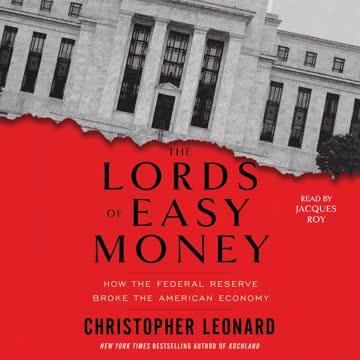
**Author:** Christopher Leonard
**Estimated Reading Time:** 45 minutes
**What You'll Learn:**
- How the Federal Reserve became the most powerful economic institution in America - Why the Fed's policies after 2008 created a new economic order that benefits the few at the expense of the many - The inside story of the dissenting voices who warned about the consequences of easy money - How quantitative easing and zero interest rates reshaped Wall Street, Main Street, and American politics - What the long-term risks of perpetual monetary stimulus mean for your financial future
**Who This Book Is For:**
This book is for anyone who wants to understand why the American economy feels broken. It is for readers who sense that something fundamental shifted after the 2008 financial crisis but cannot quite articulate what changed. It is for investors, business owners, workers, and citizens who want to understand the hidden forces shaping their economic lives. Most importantly, it is for people who believe that understanding how money works is not optional in the modern world. It is essential.
In the fall of 2019, something strange happened in the American financial system. The repo market, a largely invisible but critically important corner of Wall Street where banks lend money to each other overnight, suddenly seized up. Interest rates on these short-term loans spiked to levels that suggested something was deeply wrong. The Federal Reserve, caught off guard, rushed to inject billions of dollars into the system to prevent a full-blown crisis. What made this moment remarkable was not the intervention itself. The Federal Reserve had been intervening in markets for over a decade by that point. What made it remarkable was that the crisis happened during a period of economic expansion. The economy was growing. Unemployment was low. The stock market was near record highs. And yet the financial system still needed emergency support from the central bank. This was the moment that revealed how thoroughly the American economy had become addicted to easy money. Christopher Leonard's investigation into this transformation begins with a simple question: How did the Federal Reserve, an institution designed to be a lender of last resort for banks, become the primary driver of the American economy? The answer takes readers through the halls of the Federal Reserve, the trading floors of Wall Street, and the corridors of power in Washington. It reveals a story of good intentions, unintended consequences, and a fundamental shift in how economic power is distributed. The story begins in 2008, when the global financial system nearly collapsed. The Federal Reserve, led by Chairman Ben Bernanke, responded with unprecedented force. It cut interest rates to zero. It pumped trillions of dollars into the financial system…
Continue reading in the MinuteRead app
Get the complete 30-minute summary of The Lords of Easy Money
Get the complete summary in the appThe Federal Reserve became the primary driver of economic policy after Congress became gridlocked and ineffective.
Quantitative easing created trillions of dollars in new money, benefiting asset owners at the expense of everyone else.
Zero interest rates distorted financial signals, encouraging excessive risk-taking and misallocating capital.
Thomas Hoenig was the lone dissenter against the Fed's easy money policies, and his warnings proved prescient.
Wall Street became addicted to easy money, creating a financial system that was more fragile and more dependent on Fed s
The corporate debt bubble was fueled by easy money, with companies borrowing trillions for stock buybacks.
"The Lords of Easy Money" is a strong fit if you want practical ideas around economics, finance, business, especially themes like the federal reserve became the primary driver of economic policy after congress became gridlocked and ineffective; quantitative easing created trillions of dollars in new money, benefiting asset owners at the expense of everyone else. The MinuteRead summary distills these concepts into a focused read, whether you're deciding whether to buy the book or applying its lessons at work.
Christopher Leonard is an investigative journalist and author known for his in-depth reporting on business and economics. He is a graduate of the University of Missouri Journalism School and currently serves as director of the Missouri School of Journalism Reynolds Journalism Institute. Leonard has written three books, including "The Meat Racket" and "Kochland: The Secret History of Koch Industries and Corporate Power in America." His work often focuses on complex economic and corporate issues, …
View all summaries by Christopher LeonardContinue Reading
Access the complete 30-minute summary and thousands more nonfiction books in the MinuteRead app.

Continue reading the complete summary in the MinuteRead app.