 MinuteRead
30 min
Book summary
Premium summary · Opens in the app · 30 min read
For most of the twentieth century, the world believed it had solved the problem of production. Henry Ford's assembly line and Alfred Sloan's management systems at General Motors had created a model that seemed unbeatable. Mass production delivered affordable goods at unprecedented scale. It built the American middle class. It powered the Allied victory in World War II. It became the template for every serious manufacturer on earth.
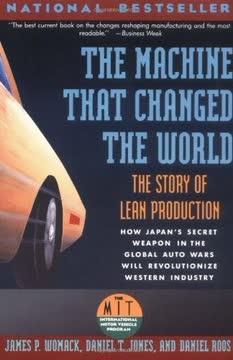
**Author:** James P. Womack, Daniel T. Jones, and Daniel Roos
**Estimated Reading Time:** 45 minutes
**What You'll Learn:**
- Why lean production represents a fundamental shift in how humans make things - How Toyota developed a system that outperformed the world's best manufacturers - What separates lean thinking from mass production in practice - How lean principles extend beyond factories into every kind of work - What the global spread of lean production means for the future of industry
**Who This Book Is For:**
This book is for anyone who wants to understand why some organizations consistently outperform others. It is for manufacturing leaders seeking a better way to organize production. It is for managers in any industry who sense that traditional approaches to work are reaching their limits. It is for curious readers who want to understand the hidden system behind the rise of Japanese industry and the transformation of global manufacturing. If you have ever wondered how Toyota became one of the world's most successful companies, or why some organizations seem to improve endlessly while others stagnate, this book will give you the answers.
For most of the twentieth century, the world believed it had solved the problem of production. Henry Ford's assembly line and Alfred Sloan's management systems at General Motors had created a model that seemed unbeatable. Mass production delivered affordable goods at unprecedented scale. It built the American middle class. It powered the Allied victory in World War II. It became the template for every serious manufacturer on earth. Then something unexpected happened. A small Japanese company, operating in a country devastated by war, began developing a different way of making things. Toyota had almost no capital, no domestic market to speak of, and no access to the resources that American manufacturers took for granted. Yet over several decades, it built a production system that produced higher quality cars with fewer workers, less inventory, and less factory space than any American or European competitor. The Machine That Changed the World tells the story of this discovery. It is based on a five-year, five-million-dollar study conducted by the Massachusetts Institute of Technology's International Motor Vehicle Program. Researchers visited automobile assembly plants and component suppliers across Japan, North America, and Europe. They measured productivity, quality, and management practices with unprecedented rigor. What they found overturned decades of conventional wisdom about manufacturing. The central finding was simple and profound. Lean production, the system developed by Toyota, was not merely a Japanese curiosity or a cultural artifact. It was a fundamentally superior way to organize human work. It combined the flexibility and craftsmanship of pre-industrial production with the scale and efficiency of mass production. It eliminated the trade-offs that…
Continue reading in the MinuteRead app
Get the complete 30-minute summary of The Machine That Changed the World
Get the complete summary in the appLean production combines the strengths of craft and mass production while eliminating their weaknesses. It delivers high
The Toyota Production System is built on two pillars: just-in-time production and autonomation. Just-in-time means produ
Waste is any activity that consumes resources without creating value. The eight types of waste are overproduction, waiti
The pull system produces based on actual demand, not forecasts. Each process produces only what the next process needs.
Quality must be built into the process. Workers must have the authority to stop production when they detect problems.
Continuous improvement is essential. The goal is not to become lean. The goal is to become leaner every day.
"The Machine That Changed the World" is a strong fit if you want practical ideas around business, management, history, especially themes like lean production combines the strengths of craft and mass production while eliminating their weaknesses. it delivers high; the toyota production system is built on two pillars: just-in-time production and autonomation. just-in-time means produ. The MinuteRead summary distills these concepts into a focused read, whether you're deciding whether to buy the book or applying its lessons at work.
James P. Womack is an influential author and researcher in the field of lean manufacturing. He co-founded the Lean Enterprise Institute and has written extensively on lean principles. James P. Womack is best known for his work on "The Machine That Changed the World," which introduced lean manufacturing concepts to a wide audience. His research at MIT's International Motor Vehicle Program provided the foundation for the book. Womack has continued to write and speak about lean thinking, applying t…
View all summaries by James P. WomackContinue Reading
Access the complete 30-minute summary and thousands more nonfiction books in the MinuteRead app.

Continue reading the complete summary in the MinuteRead app.






