 MinuteRead
30 min
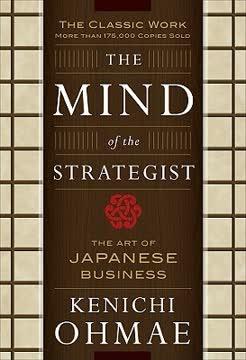
Book summary
Premium summary · Opens in the app · 30 min read
Most business planning fails before it begins. Not because the analysis is wrong or the data is incomplete, but because the thinking behind it never rises above the ordinary. Companies produce thick planning documents, hold elaborate strategy retreats, and hire expensive consultants. Yet the resulting strategies often look remarkably similar to what competitors are already doing. The plans are competent. They are thorough. They are also useless.
**Author:** Kenichi Ohmae **Estimated Reading Time:** 45 minutes
The difference between mechanical planning and true strategic thinking. How to dissect complex business situations into their constituent parts. The four fundamental routes to competitive advantage. Why asking "why" relentlessly can transform an industry. How to apply the strategic triangle of customer, corporation, and competition to any business challenge.
This book is for managers who feel trapped by conventional thinking. For entrepreneurs who sense opportunity but cannot articulate it. For executives who suspect their planning processes produce documents rather than decisions. For anyone who wants to understand how great strategists see the world differently and how that vision translates into competitive advantage.
Most business planning fails before it begins. Not because the analysis is wrong or the data is incomplete, but because the thinking behind it never rises above the ordinary. Companies produce thick planning documents, hold elaborate strategy retreats, and hire expensive consultants. Yet the resulting strategies often look remarkably similar to what competitors are already doing. The plans are competent. They are thorough. They are also useless. Kenichi Ohmae spent decades observing this phenomenon from inside McKinsey & Company, where he advised corporations across Japan, the United States, and Europe. He noticed something striking. The companies that achieved lasting competitive advantage did not necessarily work harder than their rivals. They did not have access to better information. What they had was a different way of thinking. The strategist's mind works differently from the operational manager's mind. The operational manager sees a business as a set of processes to be optimized. The strategist sees a business as a competitive arena where relative position determines outcomes. The operational manager asks how to do things better. The strategist asks which things are worth doing at all. This distinction matters more than most executives realize. A company can improve its manufacturing efficiency, reduce its costs, and enhance its customer service, yet still lose market share to a competitor who has found a fundamentally better way to create value. Absolute improvement is not enough. What matters is improvement relative to competitors, and that requires a different kind of analysis. Ohmae wrote this book in 1975, during a period when Japanese companies were disrupting industry after industry. Western executives wanted to understand the secret. They assumed it was cultural. They imagined it involved consensus decision-making, lifetime employment, or government industrial policy. Ohmae, who had studied at MIT and worked with Western corporations, knew better. The secret was not cultural. It was intellectual. Japanese strategists, he observed, approached problems differently. They did not accept industry structures as given. They did not assume that the way things had always been done was the way they must continue to…
Continue reading in the MinuteRead app
Get the complete 30-minute summary of The Mind of the Strategist
Get the complete summary in the appStrategic thinking begins with dissecting apparent wholes into constituent parts.
Competitive advantage is about relative strength, not absolute improvement.
Identify the key factors for success in your industry and concentrate resources there.
Exploit differences between you and your competitors that matter to customers.
Question industry assumptions relentlessly. Ask why until you find the bottlenecks.
Define your business in terms of customer objectives, not products.
"The Mind of the Strategist" is a strong fit if you want practical ideas around business, management, business strategy, especially themes like strategic thinking begins with dissecting apparent wholes into constituent parts; competitive advantage is about relative strength, not absolute improvement. The MinuteRead summary distills these concepts into a focused read, whether you're deciding whether to buy the book or applying its lessons at work.
Kenichi Ohmae is a renowned Japanese organizational theorist and management consultant. He is best known for developing the 3C's Model, a strategic business framework. Ohmae's expertise spans business strategy, organizational theory, and public policy. He has held prestigious academic positions, including serving as a Professor and Dean at the UCLA Luskin School of Public Affairs. As an author, Ohmae has written influential books on business strategy, with "The Mind of the Strategist" being one …
View all summaries by Kenichi OhmaeContinue Reading
Access the complete 30-minute summary and thousands more nonfiction books in the MinuteRead app.

Continue reading the complete summary in the MinuteRead app.






