MinuteRead
30 min
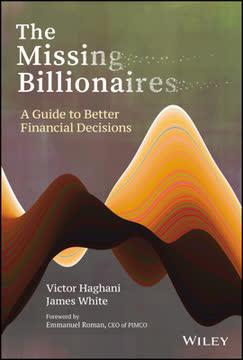
Book summary
Premium summary · Opens in the app · 30 min read
In 1998, Long-Term Capital Management collapsed. The hedge fund had been founded by some of the brightest minds in finance, including Nobel laureates and legendary traders. Victor Haghani was one of its founding partners. The fund had delivered extraordinary returns for years, and its partners had enormous confidence in their models. Then, over a few weeks, it lost nearly everything.
**Author:** Victor Haghani
**Estimated Reading Time:** 45 minutes
**What You'll Learn:**
- Why most wealthy families lose their fortunes within generations - How to make better financial decisions using Expected Utility - Why investment sizing matters more than investment selection - How to think about spending, risk, and legacy over a lifetime - Practical frameworks for managing wealth across generations
**Who This Book Is For:**
This book is for anyone who wants to think more clearly about financial decision-making. Whether you manage a large portfolio, advise others on their investments, or simply want to make better choices with your own money, the ideas here will change how you approach risk, spending, and wealth. It is especially valuable for investors who suspect that conventional wisdom about money is incomplete, and for those who want a rigorous but accessible framework for making financial choices under uncertainty.
In 1998, Long-Term Capital Management collapsed. The hedge fund had been founded by some of the brightest minds in finance, including Nobel laureates and legendary traders. Victor Haghani was one of its founding partners. The fund had delivered extraordinary returns for years, and its partners had enormous confidence in their models. Then, over a few weeks, it lost nearly everything. The collapse of Long-Term Capital Management was not caused by a failure of intelligence. It was caused by a failure of decision-making under uncertainty. The partners had sized their positions too aggressively. They had treated uncertain estimates as if they were certain facts. They had confused being smart with being right. Haghani spent years reflecting on what went wrong. He realized that the problem was not unique to his hedge fund. It was everywhere. Wealthy families were losing their fortunes across generations. Endowments were making spending decisions that endangered their long-term missions. Individual investors were making choices that left them with far less than they could have had. The book's title, *The Missing Billionaires*, refers to a puzzle. If wealth compounds over time, and if wealthy families pass their money to their children, then after several generations there should be many more billionaires than we actually observe. The fact that there are so few billionaires relative to what simple math would predict tells us something important: most wealthy families are destroying wealth, not preserving it. The problem is not that these families lack resources. They have access to the best advisors, the best investments, and the best information. The problem is that they are making systematic errors in how they think about risk, spending, and investment sizing. This book offers a better way. It draws on decades of academic research in finance and economics, but it presents these ideas in a practical framework that anyone can…
Continue reading in the MinuteRead app
Get the complete 30-minute summary of The Missing Billionaires
Get the complete summary in the appMaximize Expected Utility, not expected wealth.
Sizing matters more than selection.
Optimal spending is a fraction of current wealth.
Adjust spending as your wealth changes.
Treat human capital as part of your portfolio.
Account for uncertainty by being more conservative.
"The Missing Billionaires" is a strong fit if you want practical ideas around finance, economics, business, especially themes like maximize expected utility, not expected wealth; sizing matters more than selection. The MinuteRead summary distills these concepts into a focused read, whether you're deciding whether to buy the book or applying its lessons at work.
Victor Haghani is a finance professional and author with extensive experience in the investment industry. He co-founded Long-Term Capital Management, a hedge fund that achieved remarkable success before its spectacular collapse in 1998. This experience significantly influenced Haghani's approach to finance and risk management, as reflected in his book. Victor Haghani currently works in wealth management, applying the principles discussed in his writing to real-world financial situations. His bac…
View all summaries by Victor HaghaniContinue Reading
Access the complete 30-minute summary and thousands more nonfiction books in the MinuteRead app.

Continue reading the complete summary in the MinuteRead app.