MinuteRead
30 min
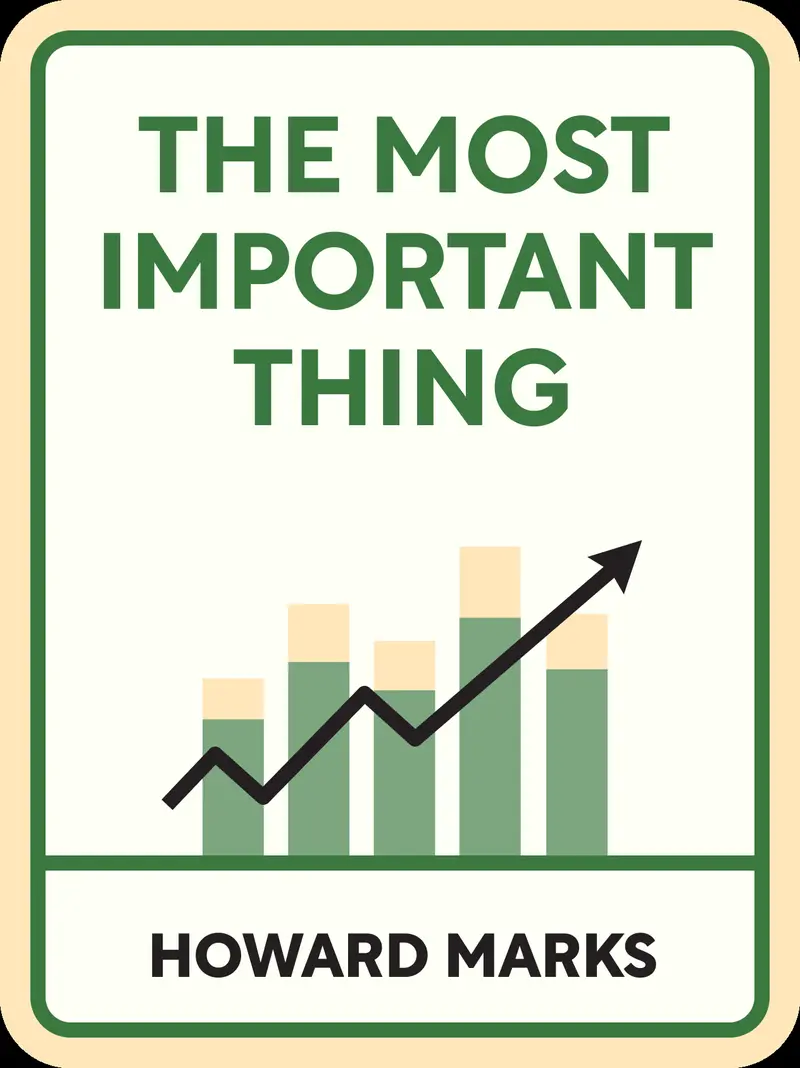
Book summary
by Howard Marks
Premium summary · Opens in the app · 30 min read
Most investment books promise a system. They offer formulas for picking stocks, rules for timing markets, or secrets to beating the crowd. Howard Marks offers something different, and far more valuable: a way of thinking.
**Author:** Howard Marks
**Estimated Reading Time:** 45 minutes
**What You'll Learn:**
- Why superior investing requires thinking differently, not just thinking harder - How to understand risk in ways most investors never consider - Why market cycles and investor psychology matter more than forecasts - How to find genuine bargains without falling into value traps - What separates defensive investors from reckless speculators
**Who This Book Is For:**
This book is for anyone who wants to understand investing at a deeper level. Whether you are a professional portfolio manager, an individual investor building long-term wealth, or simply someone curious about how markets truly work, Howard Marks offers a framework that cuts through the noise. His insights come from decades of managing money through bull markets, crashes, and everything in between. If you have ever wondered why smart people make terrible investment decisions, or why buying good companies does not always lead to good returns, this book will change how you think.
Most investment books promise a system. They offer formulas for picking stocks, rules for timing markets, or secrets to beating the crowd. Howard Marks offers something different, and far more valuable: a way of thinking. The Most Important Thing is not a how-to manual. It is a collection of memos that Marks wrote to clients over more than two decades, refined into a meditation on what actually drives investment success. The title itself is a bit of a joke. Marks identifies many "most important things," each one essential in its own way. But beneath them all lies a single insight: superior investing is not about being smarter than everyone else. It is about thinking differently, and having the discipline to act on that thinking when it is most uncomfortable. The problem most investors face is not a lack of information. In fact, information is more abundant than ever. The problem is that most people process information the same way. They read the same news, hear the same forecasts, and reach the same conclusions. When everyone agrees, prices reflect that agreement. And when prices reflect consensus, there is no edge to be gained. Marks spent his career at the intersection of credit markets, distressed debt, and contrarian investing. He co-founded Oaktree Capital Management, which became one of the world's largest distressed debt investors. His firm made its reputation by buying assets when others were terrified to touch them, and by exercising patience when others were chasing returns. The lessons in this book come from real experience, not academic theory. What makes Marks's approach different is his focus on risk. Most investors think about risk as volatility, or as the chance of losing money in the short term. Marks thinks about…
Continue reading in the MinuteRead app
Get the complete 30-minute summary of The Most Important Thing
Get the complete summary in the app**Think on the second level.** Go beyond the obvious. Consider what others think, what the price implies, and what could
**Focus on value, not price.** Understand what an asset is worth, and compare it to the current price. Buy only when the
**Risk is the probability of permanent loss.** It is not volatility. It is invisible, and it is highest when it is least
**Control risk above all else.** The road to long-term success runs through risk control more than through aggressivenes
**Everything is cyclical.** Nothing goes in one direction forever. Trees do not grow to the sky.
**The pendulum swings between greed and fear.** It rarely rests in the middle. Position yourself accordingly.
"The Most Important Thing" is a strong fit if you want practical ideas around finance, business, economics, especially themes like **think on the second level.** go beyond the obvious. consider what others think, what the price implies, and what could; **focus on value, not price.** understand what an asset is worth, and compare it to the current price. buy only when the. The MinuteRead summary distills these concepts into a focused read, whether you're deciding whether to buy the book or applying its lessons at work.
Howard Stanley Marks is a renowned American investor and writer with extensive experience in finance and investment management. He holds degrees from the Wharton School and the University of Chicago Booth School of Business. Marks co-founded Oaktree Capital Management in 1995 and previously led investment groups at The TCW Group. His career also includes 16 years at Citicorp Investment Management, where he held various leadership positions. Marks is known for his expertise in distressed debt, hi…
View all summaries by Howard MarksContinue Reading
Access the complete 30-minute summary and thousands more nonfiction books in the MinuteRead app.

Continue reading the complete summary in the MinuteRead app.