MinuteRead
30 min
Book summary
by Richard Florida
Premium summary · Opens in the app · 30 min read
For much of the twentieth century, the story of cities was a story of decline. The great industrial metropolises that had powered the rise of modern capitalism were hemorrhaging people and jobs. Middle-class families fled to the suburbs. Factories closed. Crime rose. Urban neighborhoods emptied out. By the 1970s and 1980s, many observers had written off the American city as a relic of a bygone era.
**Author:** Richard Florida
**Estimated Reading Time:** 45 minutes
**What You'll Learn:** Why the clustering of talent and wealth in cities has produced unprecedented prosperity alongside deepening inequality, how winner-take-all urbanism is reshaping our geography, and what can be done to build more inclusive cities.
**Who This Book Is For:** Anyone who lives in a city, works in urban policy, invests in real estate, or wants to understand the forces reshaping our communities, economies, and daily lives.
For much of the twentieth century, the story of cities was a story of decline. The great industrial metropolises that had powered the rise of modern capitalism were hemorrhaging people and jobs. Middle-class families fled to the suburbs. Factories closed. Crime rose. Urban neighborhoods emptied out. By the 1970s and 1980s, many observers had written off the American city as a relic of a bygone era. Then something remarkable happened. Cities began to come back. The revival started slowly in the 1990s and accelerated dramatically in the early 2000s. Young people, entrepreneurs, artists, and knowledge workers began moving back into urban centers. Crime rates fell. Neighborhoods that had been abandoned for decades filled with new life. Restaurants, galleries, and tech startups replaced boarded-up storefronts. The urban renaissance was underway. Richard Florida was one of the first thinkers to recognize and celebrate this transformation. His earlier work, particularly *The Rise of the Creative Class*, argued that cities were becoming the central organizing units of the modern economy. The key to urban success, he proposed, lay in attracting talented, creative people. Cities that welcomed diversity, fostered innovation, and offered vibrant cultural scenes would thrive. Those that did not would fall behind. For a time, this seemed like an unambiguously positive story. Cities were engines of innovation. They were places where people from different backgrounds could come together, exchange ideas, and build better lives. The creative class was growing. Urban economies were booming. But as Florida watched the urban revival unfold over the following decade, he began to notice something troubling. The prosperity he had celebrated was not being shared equally. In fact, the very forces that made cities successful were also driving new forms of inequality, segregation, and displacement. The same clustering of talent and capital that generated economic growth was also concentrating wealth in fewer hands and fewer places. The same neighborhoods that attracted creative workers were becoming unaffordable for everyone else. The same cities that led the global economy were pulling away from the rest of the country, leaving behind struggling second-tier cities, declining suburbs, and hollowed-out rural areas. This is the New Urban Crisis. The crisis is not simply about gentrification, although that is part of it. It is not simply about income…
Continue reading in the MinuteRead app
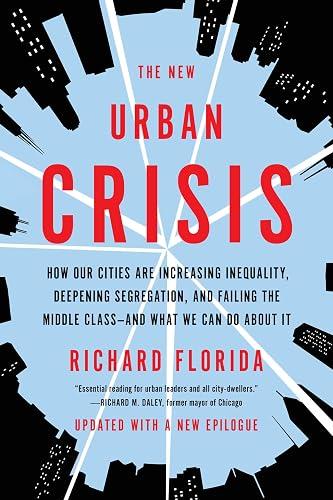
Get the complete 30-minute summary of The New Urban Crisis
Get the complete summary in the appCities succeed by clustering talented people, which drives innovation and economic growth.
The same clustering force that creates prosperity also creates inequality.
A small number of superstar cities capture a disproportionate share of economic gains.
Housing costs in successful cities have risen far faster than incomes, creating an affordability crisis.
Cities are becoming increasingly segregated by income, education, and occupation.
The middle class is being squeezed out of cities and is shrinking in suburbs as well.
"The New Urban Crisis" is a strong fit if you want practical ideas around urban planning, economics, sociology, especially themes like cities succeed by clustering talented people, which drives innovation and economic growth; the same clustering force that creates prosperity also creates inequality. The MinuteRead summary distills these concepts into a focused read, whether you're deciding whether to buy the book or applying its lessons at work.
Motivated to help readers with the very same clustering force that generates economic and social progress also divides us, Richard Florida wrote “The New Urban Crisis” to package those ideas for a fast, focused read. In “The New Urban Crisis”, Richard Florida focuses on the very same clustering force that generates economic and social progress also divides us. Through “The New Urban Crisis”, Richard Florida distills the core ideas on urban planning into lessons readers can absorb in a single sho…
Continue Reading
Access the complete 30-minute summary and thousands more nonfiction books in the MinuteRead app.

Continue reading the complete summary in the MinuteRead app.