MinuteRead
30 min
Book summary
Premium summary · Opens in the app · 30 min read
Every manager knows the feeling. You arrive at work with a clear plan for the day. You have projects to advance, decisions to make, and strategic thinking to do. Then the first employee walks into your office.
**Author:** Kenneth H. Blanchard
**Estimated Reading Time:** 45 minutes
**What You'll Learn:**
- Why managers end up doing their team's work while their own priorities suffer - The four rules of monkey management that restore order and accountability - How to delegate in a way that develops people rather than dumping tasks - How to protect your discretionary time for the leadership work only you can do - A practical system for transforming from an overwhelmed doer into an effective manager
**Who This Book Is For:**
Managers who feel buried under work that isn't theirs. Team leaders who want to develop their people without losing control. Executives who suspect their organization has a hidden productivity problem. And anyone who has ever left the office wondering why they spent the entire day solving everyone else's problems while their own to-do list sat untouched.
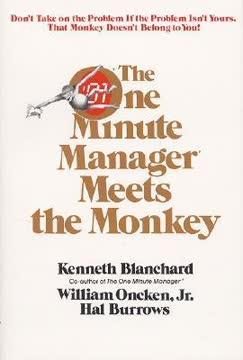
Every manager knows the feeling. You arrive at work with a clear plan for the day. You have projects to advance, decisions to make, and strategic thinking to do. Then the first employee walks into your office. "I have a problem," they say. Before you know it, the problem has become yours. You're gathering information, making calls, and figuring out a solution. The employee leaves feeling relieved. You feel helpful. But something subtle has happened. A task that belonged to your employee now belongs to you. And it's only 9:15 in the morning. By the end of the day, you've solved a dozen problems. You've been busy every minute. You've barely touched your own work. You'll stay late or take things home. Tomorrow will be the same. This is the central crisis of modern management. Not lazy employees. Not incompetent staff. Not a lack of effort. The crisis is that managers have become the primary problem-solvers for their entire team, and nobody has noticed how unsustainable this has become. Kenneth Blanchard, co-author of the legendary One Minute Manager series, identified this problem decades ago, and it has only grown worse in the years since. In The One Minute Manager Meets the Monkey, he offers a diagnosis that is as uncomfortable as it is liberating: the problem isn't your workload. The problem is that you're doing everyone else's work. The book uses a simple metaphor to explain a profound organizational truth. A "monkey" is the next move in any task or project. Every monkey needs an owner. When an employee brings you a problem and you agree to think about it, get back to them, or handle it, the monkey has jumped from their back to yours. They walk away lighter. You sit there heavier. The result is predictable. Managers become bottlenecks. Employees become dependent. Organizations slow down. And…
Continue reading in the MinuteRead app
Get the complete 30-minute summary of The One Minute Manager Meets the Monkey
Get the complete summary in the appA monkey is the next move. Every task has one. Know who owns it.
All monkeys must be handled at the lowest organizational level consistent with their welfare.
Use the four rules: describe the monkey, assign the monkey, insure the monkey, check on the monkey.
The best way to develop responsibility is to give responsibility.
Coaching is the bridge between where your team is and where they need to be.
Subordinate-imposed time is the enemy of discretionary time.
"The One Minute Manager Meets the Monkey" is a strong fit if you want practical ideas around business, leadership, management, especially themes like a monkey is the next move. every task has one. know who owns it; all monkeys must be handled at the lowest organizational level consistent with their welfare. The MinuteRead summary distills these concepts into a focused read, whether you're deciding whether to buy the book or applying its lessons at work.
Kenneth H. Blanchard is a renowned leadership expert and bestselling author. He co-wrote "The One Minute Manager" and has authored or co-authored over 60 books, selling more than 21 million copies worldwide. His works have been translated into over 27 languages, and he was inducted into Amazon's Hall of Fame as a top 25 bestselling author. Blanchard co-founded The Ken Blanchard Companies, an international management training and consulting firm, with his wife Margie in 1979. He also teaches at t…
View all summaries by Kenneth H. BlanchardContinue Reading
Access the complete 30-minute summary and thousands more nonfiction books in the MinuteRead app.

Continue reading the complete summary in the MinuteRead app.