MinuteRead
30 min
Book summary
Premium summary · Opens in the app · 30 min read
Most options traders fail for the same reason most restaurants fail. They open their doors without a business plan, without understanding their costs, without knowing who their customers are, and without any system for managing risk. They confuse activity with progress. They mistake luck for skill. And when the inevitable bad month arrives, they have no framework for survival.
**Author:** Dennis A. Chen
**Estimated Reading Time:** 45 minutes
**What You'll Learn:**
- How to run your options portfolio like a disciplined insurance company - Why selling options is fundamentally different from buying them - The three dimensions of volatility that create trading edge - How to protect against catastrophic losses while generating consistent income - The specific rules and frameworks used by a professional options trader
**Who This Book Is For:**
This book is for options traders who have moved beyond the basics and want to build a systematic, business-like approach to generating income. If you understand what a put and a call are, if you have placed a credit spread or an iron condor, and if you are ready to stop gambling and start operating like a professional, this book will change how you think about every trade you place.
Most options traders fail for the same reason most restaurants fail. They open their doors without a business plan, without understanding their costs, without knowing who their customers are, and without any system for managing risk. They confuse activity with progress. They mistake luck for skill. And when the inevitable bad month arrives, they have no framework for survival. Dennis Chen approaches options trading from an entirely different angle. He asks a simple question: what if you ran your trading account like an insurance company? Insurance companies have been around for centuries. They survive hurricanes, earthquakes, floods, and financial crises. They do not survive because they are lucky. They survive because they understand exactly what they are selling, they price their products with a margin of safety, they diversify their risks, and they maintain reserves for catastrophic events. They know that some policies will lose money. They know that some years will be terrible. But they also know that over time, disciplined underwriting produces consistent profits. The individual options trader rarely thinks this way. Most traders buy options hoping for a big score. They chase momentum. They trade based on tips, hunches, and headlines. They have no underwriting process, no risk management rules, and no understanding of what they are actually selling or buying. Chen's insight is that selling options is functionally identical to selling insurance. When you sell a put, you are collecting a premium in exchange for agreeing to buy a stock at a lower price if it falls. That is exactly what an insurance company does when it sells a policy on a house. The homeowner pays a premium. The insurance company agrees to pay if the house burns down. The insurance company does not hope the house burns down. It prices the policy so that across thousands of houses, the premiums collected exceed the…
Continue reading in the MinuteRead app
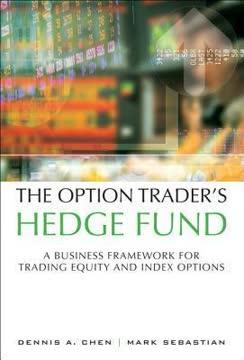
Get the complete 30-minute summary of The Option Trader's Hedge Fund
Get the complete summary in the appRun your options portfolio as a one-man insurance company. You are selling promises to pay in the future in exchange for
Never risk more than 2% of your capital on any single trade. This neutralizes the shark attack.
If you lose 6% in a single month, stop trading for the rest of that month. This neutralizes the piranha attack.
Spend 5 to 10% of your trading capital on units: far out-of-the-money options that explode in a crash.
Understand the three dimensions of volatility: ATM IV, skew, and term structure. Each creates edge.
Use a trading checklist before every trade. If you cannot answer every question, do not take the trade.
"The Option Trader's Hedge Fund" is a strong fit if you want practical ideas around money & finance, especially themes like run your options portfolio as a one-man insurance company. you are selling promises to pay in the future in exchange for; never risk more than 2% of your capital on any single trade. this neutralizes the shark attack. The MinuteRead summary distills these concepts into a focused read, whether you're deciding whether to buy the book or applying its lessons at work.
Dennis A. Chen is the author of "The Option Trader's Hedge Fund." He is an experienced options trader with a background in institutional floor trading. Chen's expertise lies in developing strategies for consistent profit in options trading, particularly focusing on selling options rather than buying them. His approach draws parallels between options trading and running an insurance business. Chen emphasizes the importance of risk management, volatility understanding, and disciplined trading prac…
View all summaries by Dennis A. ChenContinue Reading
Access the complete 30-minute summary and thousands more nonfiction books in the MinuteRead app.

Continue reading the complete summary in the MinuteRead app.