MinuteRead
30 min
Book summary
Premium summary · Opens in the app · 30 min read
Every family has one. The child who feels everything more deeply. The one who notices the subtle shift in a parent's mood before anyone else. The child who melts down at loud noises, who refuses certain foods because of their texture, who lies awake at night worrying about things other children never seem to notice. Parents of these children often describe them as difficult, challenging, or overly sensitive. They worry. They wonder what they are doing wrong.
**Author:** W. Thomas Boyce, MD
**Estimated Reading Time:** 42 minutes
**What You'll Learn:**
* Why some children are extraordinarily sensitive to their environments while others seem to thrive almost anywhere * The biological science behind stress reactivity and how it shapes health, learning, and lifelong outcomes * How the same sensitivity that makes children vulnerable can also make them exceptional * Practical strategies for parents, teachers, and communities to help sensitive children flourish * Why understanding human diversity in sensitivity matters for the future of society
**Who This Book Is For:**
This book is for parents who worry about their sensitive children, for teachers who want to reach every student, for healthcare professionals seeking deeper understanding of child development, and for anyone who has ever wondered why some people seem deeply affected by their circumstances while others remain largely untouched. It is also for the orchids themselves, those who have always felt the world more intensely than others and wondered if that intensity was a gift or a burden.
Every family has one. The child who feels everything more deeply. The one who notices the subtle shift in a parent's mood before anyone else. The child who melts down at loud noises, who refuses certain foods because of their texture, who lies awake at night worrying about things other children never seem to notice. Parents of these children often describe them as difficult, challenging, or overly sensitive. They worry. They wonder what they are doing wrong. W. Thomas Boyce spent decades studying exactly these children. As a pediatrician and researcher at some of the world's leading institutions, he observed thousands of children and followed their development over years. What he discovered overturned conventional wisdom about childhood vulnerability and resilience. The children who struggled most in difficult circumstances were not simply fragile. They were not broken versions of normal children. They were something else entirely. The breakthrough came when Boyce and his colleagues began looking closely at biological stress responses. They found that children fall into roughly two categories. Most children, about eighty percent, show relatively modest biological reactions to stress. Their cortisol levels rise somewhat when they face challenges, their fight-or-flight systems activate moderately, and then everything returns to baseline. These children tend to do reasonably well in almost any environment. They are the dandelions, able to take root and grow in nearly any soil. But about twenty percent of children show dramatically different patterns. Their stress responses are intense. Their cortisol spikes sharply. Their autonomic nervous systems react powerfully. These children are exquisitely sensitive to their environments. In conditions of adversity, stress, or neglect, they suffer disproportionately. They develop more illnesses, more emotional problems, more behavioral difficulties. They are…
Continue reading in the MinuteRead app
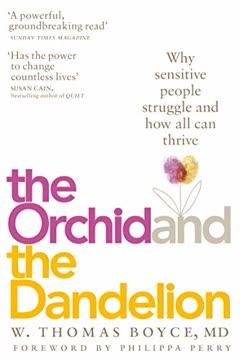
Get the complete 30-minute summary of The Orchid and the Dandelion
Get the complete summary in the appAbout 20 percent of children are orchids, highly sensitive to their environments in both positive and negative direction
The remaining 80 percent are dandelions, able to function reasonably well in almost any environment.
Orchid sensitivity is biological, involving stress response systems, neurotransmitter function, and genetic factors.
The same sensitivity that makes orchids vulnerable to adversity also makes them responsive to support.
In supportive environments, orchid children often outperform their less sensitive peers.
Orchid children need warmth, structure, predictability, and appropriate challenges.
"The Orchid and the Dandelion" is a strong fit if you want practical ideas around parenting, psychology, education, especially themes like about 20 percent of children are orchids, highly sensitive to their environments in both positive and negative direction; the remaining 80 percent are dandelions, able to function reasonably well in almost any environment. The MinuteRead summary distills these concepts into a focused read, whether you're deciding whether to buy the book or applying its lessons at work.
Dr. W. Thomas Boyce is a pediatrician and researcher who specializes in the study of child development and behavior. His work focuses on understanding how environmental factors and individual differences in sensitivity affect children's health and well-being. Boyce's interest in this field was partly inspired by his own family experiences, particularly with his sister. He has conducted extensive research on the biological and psychological aspects of children's stress responses and resilience. B…
View all summaries by W. Thomas BoyceContinue Reading
Access the complete 30-minute summary and thousands more nonfiction books in the MinuteRead app.

Continue reading the complete summary in the MinuteRead app.