MinuteRead
30 min
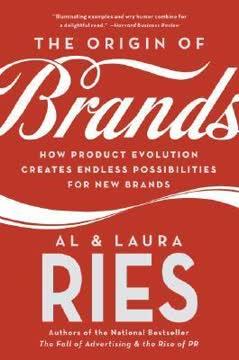
Every business leader wants to build a great brand. Yet the path to brand greatness remains surprisingly misunderstood. The conventional wisdom says that success comes from making better products, running clever advertising campaigns, and working harder than the competition. Billions of dollars are spent each year on these assumptions. Most of it is wasted.
**Author:** Al Ries
**Estimated Reading Time:** 45 minutes
**What You'll Learn:**
- Why convergence is a myth that destroys brands - How divergence creates the conditions for new category leaders - The biological principles that govern brand evolution - Why being first in a category matters more than being better - How to create, name, and dominate new categories - Why pruning your brand portfolio strengthens your position - How to use PR and slow growth to build lasting brands
**Who This Book Is For:**
Entrepreneurs launching new products, marketers struggling to differentiate in crowded markets, executives considering brand extensions, and anyone who wants to understand why some brands endure while others fade. If you have ever wondered why the best product does not always win, or why category leaders seem impossible to dislodge, this book provides the answer.
Every business leader wants to build a great brand. Yet the path to brand greatness remains surprisingly misunderstood. The conventional wisdom says that success comes from making better products, running clever advertising campaigns, and working harder than the competition. Billions of dollars are spent each year on these assumptions. Most of it is wasted. Al Ries spent decades observing a different pattern. The brands that dominate their markets rarely win because they made a better product. They win because they created a new category and became the first brand to occupy it in the minds of consumers. Coca-Cola did not become the world's most valuable soft drink brand by making a better cola. It became the first cola. Google did not win search by building a better algorithm than everyone else. It became the first brand people associated with internet search. Amazon did not win online retail by offering better service than traditional stores. It became the first major online bookstore and then the first dominant online retailer. This pattern repeats across every industry and every era. The first brand in a new category captures a position in the mind that competitors find nearly impossible to dislodge. Later entrants can succeed, but only by creating their own categories or by positioning themselves as the opposite of the leader. Trying to beat the leader at its own game almost always fails. The problem is that most companies do not think in terms of categories. They think in terms of products, features, and benefits. They believe that if they build something better, customers will naturally switch. This belief ignores the way human minds actually work. People do not evaluate products in isolation. They evaluate products through the lens of categories. When someone wants a cola, they think of Coca-Cola. When someone wants a smartphone, they think of the iPhone. The brand and the…
Continue reading in the MinuteRead app
Get the complete 30-minute summary of The Origin of Brands
Get the complete summary in the appDivergence, not convergence, drives brand creation.
You do not build brands. You create categories.
Being first in the mind is the most powerful brand advantage.
If you cannot be first, be the opposite of the leader.
New categories require new brands.
Line extensions weaken brands.
"The Origin of Brands" is a strong fit if you want practical ideas around business, design, especially themes like divergence, not convergence, drives brand creation; you do not build brands. you create categories. The MinuteRead summary distills these concepts into a focused read, whether you're deciding whether to buy the book or applying its lessons at work.
Al Ries is a prominent marketing professional and author, co-founder of the consulting firm Ries & Ries with his daughter Laura. He coined the term "positioning" in marketing and co-authored the industry-standard book "Positioning: The Battle For Your Mind." Ries graduated from DePauw University in 1950 and worked at General Electric before founding his own advertising agency. He later transitioned to marketing strategy, collaborating with Jack Trout to promote the concept of positioning. Ries h…
View all summaries by Al RiesContinue Reading
Access the complete 30-minute summary and thousands more nonfiction books in the MinuteRead app.

Continue reading the complete summary in the MinuteRead app.