 MinuteRead
30 min
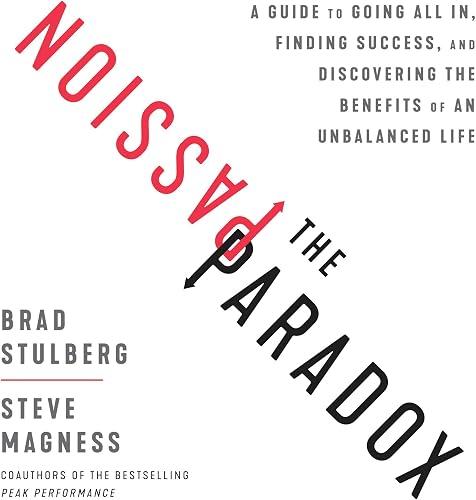
The Passion Paradox explains the risks of blindly following what we love to do the most and teaches us how to cultivate our passions in a way that can lead us to a fulfilling life.
The Passion Paradox explains the risks of blindly following what we love to do the most and teaches us how to cultivate our passions in a way that can lead us to a fulfilling life.
When you love what you do, you often forget about everything else. If you try to turn your passion into a job, you can easily get very busy and neglect family, friends and even your own wellbeing. Even Mahatma Gandhi, whose entire life was dedicated to helping his people and advocating for non-violence, had a troubled relationship with his son.
Passion also means suffering and implies you sacrifice something to it. It will almost certainly take you to an unbalanced life. But putting forth too much emotional and physical effort is only sustainable in the short term. So, if you aim for the long run, you should pace yourself.
If you let it go unchecked, passion can lead you to burn out and loneliness or turn you into a slave to external validation.
Sometimes you start a project you really like working on, then you become increasingly focused on results and switch from the pleasure of doing what you love to the urge to be appreciated. Imagine you liked taking pictures and you decided to post them on Instagram. Easily, especially if your followers grow fast, you may become obsessed with the number of likes you get, forgetting why you opened your account in the first place.
Sometimes passion may simply slowly dim and even disappear. This is, for example, what happens to many people who manage to turn a hobby into their job. Often it starts to feel like work and it’s not fun anymore.
Isn’t passion something that can help us achieve greatness? How come it may have so many bad consequences on our lives? The answer is in the neurochemical processes behind it, which make it really similar to drug addiction. Passion is so powerful because it triggers dopamine production, with positive and negative consequences. Dopamine is a substance produced by the brain to push us towards our goals. it One released, it makes us chase rewards. Unfortunately, once we get them, dopamine slowly decreases, letting us willing for more. Also, our tolerance for dopamine increases over time. We need higher and higher levels to experience the same feeling. Thus we need to set increasingly difficult goals to get satisfied. This process, which fosters people’s motivation, is the same that drives addicts to get drugs. It’s useful but also dangerous. Jeffrey Skilling was the founder of what was named America’s most innovative large company: Enron. He only hired the most passionate people. Enron, valued at 60 billion dollars, was a model of…
Continue reading in the MinuteRead app
Get the complete 5-minute summary of The Passion Paradox
Get the complete summary in the appPursuing your passion is risky and requires self-awareness.
The biological mechanism behind passion ties it with addiction.
A healthy passion comes with the pleasure of improving yourself.
"The Passion Paradox" is a strong fit if you want practical ideas around business, career, creativity, especially themes like pursuing your passion is risky and requires self-awareness; the biological mechanism behind passion ties it with addiction. The MinuteRead summary distills these concepts into a focused read, whether you're deciding whether to buy the book or applying its lessons at work.
Brad Stulberg researches, writes, and coaches on performance, well-being, and sustainable excellence. He is the bestselling author of The Practice of Groundedness, Master of Change, and co-author of Peak Performance. Stulberg regularly contributes to the New York Times, and his work has been featured in The Wall Street Journal and The Atlantic among many other outlets. He serves as the co-host of the podcast "excellence, actually" and is on faculty at the University of Michigan. He lives in Ashe…
View all summaries by Brad StulbergContinue Reading
Access the complete 5-minute summary and thousands more nonfiction books in the MinuteRead app.

Continue reading the complete summary in the MinuteRead app.






