 MinuteRead
30 min
Book summary
by Robert Fritz
Premium summary · Opens in the app · 30 min read
Every organization has a path of least resistance. It is the route that energy naturally follows when people make decisions, allocate resources, and respond to challenges. Sometimes that path leads toward growth, innovation, and sustained success. More often, it leads back to familiar patterns, entrenched habits, and the quiet comfort of the status quo.
**Author:** Robert Fritz
**Estimated Reading Time:** 45 minutes
**What You'll Learn:** - Why most organizational change efforts fail despite good intentions - How underlying structures determine whether your organization advances or oscillates - The difference between problem-solving and creating - How to build structural tension that naturally drives progress - Why shared vision alone is not enough without shared reality - How to redesign structures so the path of least resistance leads toward your goals
**Who This Book Is For:** Managers and leaders who are tired of pushing initiatives that lose momentum. Executives who sense that something invisible keeps pulling their organization back to old patterns. Anyone who wants to understand why some organizations consistently move forward while others spin in circles despite equal effort and talent.
Every organization has a path of least resistance. It is the route that energy naturally follows when people make decisions, allocate resources, and respond to challenges. Sometimes that path leads toward growth, innovation, and sustained success. More often, it leads back to familiar patterns, entrenched habits, and the quiet comfort of the status quo. Robert Fritz spent years studying why some organizations advance while others oscillate. He noticed something that most management theories miss. The difference is not found in motivation, talent, or even strategy. The difference is structural. Think about a river. Water does not choose its path. It follows the terrain, flowing where the landscape directs it. If you want the river to flow somewhere else, you do not yell at the water. You do not give the water an inspiring speech. You change the shape of the land. The same principle applies to organizations. People behave according to the structures they operate within. If you want different behavior, you must change the structure. Most managers never see this. They focus on symptoms. Sales are down, so they push harder. Morale is low, so they plan a retreat. Innovation is stagnant, so they hire a consultant. These actions may produce temporary improvements, but the underlying structure remains unchanged. Eventually, the organization reverts to its previous behavior. The path of least resistance wins again. Fritz argues that the central task of leadership is not motivation or problem-solving. It is structural design. Leaders must become architects of organizational structure, understanding how invisible forces shape behavior and outcomes. When leaders learn to see structure, they can redesign it so that the natural flow of energy moves toward the organization's goals rather than away from them. This book offers a different way of thinking about management. It is not a collection of techniques or best practices. It is a framework for understanding why organizations behave the way they do and how to create lasting change.…
Continue reading in the MinuteRead app
Get the complete 30-minute summary of The Path of Least Resistance for Managers
Get the complete summary in the appStructure determines behavior. Change the structure to change the behavior.
Structural tension is created by the gap between a clear vision and an honest assessment of current reality.
The absence of problems is not the same as the presence of desired outcomes.
Structural conflict causes oscillation. Competing priorities neutralize progress.
Problem-solving alone leads to oscillation, not advancement.
Shared structural tension requires both shared vision and shared reality.
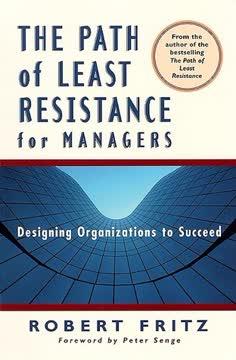
"The Path of Least Resistance for Managers" is a strong fit if you want practical ideas around business, management, leadership, especially themes like structure determines behavior. change the structure to change the behavior; structural tension is created by the gap between a clear vision and an honest assessment of current reality. The MinuteRead summary distills these concepts into a focused read, whether you're deciding whether to buy the book or applying its lessons at work.
Robert Fritz is an author and management consultant known for his work on structural dynamics and organizational behavior. He has written several books on personal and organizational development, with "The Path of Least Resistance for Managers" being one of his notable works. Fritz's approach focuses on helping individuals and organizations create desired outcomes by understanding and working with underlying structures. His ideas have been influential in various fields, including business manage…
View all summaries by Robert FritzContinue Reading
Access the complete 30-minute summary and thousands more nonfiction books in the MinuteRead app.

Continue reading the complete summary in the MinuteRead app.






