MinuteRead
30 min
Book summary
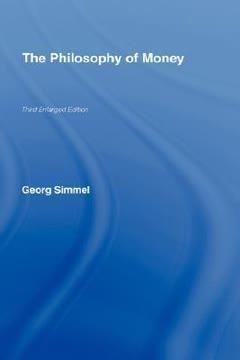
by Georg Simmel
Premium summary · Opens in the app · 30 min read
Most books about money explain how to earn it, save it, invest it, or spend it. They treat money as a practical instrument, a neutral tool that simply facilitates exchange. Georg Simmel saw something far more profound. Writing at the dawn of the twentieth century, he recognized that money was not just an economic convenience but a philosophical revolution that had quietly transformed the texture of human existence.
**Author:** Georg Simmel **Estimated Reading Time:** 45 minutes
**What You'll Learn:**
- Why money is not merely an economic tool but a philosophical phenomenon - How value emerges from relationships rather than inherent qualities - The cultural and psychological transformation money brings to modern life - Why the evolution of money mirrors the evolution of human consciousness - How money reshapes freedom, individuality, and social bonds
**Who This Book Is For:**
Readers who sense that money means more than transactions. Those curious about the hidden architecture of modern life. Anyone who has wondered why the pursuit of money feels simultaneously liberating and hollow. This is not a book about getting rich. It is a book about understanding the silent force that shapes how we think, relate, and value.
Most books about money explain how to earn it, save it, invest it, or spend it. They treat money as a practical instrument, a neutral tool that simply facilitates exchange. Georg Simmel saw something far more profound. Writing at the dawn of the twentieth century, he recognized that money was not just an economic convenience but a philosophical revolution that had quietly transformed the texture of human existence. Simmel was not an economist. He was a sociologist and philosopher who wandered across disciplines with unusual freedom. He wrote about the metropolis, about strangers, about fashion, about secrecy. But in The Philosophy of Money, first published in 1900, he produced his most ambitious work. His question was not how money functions but what money does to us. The problem Simmel identified is that we live inside a money economy without understanding its deeper consequences. We use money every day, yet we rarely pause to consider how it shapes our perceptions, our relationships, our sense of self. Money appears natural, inevitable, almost invisible. But Simmel argued that money is one of the most consequential inventions in human history, not because it makes trade easier, but because it transforms the very way we think about value, meaning, and connection. Before money, value was embedded in specific objects. A cow had worth because it provided milk, labor, and meat. A piece of land had worth because it sustained a family. Value was concrete, local, and tied to the particular qualities of things. Money changed all of this. It created a universal measure that could express the value of anything, from a loaf of bread to a work of art to an hour of labor. In doing so, it abstracted value from the particular and made it general. This abstraction is the heart of Simmel's insight. Money is not valuable because of what it is. A coin or a bill has almost no intrinsic worth. Money is…
Continue reading in the MinuteRead app
Get the complete 30-minute summary of The Philosophy of Money
Get the complete summary in the appMoney has no intrinsic value. It is valuable only because of what it represents: the network of possible exchanges.
Value is relational. It emerges from the distance between desire and possession.
Money evolved from concrete commodities to abstract symbols, reflecting a broader cultural movement toward abstraction.
The money economy trains the mind in calculation, abstraction, and detachment.
Money liberates individuals from personal bonds but subjects them to impersonal market forces.
The money economy transforms social relationships from personal to transactional.
"The Philosophy of Money" is a strong fit if you want practical ideas around money & finance, philosophy, sociology, especially themes like money has no intrinsic value. it is valuable only because of what it represents: the network of possible exchanges; value is relational. it emerges from the distance between desire and possession. The MinuteRead summary distills these concepts into a focused read, whether you're deciding whether to buy the book or applying its lessons at work.
Georg Simmel was a prominent German sociologist, philosopher, and critic of the late 19th and early 20th centuries. He pioneered sociological antipositivism and made significant contributions to urban sociology, symbolic interactionism, and social network analysis. Simmel's work focused on social and cultural phenomena, exploring concepts of individuality, fragmentation, and the impact of modern urban life. His major works include "The Philosophy of Money" and "The Metropolis and Mental Life." S…
View all summaries by Georg SimmelContinue Reading
Access the complete 30-minute summary and thousands more nonfiction books in the MinuteRead app.

Continue reading the complete summary in the MinuteRead app.