MinuteRead
30 min
Book summary
Premium summary · Opens in the app · 30 min read
Most organizations operate on a set of assumptions that have gone unexamined for decades. These assumptions tell us that people are primarily self-interested, that hierarchy is the natural order, that control produces results, and that change must be planned from the top. They tell us that organizations are machines and people are parts.
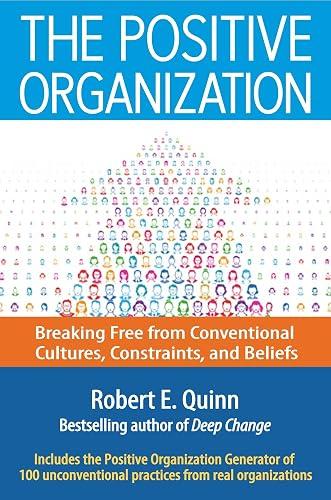
**Author:** Robert E. Quinn **Estimated Reading Time:** 45 minutes
**What You'll Learn:** - Why some organizations consistently exceed expectations while others struggle - How leaders can shift from conventional thinking to a more powerful positive mindset - The role of purpose, authenticity, and trust in building thriving cultures - Practical tools for creating positive change from anywhere in an organization
**Who This Book Is For:** Leaders at every level who sense that something is missing in their organization. Managers frustrated by disengagement and stagnation. Executives who want more than compliance from their people. Anyone who believes work should bring out the best in human beings rather than merely extracting effort from them.
Most organizations operate on a set of assumptions that have gone unexamined for decades. These assumptions tell us that people are primarily self-interested, that hierarchy is the natural order, that control produces results, and that change must be planned from the top. They tell us that organizations are machines and people are parts. These assumptions are not wrong in any absolute sense. They are simply incomplete. And when leaders treat them as complete, they create organizations that feel lifeless, transactional, and exhausting. People comply but do not commit. They perform but do not flourish. They meet expectations but rarely exceed them. Robert Quinn spent his career studying organizations that break this pattern. He noticed something striking: certain organizations, even in difficult industries and challenging circumstances, seemed to generate energy rather than consume it. People in these organizations described their work as meaningful. They collaborated naturally. They innovated without being told. They exceeded expectations not because they were pressured to, but because they wanted to. What made these organizations different? Quinn discovered that it was not strategy, structure, or talent. It was something deeper: a way of seeing the organization itself. Most leaders carry a mental map that emphasizes hierarchy, control, and self-interest. This map is useful for certain tasks. It helps leaders maintain stability, manage resources, and ensure accountability. But it has a serious limitation. It cannot explain or create the conditions where people genuinely thrive. Quinn calls the alternative a positive mental map. This map sees organizations as networks of relationships rather than pyramids of authority. It sees people as capable of prosocial motivation, not just self-interest. It sees change as something that can emerge from anywhere, not just from the top. And it sees purpose as the primary source of energy, not profit. The difference between these two maps is not philosophical. It is practical. Leaders who operate only from the conventional map create organizations where people withdraw. Leaders who learn to operate from both maps, what Quinn calls bilingual leaders, create organizations where people flourish.…
Continue reading in the MinuteRead app
Get the complete 30-minute summary of The Positive Organization
Get the complete summary in the appPositive organizations are created when people flourish as they work, not when they are pressured to perform.
Leaders need both conventional and positive mental maps. The goal is integration, not replacement.
Purpose is the primary source of energy. Connect people to why their work matters.
Authentic conversations require vulnerability. Leaders must model it.
Seeing is more persuasive than telling. Expose people to excellence.
The common good unlocks commitment, not just compliance.
"The Positive Organization" is a strong fit if you want practical ideas around leadership, business, management, especially themes like positive organizations are created when people flourish as they work, not when they are pressured to perform; leaders need both conventional and positive mental maps. the goal is integration, not replacement. The MinuteRead summary distills these concepts into a focused read, whether you're deciding whether to buy the book or applying its lessons at work.
Motivated to help readers with iN A POSITIVE ORGANIZATION, Robert E. Quinn wrote “The Positive Organization” to package those ideas for a fast, focused read. In “The Positive Organization”, Robert E. Quinn focuses on iN A POSITIVE ORGANIZATION. Through “The Positive Organization”, Robert E. Quinn distills the core ideas on leadership into lessons readers can absorb in a single short sitting. Readers turn to this work when they want Robert E. Quinn's perspective on the subject without working thr…
View all summaries by Robert E. QuinnContinue Reading
Access the complete 30-minute summary and thousands more nonfiction books in the MinuteRead app.

Continue reading the complete summary in the MinuteRead app.