MinuteRead
30 min
Book summary
Premium summary · Opens in the app · 30 min read
There is a moment that defines nearly every meaningful pursuit. It is not the moment of triumph, nor the moment of inspiration. It is the quiet moment when you must choose between what you said you wanted and what you feel like doing right now. That moment arrives without fanfare. It arrives at six in the morning when the alarm sounds and the bed is warm. It arrives when the project deadline looms and your phone glows with distraction. It arrives when you stand in the kitchen, tired and hungry,
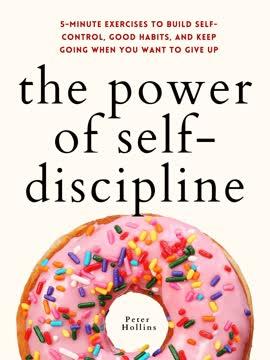
**Author:** Peter Hollins **Estimated Reading Time:** 45 minutes
**What You'll Learn:** - Why self-discipline is the single most important skill for bridging the gap between who you are and who you want to become - How to break the cycle of laziness that keeps you trapped in inaction - The neuropsychology behind disciplined behavior and how to rewire your brain for follow-through - Practical techniques including if-then planning, self-interrogation, and strategic peer pressure - A complete 30-day implementation plan to build lasting self-discipline
**Who This Book Is For:** Anyone who has ever known exactly what to do but struggled to actually do it. If you have goals that remain unfulfilled, habits you cannot seem to establish, or a persistent gap between your intentions and your actions, this book is for you.
There is a moment that defines nearly every meaningful pursuit. It is not the moment of triumph, nor the moment of inspiration. It is the quiet moment when you must choose between what you said you wanted and what you feel like doing right now. That moment arrives without fanfare. It arrives at six in the morning when the alarm sounds and the bed is warm. It arrives when the project deadline looms and your phone glows with distraction. It arrives when you stand in the kitchen, tired and hungry, and the easy choice is not the good choice. Most people lose that moment. Not because they are weak or lazy or fundamentally flawed. They lose it because no one ever taught them how to win it. They were told to be motivated. They were told to want it badly enough. They were told to try harder. But motivation fades, wanting is not enough, and trying harder without a system is just exhausting yourself faster. Peter Hollins wrote this book to address a simple but profound problem: the distance between what you intend to do and what you actually do. That distance is where dreams go to die. It is where potential becomes regret. And it is a distance that can be closed, not through superhuman willpower, but through understanding how self-discipline actually works and building systems that make disciplined action easier. The central insight of this book is both liberating and demanding. Self-discipline is not a personality trait you either have or lack. It is a skill. It is a set of behaviors, thought patterns, and environmental choices that anyone can learn. The disciplined person is not someone who never feels lazy. The disciplined person is someone who has learned to act despite feeling lazy. The disciplined person is not someone who never wants to quit. The disciplined person is someone who has built a system that makes…
Continue reading in the MinuteRead app
Get the complete 30-minute summary of The Power of Self-Discipline
Get the complete summary in the appSelf-discipline is a skill, not a trait. You can learn it.
The cycle of laziness has five phases: assumptions, discomfort, excuses, avoidance, consequences. Break it at any phase.
Ask yourself: "Am I doing the right thing or the easy thing?" Answer honestly.
Start small. A five-minute habit done daily beats a one-hour habit done occasionally.
Use if-then plans: "If X happens, then I will do Y." Write them down.
Know whether you are a moderator or an abstainer. Choose the strategy that fits.
"The Power of Self-Discipline" is a strong fit if you want practical ideas around self help, personal development, psychology, especially themes like self-discipline is a skill, not a trait. you can learn it; the cycle of laziness has five phases: assumptions, discomfort, excuses, avoidance, consequences. break it at any phase. The MinuteRead summary distills these concepts into a focused read, whether you're deciding whether to buy the book or applying its lessons at work.
Peter Hollins is a bestselling author and researcher in human psychology. He holds a BS in psychology and a graduate degree, focusing his work on understanding the human condition. Hollins is known for writing self-help books that condense complex theories into digestible content for time-poor readers. His writing style is characterized by a relatable tone and the ability to simplify elaborate case studies into practical advice. Hollins' books often cover topics related to personal development, …
View all summaries by Peter HollinsContinue Reading
Access the complete 30-minute summary and thousands more nonfiction books in the MinuteRead app.

Continue reading the complete summary in the MinuteRead app.