MinuteRead
30 min
Book summary
Premium summary · Opens in the app · 5 min read
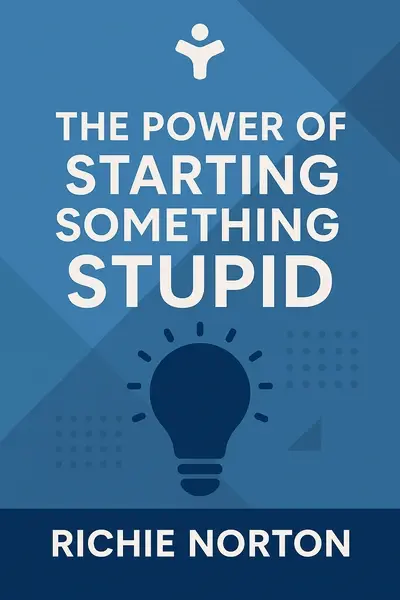
The Power Of Starting Something Stupid shows you that most ideas are often falsely labeled stupid at first, and that if they are, that’s a good indicator you should pursue them and not care what anyone thinks.
The Power Of Starting Something Stupid shows you that most ideas are often falsely labeled stupid at first, and that if they are, that’s a good indicator you should pursue them and not care what anyone thinks.
You’ve been there before. I know you have. You came up with something you thought was a BRILLIANT idea, like using iPads in restaurants to replace waiters.
Your friends instantly proceed to tell you how stupid the idea is. “People want the human interaction, that’ll never fly.” “iPads are expensive, that’s stupid!” Discouraged, you give up on your idea before you even started.
Actually, the second you heard the word “stupid”, you should’ve listened up. Some of the world’s greatest business ideas were considered stupid. But people started them anyway, because they trusted their gut feeling and not their friends’ opinions.
The telephone in 1876? Considered a total waste of time. Harry Potter? Rejected by 11 publishers. Oh and that iPad thing? Happened to me in 2011. I had the idea to create a restaurant where people sit down, have an iPad in their table, and instantly order from there.
Stupid? Yes. But in 2012, I ordered at a restaurant at the Toronto airport with this exact method. Don’t give a damn about what people say. If anything, take “stupid” as an indicator that you’re on to something great.
Now your idea can be as stupid as you want, but that doesn’t mean you get to be stupid about how you execute it. If your goal is to run a successful blog, it’s super easy to postpone even starting, because there are so many things to do. You have to buy the domain, set up the website, pick a design and then there are god knows how many blog posts to write before you ever get somewhere. But looking at your project like this won’t help you execute it. Instead, chunk your idea into the smallest projects you can manage. This way, you allow yourself to fail on a small scale, without ever questioning your idea in itself. For example, you can pick one of three topics and write 4 blog posts in a month about it. If none of them elicit any interesting comments or favorable feedback, you can just choose the next topic and start over. Your topic failed, but your idea is still very much intact. Don’t focus on the big picture, just on the very next step. Would I love Four Minute Books to be this gigantic stash of 1000 book summaries? Sure. But instead of obsessing over how much work that takes, I’d rather focus on just writing one summary per week. As long as I continue doing…
Continue reading in the MinuteRead app
Get the complete 5-minute summary of The Power Of Starting Something Stupid
Get the complete summary in the appIf you have an idea people think is stupid, only trust your instincts.
Give yourself the freedom to fail by breaking your idea down into small projects.
Work with what you’ve got, instead of making excuses.
"The Power Of Starting Something Stupid" is a strong fit if you want practical ideas around business, career, creativity, especially themes like if you have an idea people think is stupid, only trust your instincts; give yourself the freedom to fail by breaking your idea down into small projects. The MinuteRead summary distills these concepts into a focused read, whether you're deciding whether to buy the book or applying its lessons at work.
Richie Norton is an award-winning, bestselling author and entrepreneur. His books include Anti-Time Management, The Power of Starting Something Stupid and Résumés Are Dead & What to Do About It. Richie was named one of the world's top 100 business coaches by Dr. Marshall Goldsmith. He is an international speaker (including TEDx and Google Startup Grind). Richie is a serial entrepreneur including the founder of Global Consulting Circle, creating/scaling business models for venture-backed startup…
View all summaries by Richie NortonContinue Reading
Access the complete 5-minute summary and thousands more nonfiction books in the MinuteRead app.

Continue reading the complete summary in the MinuteRead app.