MinuteRead
30 min
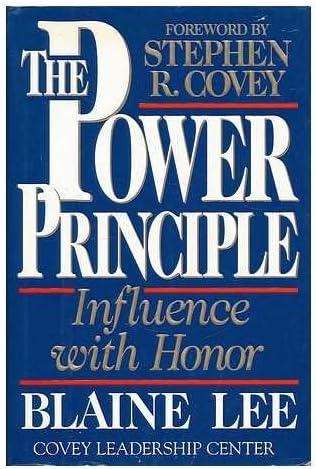
Book summary
by Blaine Lee
Premium summary · Opens in the app · 30 min read
Every meaningful relationship in your life involves power. The relationship between parent and child. Between teacher and student. Between manager and employee. Between salesperson and customer. Between husband and wife. Power is present in all of these interactions, shaping outcomes, influencing decisions, and determining whether relationships thrive or wither.
**Author:** Blaine Lee
**Estimated Reading Time:** 45 minutes
**What You'll Learn:** Why power is neutral, how different types of power shape every relationship in your life, and how to build influence that lasts through honor and respect rather than fear or transaction.
**Who This Book Is For:** Leaders, parents, teachers, salespeople, and anyone who wants to understand why some people inspire loyalty while others only command compliance. If you have ever felt powerless, or if you have ever wondered why your influence falls short, this book will change how you think about power.
Every meaningful relationship in your life involves power. The relationship between parent and child. Between teacher and student. Between manager and employee. Between salesperson and customer. Between husband and wife. Power is present in all of these interactions, shaping outcomes, influencing decisions, and determining whether relationships thrive or wither. Yet most people are deeply uncomfortable with the word power. We associate it with manipulation, control, and abuse. We picture dictators, tyrants, and bullies. We think of power as something to be feared, something corrupting, something that brings out the worst in people. Many of us would rather not think about power at all. Blaine Lee argues that this discomfort stems from a fundamental misunderstanding. Power itself is not negative or positive. Power is simply the capacity to influence others. It is a neutral force, like electricity or water. What matters is how we generate it, how we use it, and what we do with the influence it creates. Consider the ways power shows up in your life. When you ask your child to clean their room, you are exercising power. When you negotiate a salary, you are engaging with power. When you try to convince a colleague to support your project, you are drawing on power. When you attempt to change a habit in your marriage, you are navigating power dynamics. The question is never whether power exists. The question is what kind of power you are using and whether it is building or destroying your relationships. Lee identifies three fundamental types of power. The first is coercive power, which is based on fear. People follow because they are afraid of what will happen if they do not. The second is utility power, which is based on exchange. People follow because they are getting something in return. The third is principle-centered power, which is based on honor. People follow because they respect you, trust you, and believe in who you are. Most of us default to the first two types of power without realizing it. We use threats, pressure, and intimidation. Or we use rewards, incentives, and transactions. These approaches can work in the short term. A…
Continue reading in the MinuteRead app
Get the complete 30-minute summary of The POWER PRINCIPLE
Get the complete summary in the appPower is neutral. It is the capacity to influence others, and it becomes good or bad depending on how you use it.
There are three types of power: coercive (based on fear), utility (based on exchange), and principle-centered (based on
Coercion produces compliance but destroys trust. It controls behavior without changing hearts.
Utility power creates transactions but not loyalty. Relationships last only as long as the exchange is favorable.
Principle-centered power creates willing followers. People follow because they trust and respect you.
Honor is the foundation of lasting influence. It is built through consistent behavior that demonstrates respect, trust,
"The POWER PRINCIPLE" is a strong fit if you want practical ideas around leadership, business, self help, especially themes like power is neutral. it is the capacity to influence others, and it becomes good or bad depending on how you use it; there are three types of power: coercive (based on fear), utility (based on exchange), and principle-centered (based on. The MinuteRead summary distills these concepts into a focused read, whether you're deciding whether to buy the book or applying its lessons at work.
Motivated to help readers with power itself is not negative or positive, Blaine Lee wrote “The POWER PRINCIPLE” to package those ideas for a fast, focused read. In “The POWER PRINCIPLE”, Blaine Lee focuses on power itself is not negative or positive. Through “The POWER PRINCIPLE”, Blaine Lee distills the core ideas on leadership into lessons readers can absorb in a single short sitting. Readers turn to this work when they want Blaine Lee's perspective on the subject without working through the e…
Continue Reading
Access the complete 30-minute summary and thousands more nonfiction books in the MinuteRead app.

Continue reading the complete summary in the MinuteRead app.