 MinuteRead
30 min
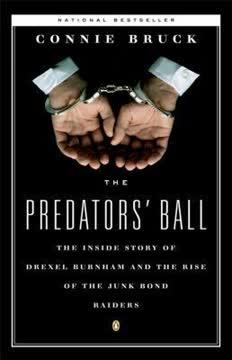
Book summary
by Connie Bruck
Premium summary · Opens in the app · 30 min read
In the early 1970s, a young trader named Michael Milken sat in a modest office at Drexel Burnham Lambert, a second-tier investment bank that few on Wall Street took seriously. He was studying something most financiers considered worthless: the bonds of companies that had fallen on hard times, been downgraded by rating agencies, or simply never qualified for investment-grade status. These securities were called "fallen angels" or, less charitably, "junk."
**Author:** Connie Bruck **Estimated Reading Time:** 45 minutes
**What You'll Learn:**
How a single financier named Michael Milken transformed Wall Street by creating a market for high-yield "junk" bonds, how this innovation fueled the largest corporate takeover wave in American history, why the empire he built collapsed under legal scrutiny, and what his rise and fall reveal about the relationship between finance, power, and accountability.
**Who This Book Is For:**
Anyone who wants to understand how modern Wall Street came to be. This book is for readers curious about the mechanics of corporate takeovers, the psychology of financial innovation, the seductive power of immense wealth, and the thin line between aggressive business practice and criminal conduct. It is essential reading for investors, entrepreneurs, students of finance, and anyone who lived through or wonders about the excesses of the 1980s.
In the early 1970s, a young trader named Michael Milken sat in a modest office at Drexel Burnham Lambert, a second-tier investment bank that few on Wall Street took seriously. He was studying something most financiers considered worthless: the bonds of companies that had fallen on hard times, been downgraded by rating agencies, or simply never qualified for investment-grade status. These securities were called "fallen angels" or, less charitably, "junk." Milken saw something different. He saw a market inefficiency so vast that exploiting it would make him the most powerful financier of his generation. He saw that the risk of these bonds, while real, was systematically overestimated by the financial establishment. He saw that the returns, properly understood, were extraordinary. And he saw that by creating a liquid market for these securities, he could unlock capital for thousands of companies that traditional banks and investment firms had abandoned. What followed was one of the most remarkable transformations in the history of American finance. Within a decade, Milken had built a network of investors and corporate raiders that would reshape the American economy. His firm, Drexel Burnham Lambert, went from obscurity to becoming the most profitable investment bank on Wall Street. His annual conference in Beverly Hills, known as the Predators' Ball, became the defining social event of the decade, a gathering of financiers, corporate executives, and dealmakers who controlled billions of dollars in capital. But the story of Michael Milken is not simply a story of success. It is also a story about the boundaries of acceptable behavior in financial markets, about the difference between innovation and manipulation, and about how systems built on loyalty and reciprocity can become systems of control and coercion. The same network that allowed Milken to place billions of dollars in bonds also allowed him to demand favors, coordinate trading, and blur the lines between legitimate…
Continue reading in the MinuteRead app
Get the complete 30-minute summary of The Predators' Ball
Get the complete summary in the appMichael Milken created the junk bond market by identifying a systematic mispricing of risk and building the infrastructu
Drexel Burnham Lambert rose from obscurity to become the most profitable investment bank on Wall Street, with revenues g
The junk bond market grew from $10 billion in 1979 to $125 billion by 1986, transforming corporate finance and enabling
Milken's network of loyal investors was the foundation of his power, allowing him to place billions of dollars in bonds
The Predators' Ball, Drexel's annual conference, became the defining social event of the 1980s, a gathering of financier
The takeover wave forced corporate America to become more efficient and more focused on shareholder value, but it also e
"The Predators' Ball" is a strong fit if you want practical ideas around business, finance, history, especially themes like michael milken created the junk bond market by identifying a systematic mispricing of risk and building the infrastructu; drexel burnham lambert rose from obscurity to become the most profitable investment bank on wall street, with revenues g. The MinuteRead summary distills these concepts into a focused read, whether you're deciding whether to buy the book or applying its lessons at work.
Connie Bruck is an American journalist and author known for her investigative reporting on business and finance. She has written for publications such as The New Yorker and The Washington Post, specializing in long-form profiles of influential figures in the business world. Bruck's work often explores the complexities of corporate power and the personalities behind major financial events. Her book "The Predators' Ball" is considered a seminal work on the junk bond era of the 1980s. Bruck's writi…
View all summaries by Connie BruckContinue Reading
Access the complete 30-minute summary and thousands more nonfiction books in the MinuteRead app.

Continue reading the complete summary in the MinuteRead app.






