MinuteRead
30 min
Book summary
by Jeff Booth
Premium summary · Opens in the app · 30 min read
Something strange is happening in the world economy. Technology keeps getting better, faster, and cheaper. Software that once cost thousands of dollars is now free. Computing power that once filled entire rooms now fits in your pocket. Information that once required a trip to the library is now available instantly, anywhere, for nothing.
**Author:** Jeff Booth
**Estimated Reading Time:** 4 hours
**What You'll Learn:**
Why technology is fundamentally deflationary, how our debt-based economic system is colliding with that reality, and what the transition to a world of abundance will require from individuals, businesses, and governments.
**Who This Book Is For:**
Anyone who senses that something is deeply wrong with the global economy but cannot quite articulate what it is. Entrepreneurs, investors, policymakers, and curious minds who want to understand the forces reshaping our world and how to position themselves for what comes next.
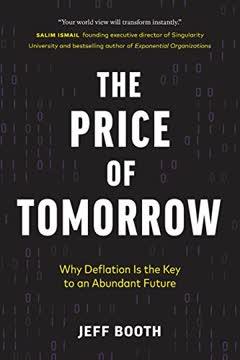
Something strange is happening in the world economy. Technology keeps getting better, faster, and cheaper. Software that once cost thousands of dollars is now free. Computing power that once filled entire rooms now fits in your pocket. Information that once required a trip to the library is now available instantly, anywhere, for nothing. Yet despite this extraordinary progress, most people do not feel wealthier. Wages have stagnated for decades. The cost of housing, healthcare, and education keeps climbing. Young people carry more debt than any generation before them. Governments around the world owe sums so large they are almost impossible to comprehend. Something is deeply wrong. Jeff Booth wrote The Price of Tomorrow to explain this paradox. His central argument is simple but profound: technology is inherently deflationary. It makes things cheaper, faster, and more abundant. Our economic system, however, is built on the opposite assumption. It requires inflation, growth, and scarcity to function. These two forces are now on a collision course. Booth is not an academic economist. He is a technology entrepreneur who spent over two decades building BuildDirect, a company that used technology to disrupt the building supplies industry. He saw firsthand how digital platforms could eliminate inefficiency, lower prices, and create value for customers. He also saw how the broader economy kept fighting against these forces, using debt and monetary policy to prop up a system that technology was making obsolete. The book begins with a startling observation. In 2018, total global debt reached approximately $247 trillion. Global GDP was around $80 trillion. That means the world owed more than three times what it produced in a year. If we stopped adding to that debt and started paying it back at a rate of $1,000 per second, it would take nearly 8,000 years to clear the balance. This is not sustainable. It is not even close to sustainable. Booth argues that we have been masking the deflationary effects of technology by printing money and taking on debt. Central banks have kept interest rates artificially low, encouraging governments, businesses, and individuals to borrow. This borrowed money creates the illusion of growth. It keeps asset prices rising. It…
Continue reading in the MinuteRead app
Get the complete 30-minute summary of The Price of Tomorrow
Get the complete summary in the appTechnology is Inherently Deflationary and Disrupting Traditional Economic Models
The Global Economy is Trapped in a Debt-Fueled Growth Cycle
Artificial Intelligence is Rapidly Advancing and Will Transform Every Industry
The Future of Energy is Abundant, Clean, and Nearly Free
Jobs and Economic Systems Must Adapt to Technological Disruption
Human Biases and Narratives Shape Our Understanding of the World
"The Price of Tomorrow" is a strong fit if you want practical ideas around economics, finance, business, especially themes like technology is inherently deflationary and disrupting traditional economic models; the global economy is trapped in a debt-fueled growth cycle. The MinuteRead summary distills these concepts into a focused read, whether you're deciding whether to buy the book or applying its lessons at work.
Jeff Booth is a technology entrepreneur and visionary leader with over 20 years of experience. He founded BuildDirect, a technology company in the building industry, and led it through various economic challenges. Booth has been recognized for his entrepreneurial achievements, including being named BCTIA's Person of the Year and one of Goldman Sachs' 100 Most Intriguing Entrepreneurs. He is involved in multiple ventures, serving as a founding partner, co-founder, and board member for several com…
View all summaries by Jeff BoothContinue Reading
Access the complete 30-minute summary and thousands more nonfiction books in the MinuteRead app.

Continue reading the complete summary in the MinuteRead app.